
Host making several portions
Wants to work out in advance how many blending batches will be needed and whether extra cups would make serving easier. The Consumers’ Association describes personal blenders as appliances with a small blending cup.


A personal blender is handy if you want to make small portions one after another and don’t mind blending in several batches. If you’d rather make smoothies for several guests in one go, look for a blender with a larger jug. If you’re using frozen melon, always check that the exact model is suitable; wattage alone won’t tell you how smooth your recipe will be.
Wants to work out in advance how many blending batches will be needed and whether extra cups would make serving easier. The Consumers’ Association describes personal blenders as appliances with a small blending cup.
Sometimes uses frozen fruit or ice, so checks whether the chosen model and its instructions allow these ingredients. The Consumers’ Association points out that not every blender is suitable for this.
Wants to do as little washing up by hand as possible after guests leave, and checks the manual to see which parts can go in the dishwasher.
First decide how many smoothies you want to make at once and which ingredients you’ll use. Then consider cleaning and storage.
| What to consider | What should you check? | Who does this matter to? |
|---|---|---|
| Portions for guests | Compare the maximum fill line, the capacity of each cup and the number of cups included with the amount you want to serve. | When I’m making smoothies for guests, I want to know how many glasses one batch will make and whether I’ll need to rinse cups between batches. Around 36% of consumers give serving enough portions their highest priority. |
| Frozen ingredients | Check the manual for the exact model to see whether frozen fruit or ice is allowed; don’t judge this by wattage alone. | For a smoothie with frozen melon, I want to know whether the appliance can handle those ingredients. Around 29% of consumers focus most on ingredients and texture. |
| Cleaning | Check which cleaning methods are allowed for each part, such as the cup, lid and blades. | After several batches, I want to clean the separate parts without too much washing up by hand. Around 21% of consumers prioritise easy cleaning. |
| Storage | Check whether the appliance’s shape and the cups supplied will fit the space you have available. | If I don’t use the blender often, I want to be able to store it easily and avoid choosing an unnecessarily large model. Around 14% of consumers give compact storage their highest priority. |
The usable amount depends on the maximum fill line. The number of cups supplied also varies by model.
Work out how much you want to serve, then compare it with the fill line and capacity of each cup supplied.
With a small cup, you may need to blend several batches. An extra compatible cup can be useful when making portions one after another.
Not every blender is suitable for frozen fruit or ice. A power rating on its own doesn’t tell you how a model will handle your recipe.
Check the manual for the exact model to see which ingredients and quantities are allowed.
Cleaning instructions can vary from one part to another. The motor base is cleaned separately.
Check the instructions for the cup, lid and blades individually, and follow the guidance on safely removing the blade assembly.
If parts need to be washed by hand, cleaning up after several blending batches will take longer.
The features listed apply to the models and product ranges described; they are not a judgement on a brand’s entire range.
The Blend Up BL19H4F0 is designed for individual portions and comes with 400 ml and 700 ml bottles.
The VitaPower MMB2111S is a compact portable blender with a 0.6 l blending cup.
The Original 600 NB603DG is a single-cup option supplied with a 700 ml Tall Cup.
The 3000 Series HR2620/40 is a compact blender with a travel tumbler.
This selection includes larger jugs for several portions and a compact blender option with a drinking cup.
 No image available
The 1500 ml jug is an option if you’d rather make a larger quantity for guests.
The product name also mentions a 600 ml travel bottle and a 300 ml chopper cup.
The product name mentions smoothie and ice use, as well as dishwasher-safe parts; check the manual for cleaning instructions for each part.
 No image available
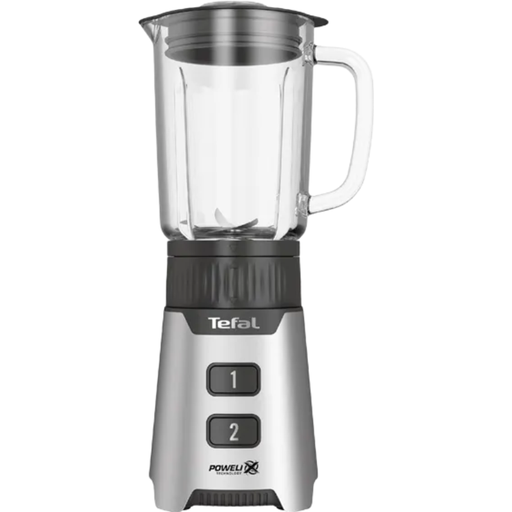
The portable design with a drinking lid is suited to individual smoothie portions.
The product name lists 400 W and a capacity of 700 ml.
For several guests, that capacity may mean making portions one after another.
 No image available
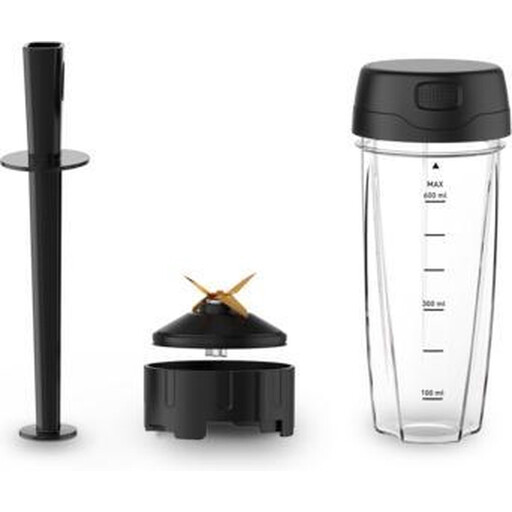
The 1.75 l jug described is designed for larger portions; a separate travel cup is also mentioned.
The product name lists 1600 W and 35,000 RPM. The product description mentions a smoothie programme and a 600 ml travel cup.
 No image available
The product description lists a 2.1 l jug for larger portions and use with fresh or frozen ingredients.
The description mentions 14 manual speed settings and automatic adjustment of time and speed.
 No image available
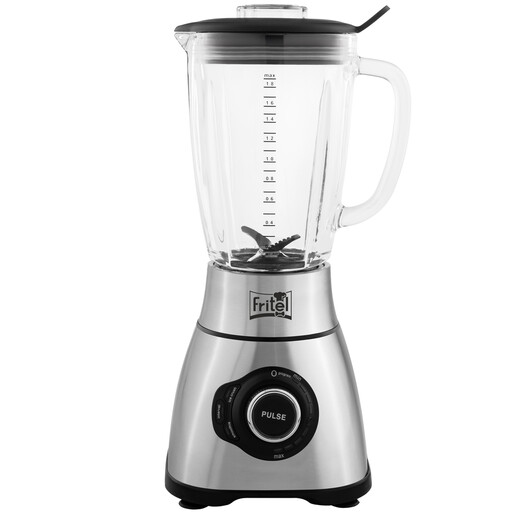
The 1.8 l glass jug is an option if you want to make enough for several guests.
The product name lists 1800 W and 9 speeds; the product description mentions a smoothie programme.
The description lists a removable blade assembly and a dishwasher-safe jug, lid and measuring cap.
Yes. The Netherlands Nutrition Centre advises washing a melon under running water before cutting into it, even if you’re going to peel it first. Brush off any sand; don’t use soap or bleach solution on the fruit.
Cover cut melon and keep it in the fridge. The Netherlands Nutrition Centre recommends storing it for up to two days; this isn’t a universal guarantee of shelf life for every smoothie recipe.
This varies by model and part, so check the user manual. The Consumers’ Association recommends wiping the casing with a damp cloth and notes that separate parts are often, but not always, dishwasher-safe.
No, not to get your statutory guarantee: you’re already entitled to this when you buy the product. According to the Dutch government, the seller must provide a solution if a product is faulty; extra cover is only worthwhile if its terms give you additional rights.
For electrical equipment covered by the Commodities Act Decree on Electrical Equipment, the Netherlands Food and Consumer Product Safety Authority (NVWA) says that CE marking is compulsory. The directive mentioned applies to equipment with a rated AC voltage between 50 V and 1,000 V; the rules that apply depend on the electrical specification. Materials that come into contact with food must also meet safety requirements. CE marking doesn’t prove how well a blender makes smoothies, nor does it mean the cup has been approved in advance by the NVWA.