
If you’re making small bites
If you’re serving small filled bites at Easter lunch, crisp Melba toast or party toast is a better fit than a large, soft slice of bread.


Choose crisp Melba toast or party toast for small bites that are ready to serve, and soft sliced white or toastie bread for larger filled sandwiches or hot toasties. When checking slice thickness, don’t rely on the term ‘medium sliced’ alone: check the size and intended use on the packaging or product page. If you have dietary requirements, check the current ingredients, allergen and nutritional information too.
If you’re serving small filled bites at Easter lunch, crisp Melba toast or party toast is a better fit than a large, soft slice of bread.
For larger filled sandwiches or hot toasties, soft sliced white or toastie bread is the right kind of product. Compare the size and nutritional information too.
If you need to consider allergens, fibre or baker’s salt, make your choice based on the current packaging. The Netherlands Nutrition Centre recommends comparing nutritional values per 100 g.
First decide whether your Easter lunch will feature small bites or larger, soft sandwiches and toasties. Then check the features that matter for your table.
| What to consider | What to check when buying | Who it matters to |
|---|---|---|
| Shape for small bites | Check whether it’s crisp Melba toast or party toast, and whether the size works with your toppings. | If I want to serve small filled bites straight away, I look for a different base than I would for sandwiches. Around 36% of consumers prefer this way of serving. |
| For soft or hot serving | Check whether the product is sold as soft sliced white or toastie bread, and check its size and usage information. | For larger filled sandwiches or hot toasties, I want soft sliced bread. Around 29% of consumers prioritise this use for bread. |
| Fibre and baker’s salt | Compare fibre per 100 g and, if iodine from bread is relevant to your choice, check whether the ingredients list mentions iodised baker’s salt. | When the ingredients determine my choice, I want to be able to compare the nutritional values and ingredients; this matters most to around 21% of consumers. |
| Allergens | Read the current allergen and ingredients information on the exact product you’re buying. | If a guest needs to avoid certain ingredients, a suitable label matters more than how the food is served. Around 14% of consumers give this check top priority. |
Melba toast and party toast are crisp bases for small bites; soft white and toastie bread are soft bread options. Mixing them up could change the kind of lunch you had planned.
Before you buy, decide whether you want to serve small bites, filled sandwiches or hot toasties, then look for the corresponding type of product.
According to the Netherlands Nutrition Centre, bread made with iodised baker’s salt is a source of iodine, but bakers don’t have to use this salt. So the word ‘toast’ or ‘bread’ doesn’t tell you which ingredients have been used.
If baker’s salt matters to your choice, read the ingredients list or ask which salt has been used when buying unpackaged bread.
A product name or picture doesn’t tell you enough about fibre and allergens. For example, Jumbo lists gluten and wheat in its Tosti Brood Wit.
Compare nutritional values per 100 g and, if you’re buying for guests with food allergies, read the current allergen information on the packaging.
According to the Dutch Government, Sunday opening varies by local authority. A product page also won’t tell you whether your local shop has the product in stock at that time.
Check the opening hours of the shop you plan to visit and buy what you need in good time.
Albert Heijn’s party toast range includes AH Natural Melba Toast and Melba toast varieties from Van der Meulen.
Jumbo’s Casino Wit Brood Half and Tosti Brood Wit Half are examples of soft white wheat bread.
ALDI lists Sun Snacks Natural Melba Toast as crisp toast in a 240 g pack.
Lidl lists 240 g Melba toast as a shop product; no product brand is given on the product page.
These two products are Melba toast for small filled bites at Easter lunch. If you’re looking for soft sliced bread for sandwiches or toasties, choose that type of bread rather than these crisp toasts.
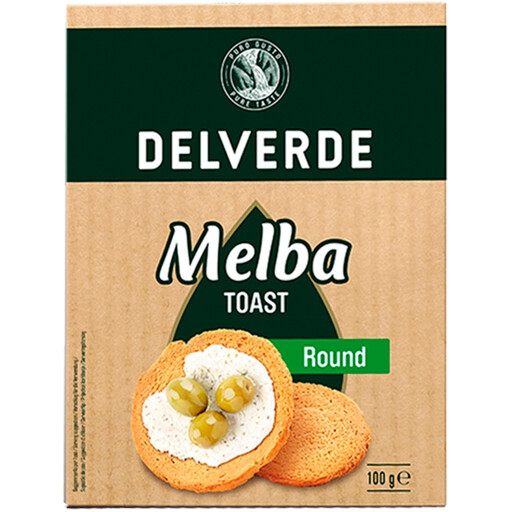 Image unavailable
For small filled bites where you want to use round Melba toast. The pack contains 100 g.
Check the current packaging for ingredients and allergens; ‘Round’ doesn’t confirm the slice thickness of soft bread.
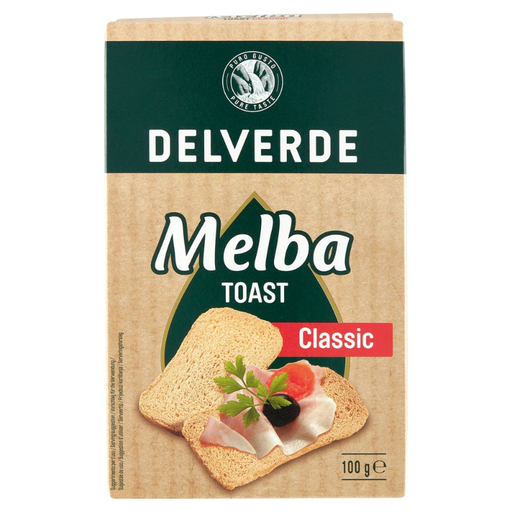 Image unavailable
For small bites with Melba toast as a crisp base. The pack contains 100 g.
If you’re buying for guests, check the current ingredients and allergen information; Melba toast isn’t soft sliced toastie bread.
No. Melba toast is a crisp product for small bites; the soft white wheat breads described by Jumbo are soft bread options. If you need a particular slice thickness, check that it’s specified for the bread you choose.
Compare the values per 100 g and read the ingredients list too. The Netherlands Nutrition Centre recommends comparing products per 100 g; also consider the difference in product type and portion size when deciding what to serve at lunch.
No, don’t assume that it does. The Netherlands Nutrition Centre says bakers aren’t required to use baker’s salt. Check the ingredients if the type of salt used matters to your choice.
Check the current allergen information and, if gluten-free is essential, look for a product explicitly labelled as gluten-free. Don’t assume Melba toast is suitable just because it isn’t soft bread: for example, Jumbo lists gluten and wheat in its Tosti Brood Wit, while other products need to be checked individually.
That depends on the shop you plan to visit. According to the Dutch Government, Sunday opening varies by local authority, so check your shop’s opening hours and buy what you need earlier if necessary.