
If you want to top savoury bites
You’re looking for a little toast to showcase a topping or spread, not a sweet biscuit. Albert Heijn describes its Melba toast as toasted bread for toppings.


Choose Melba toast as a base for savoury topped bites; serve a digestive biscuit with the sweet part of your Easter brunch or use it as a dessert base. Compare the nutrition information and ingredients within the type of product you choose: the wholemeal and multigrain Melba toast varieties examined contain more fibre, but also more salt than the plain variety, while the digestive biscuit examined with 0% sugar contains polyols and carries a warning against excessive consumption.
You’re looking for a little toast to showcase a topping or spread, not a sweet biscuit. Albert Heijn describes its Melba toast as toasted bread for toppings.
You want biscuits to serve with coffee or as part of a dessert, as well as topped toast. Albert Heijn’s product information distinguishes Melba toast from digestives, which are sold as wheat biscuits.
You consider fibre, salt, sugars and allergens when choosing. The varieties examined differ in these respects, so if a guest has an allergy, always check the ingredients list on the current packaging.
Choose it when: you want to serve small savoury bites with toppings or spreads.
Bear in mind: this is a different base from a sweet biscuit; for the varieties examined, compare the salt content too.
Choose them when: you want a wheat biscuit to serve with coffee or use as a dessert base.
Bear in mind: a digestive biscuit is no substitute for plain toast with savoury toppings. A 0% sugar variety also calls for a closer look at its ingredients and product warning.
| What to consider | What to check when buying | Who is this most important for? |
|---|---|---|
| Savoury toppings | Choose Melba toast as a base for toppings; check that the size and packaging suit your serving plans. | If I want to serve topped bites, the toast needs to leave room for the topping without turning it into a biscuit occasion. For around 33% of consumers, this versatile base is the deciding factor. |
| Fibre and salt | Compare both values per 100 g. In the Van der Meulen varieties listed by Jumbo, both fibre and salt increase from plain to wholemeal. | If you’re choosing between toast varieties based on nutrition, you’ll want to consider fibre without losing sight of the salt. This combination is a priority for around 25% of consumers. |
| Sweet biscuit | For digestive biscuits, check the sugars and ingredients per 100 g; if a variety contains polyols, read the warning on the packaging too. | For coffee or dessert, I’m looking for a biscuit, not a base for savoury toppings. Around 25% of consumers prioritise this sweet option. |
| Allergens | Read the current ingredients list and allergen information; don’t rely on the product name alone. | When I’m buying for a guest with an allergy, I need to be able to check the ingredients on that exact pack. For around 17% of consumers, this check is the top priority. |
In the product information examined, a digestive is a wheat biscuit, while Melba toast is sold as a base for toppings. The difference becomes clear in the role each product plays on the table.
First decide whether you want to serve savoury topped bites or a sweet biscuit or dessert course.
In the Van der Meulen Melba toast varieties listed by Jumbo, the plain variety contains 3,9 g of fibre and 1,3 g of salt per 100 g; the multigrain variety contains 7,5 g of fibre and 1,5 g of salt; and the wholemeal variety contains 9,7 g of fibre and 1,9 g of salt.
Compare fibre and salt on the same 100 g basis, and check the allergen information too.
For AH Digestive 0% sugar, Albert Heijn lists 14 g of polyols per 100 g and warns that excessive consumption may have a laxative effect.
Read the ingredients and product warning before choosing this variety for the sweet part of brunch.
The Dutch agreement on baker’s salt encourages the use of iodised salt. According to the Nederlands Bakkerij Centrum, however, its use is not a legal requirement.
Check the ingredients list or ask the manufacturer if the type of salt used is important to your choice.
Melba toast in plain, multigrain and wholemeal varieties, for comparing options within toast for toppings.
The own-brand range includes Melba toast for toppings and digestive biscuits for a separate sweet occasion.
Digestive biscuits for anyone looking for a wheat biscuit to serve with the sweet part of brunch.
ALDI Netherlands describes Sun Snacks Melba Toast Naturel as toasted Melba toast in a 240 g pack.
Flavoured party toast, including the Parsley & Garlic and Tomato & Oregano varieties listed by ALDI Netherlands.
For savoury toppings, you’ll find Melba toast here; for the sweet part of Easter brunch, there’s a classic digestive and a milk chocolate variety.
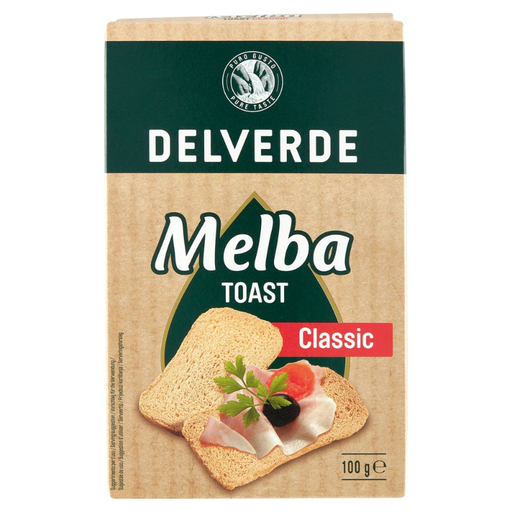 Image unavailable
Melba toast to consider if you’re planning to serve savoury bites with toppings.
Pack size: 100 g. Check the current ingredients list if allergens or the type of salt used are important to you.
 Image unavailable
A classic digestive for a biscuit break or as an ingredient in a dessert, rather than a plain base for savoury toppings.
Pack size: 400 g. Check the current packaging for allergen information.
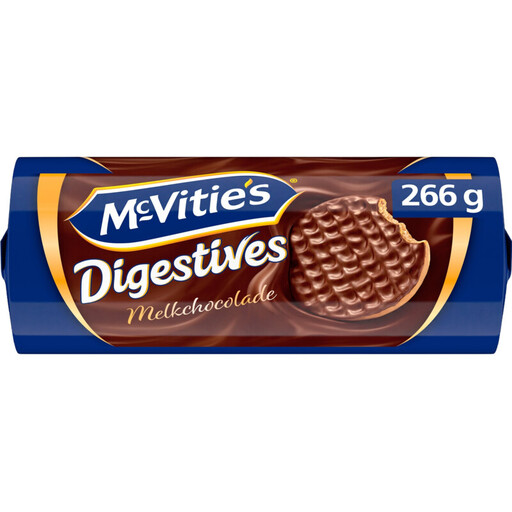 Image unavailable
A milk chocolate digestive for the sweet part of brunch, not for a platter of savoury toppings.
Pack size: 266 g. Check the current packaging for ingredients and allergen information.
No. Albert Heijn describes Melba toast as toasted bread for toppings and digestives as wheat biscuits. So, for savoury topped bites, choose a toast base; a digestive is better suited to the sweet part of Easter brunch.
Compare both fibre and salt per 100 g. For Van der Meulen, Jumbo lists 3,9 g of fibre and 1,3 g of salt for the plain variety; 7,5 g of fibre and 1,5 g of salt for the multigrain variety; and 9,7 g of fibre and 1,9 g of salt for the wholemeal variety per 100 g.
No. The regular Melba toast and digestive varieties examined contain wheat or other gluten-containing grains. If a guest needs to eat gluten-free, check a product specifically labelled gluten-free and take care to avoid cross-contamination when serving it.
Seal them well after opening and store them in a dry place. Albert Heijn recommends keeping digestive biscuits in a sealed tin; McVitie's Digestives should be stored in a dry, preferably cool place. Follow the instructions on the packaging you buy too.
No. Don’t assume there’s a general legal requirement or that toast always contains iodine. The Dutch agreement published on Overheid.nl encourages the use of iodised baker’s salt, but according to the Nederlands Bakkerij Centrum, its use is not a legal requirement. For a specific product, check the ingredients list or ask the manufacturer what type of salt is used.