
Breakfast lovers who choose their own sweet toppings
You want a crunchy base that lets the topping take centre stage. Jumbo describes Van der Meulen melba toast as suitable for topping or dipping.


Choose melba toast if you’re looking for a crunchy base for your choice of sweet topping; choose a digestive biscuit if you want to eat the biscuit on its own. If a wholegrain base is your priority, consider wholemeal bread too: the Netherlands Nutrition Centre recommends replacing white bread with wholemeal or brown bread as much as possible. When comparing toast and biscuits, check the nutritional information, portion size and allergens on the pack you choose.
You want a crunchy base that lets the topping take centre stage. Jumbo describes Van der Meulen melba toast as suitable for topping or dipping.
You look beyond flavour and compare wholegrain products with other breakfast options. The Netherlands Nutrition Centre recommends replacing white bread with wholemeal or brown bread as much as possible.
You need to be able to check the packaging and decide whether a particular toast or biscuit suits your dietary needs. A standard digestive biscuit isn’t automatically gluten-free, so check the ingredients, allergens and any gluten-free labelling.
| What to consider | What to check when buying | Who is this important to? |
|---|---|---|
| Base for toppings | Choose between plain and wholegrain melba toast, and think about what you’d like to put on it. | If I want to choose my own fruit or other sweet topping, I’m looking for a crunchy base that lets the topping take centre stage. For around 29% of consumers, this kind of base for toppings would be the main reason for choosing it. |
| Wholegrain and fibre | Read the ingredients and compare the fibre per 100 g and per portion. Consider wholemeal bread as a breakfast base too. | If fibre is my main priority at breakfast, I want to distinguish between a wholegrain base and a biscuit with grains in its name. For around 36% of consumers, this would be the first thing to consider. |
| Biscuits as a sweet option | Compare the plain and chocolate varieties by ingredients, sugars per 100 g and the portion you plan to eat. | If I want the biscuit itself to be the sweet part of breakfast, I’m looking for something different from a neutral base for toppings. For around 21% of consumers, choosing a biscuit would be the priority. |
| Gluten and allergens | Check the latest allergen information and, if needed, look for a clear gluten-free label. | If gluten or other allergens limit my choice, I need to be able to tell from the packaging which variety is suitable. For around 14% of consumers, this check would be the most important factor. |
A digestive is a biscuit. Its name doesn’t tell you whether it fits with the rest of your breakfast.
First decide whether you want a base for toppings or a biscuit to eat on its own. Then compare the ingredients, nutritional information and portion size of the variety you’ve chosen.
These terms don’t necessarily describe the same ingredients. And a biscuit that mentions fibre doesn’t automatically have the same role as wholemeal bread.
Read the ingredients and compare fibre per 100 g and per portion. The Netherlands Nutrition Centre recommends replacing white bread with wholemeal or brown bread as much as possible.
You can’t tell from the product type alone whether baker’s salt has been used in a particular toast or biscuit.
If baker’s salt matters to your choice, check the ingredients on the packaging.
A standard digestive isn’t automatically gluten-free. A label on one variety doesn’t apply to the entire product category.
Check the allergen information every time you buy, and make sure the pack you choose is explicitly labelled gluten-free if you need it to be.
Jumbo lists Van der Meulen melba toast in plain, wholegrain and multigrain varieties, among others.
Albert Heijn lists melba toast as well as standard and wholegrain digestive biscuits.
Jumbo lists, among other products under its own brand, a wholegrain digestive and a milk chocolate digestive.
Jumbo lists McVitie's Digestives Original as a classic biscuit option.
Jumbo lists Schär Digestive Landtaler Gluten Free as a separate digestive variety.
These products show two ways to put together a sweet breakfast: melba toast as a base for your choice of topping, or a digestive biscuit that forms part of the breakfast in its own right. The chocolate variety offers a separate flavour option.
 Image unavailable
For anyone who deliberately wants a plain digestive with a sweet breakfast, rather than toast as a base for toppings.
400 g pack. Compare the nutritional information per portion and check the allergens on the packaging.
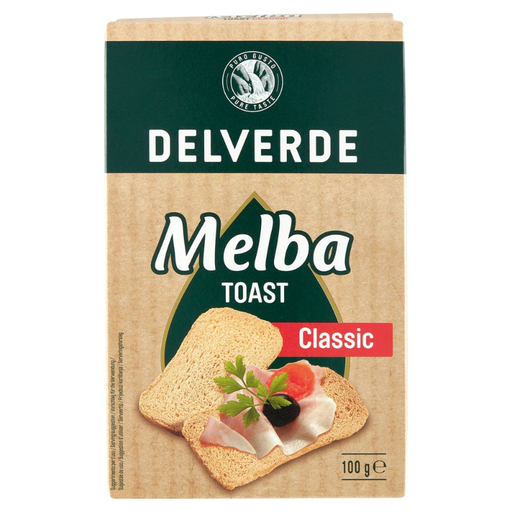 Image unavailable
For anyone who wants to choose their own sweet topping and is looking for melba toast to go with it.
100 g pack. If fibre or allergens affect your choice, compare the relevant information on the packaging.
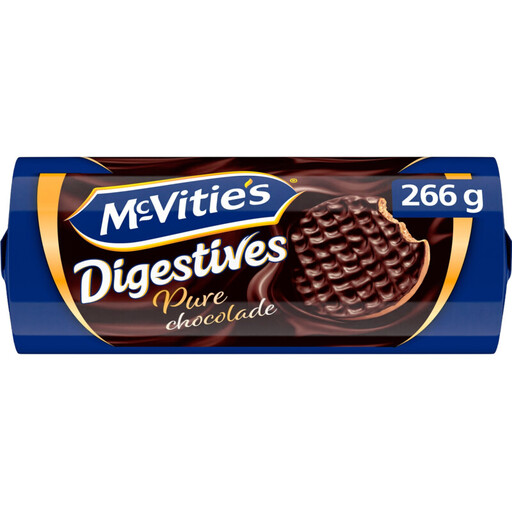 Image unavailable
For anyone specifically looking for a digestive with dark chocolate, rather than plain toast for toppings.
266 g pack. Compare the sugars per 100 g and per portion, and check the allergens on the packaging.
Choose melba toast if you want to add your own sweet topping, and a digestive biscuit if you’d rather eat the biscuit itself. If a wholegrain breakfast base is your main priority, compare wholemeal bread too: the Netherlands Nutrition Centre recommends replacing white bread with wholemeal or brown bread as much as possible.
No. The name alone doesn’t tell you what the biscuit does or whether it’s suitable as a complete breakfast. Assess a digestive by its ingredients, nutritional information and portion size, along with what else you eat for breakfast.
Don’t assume so based on the name ‘toast’. If baker’s salt matters to your buying decision, check the ingredients on the pack you choose.
Look for an explicit gluten-free label on the pack you choose and check the allergen information too. For example, Jumbo lists Schär Digestive Landtaler Gluten Free; that label doesn’t apply to standard digestive biscuits or other varieties.
Ingredients and nutritional information can change. That’s why Albert Heijn recommends checking the packaging for its products, particularly for nutritional values and dietary or allergy information.