
If you pack toast regularly
If melba toast often goes to school, the net weight is a useful starting point. The own-label packs reviewed from Albert Heijn and ALDI each contain 240 g; choose a quantity that suits how quickly you use the toast.


For school lunches, a pack you can finish regularly is a better choice than a larger supply that gets left unused. Then check whether individually wrapped portions make packing easier. Before serving, always check the current label and the school’s policy: the AH Melba toast naturel product reviewed lists wheat, barley and soya, as well as possible traces of other allergens.
If melba toast often goes to school, the net weight is a useful starting point. The own-label packs reviewed from Albert Heijn and ALDI each contain 240 g; choose a quantity that suits how quickly you use the toast.
If you’re buying toast for a pupil with a food allergy, check the ingredients and any warnings about traces every time you shop. Also check the school’s policy before packing anything; a product described as ‘natural’ isn’t necessarily suitable for someone with an allergy.
How the toast is packaged can make all the difference if you take a small amount each time. Albert Heijn says its 240 g pack of AH Melba toast naturel contains twelve individual packs, each with six pieces of toast.
First, work out how much toast you actually use and how you want to pack it. Then check the label and the school’s policy for the person who’ll be eating it.
| What to consider | What to check | Who it matters most to |
|---|---|---|
| Quantity and stock | Check the net weight and consider whether you’ll finish the pack at your usual rate of use. | With a small food budget, I don’t want to buy toast that ends up sitting unused. Around 42% of consumers prioritise buying a quantity that suits their needs. |
| Allergens and school policy | Read the current ingredients, any warnings about traces and the school’s policy. | If I’m packing toast for a pupil with a food allergy, I need to know whether the product and the school’s policy are suitable for their needs. Around 33% of consumers put these checks first. |
| Portions and storage | Check whether the pack contains individually wrapped portions, and follow the storage advice on the packaging once opened. | For a school lunch, I want to be able to take a small amount without any hassle. For around 25% of consumers, ease of packing is the main consideration. |
According to Albert Heijn, AH Melba toast naturel lists wheat, barley and soya, as well as possible traces of allergens including sesame. The term ‘natural’ doesn’t replace the ingredients list.
Check the current label every time you buy it, and make sure it meets the pupil’s needs and the school’s policy.
A 240 g pack may be less practical if you only pack toast occasionally or can’t store it as directed once opened.
Choose a quantity that suits how often you use toast. Albert Heijn recommends storing its opened Melba toast naturel in a sealed container.
Melba toast describes a type of product, not one fixed recipe or style of packaging. Those differences can matter when you’re buying it for school.
Check the full product name, net weight and ingredients of the specific variety you’re buying.
According to Albert Heijn’s product information, AH Melba toast naturel comes in a 240 g pack containing twelve packs of six pieces of toast.
Jumbo lists Van der Meulen melba toast in varieties including natural, wholemeal, sesame and multigrain.
ALDI lists Sun Snacks Melba toast in a 240 g pack.
Lidl lists 240 g melba toast as an in-store-only product.
Bolletje’s product range includes related categories such as crackers, rusks and crispbread. These aren’t necessarily interchangeable with melba toast.
Each of these Joybuy products is listed as containing 100 g. This size may suit you if you don’t pack toast often; always check the ingredients against the pupil’s needs and the school’s policy.
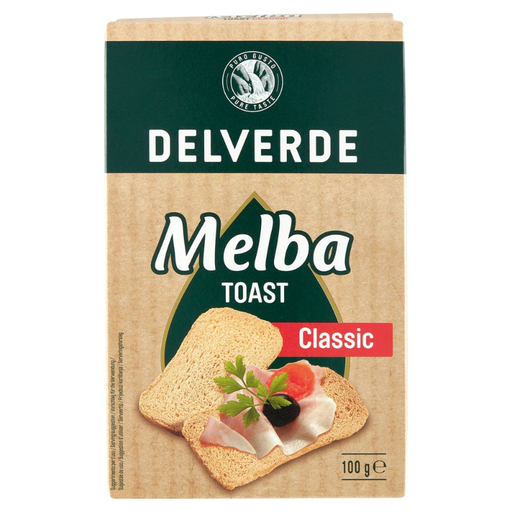 Image unavailable
A smaller pack may suit you if you only pack melba toast for school now and then.
Before serving, check the current label for wheat, barley and possible traces of other allergens, and take the school’s policy into account.
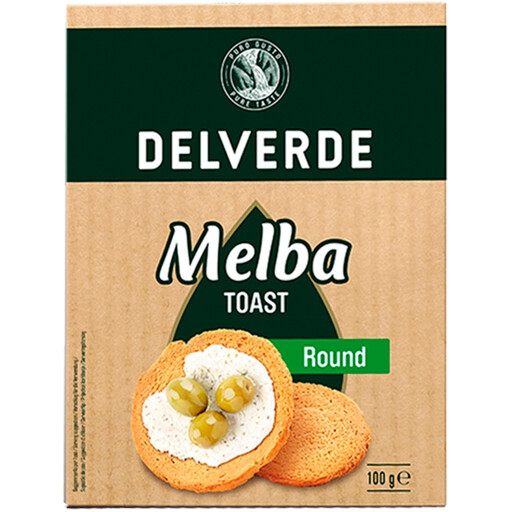 Image unavailable
This 100 g pack of round melba toast is an option if you’d prefer a smaller pack.
For a school lunch, check the current label for wheat, barley and possible traces of other allergens. Supervise young children while they eat.
Yes, especially if a pupil has a food allergy or the school has a policy about food brought from home. For AH Melba toast naturel, Albert Heijn lists wheat, barley and soya, as well as possible traces of other allergens. Check the current label of the product you’ve chosen when you buy it.
According to the Netherlands Nutrition Centre, a school that provides food must handle it safely and give information about allergens. If you’re bringing toast from home, ask about your school’s policy; rules for food provided by the school don’t automatically tell you what a pupil can bring in themselves.
Follow the storage advice on the packaging of the variety you’ve bought. Albert Heijn recommends storing opened AH Melba toast naturel in a sealed container.
No. The rule doesn’t mean that every toast product contains iodised baker’s salt. The Netherlands Food and Consumer Product Safety Authority explains that iodine compounds may be present in bread, bread substitutes and other bakery products when baker’s salt is added. If this matters to your choice, check the ingredients of the specific product.