
Those buying for a special occasion
Looking for toast whose shape and flavour will go well with the toppings for drinks, lunch or an aperitif.


Choose plain Melba toast when the topping is the star, a multigrain option if you want to compare specific ingredients and nutritional values, or sesame toast if a more distinctive flavour suits the occasion. If you’re serving toast to older people, check that its crisp texture, allergens and nutritional values are suitable for those you’re buying for before making your choice.
Looking for toast whose shape and flavour will go well with the toppings for drinks, lunch or an aperitif.
Need to check whether crisp toast is suitable for someone’s ability to chew and swallow, and whether it meets any allergy or dietary requirements. The Netherlands Nutrition Centre emphasises that older people are not a uniform group.
Want enough toast for the planned number of servings, with ingredient information available when it is served.
First, decide who the toast is for and what toppings you want to serve. Then compare the ingredients, nutritional information and pack size of each option.
| What to consider | What to check when buying | Who it matters most to |
|---|---|---|
| Texture and allergens | Check that crisp toast is suitable for the individual and read the full allergen information for the option you choose. | If I’m buying for someone with chewing or swallowing difficulties, or an allergy, the toast needs to be suitable for them. For around 33% of consumers, individual suitability comes first. |
| Presentation and flavour | Choose a shape and flavour that work with the toppings; if you’re choosing sesame toast, also check that sesame can be served. | For a special occasion, I want the toast to complement the toppings without overpowering their flavour. For around 27% of consumers, presentation and flavour are the top priorities. |
| Nutritional information | Compare fibre and salt per 100 g and per planned serving. Check the ingredients list if iodised salt is important to you. | When nutritional values are part of my decision, I want to assess the specific option rather than rely on the word ‘premium’. Around 20% of consumers prioritise this product information. |
| Pack size and portions | Check the net weight, how many pieces you need and the storage instructions. | If I’m setting out toast for several people, I want to buy enough and store any unused toast properly. For around 20% of consumers, getting the right amount and storing it well matter most. |
Organic, sesame and multigrain describe different characteristics; on their own, they don’t tell you how much fibre or salt a toast contains.
Compare the ingredients and nutritional information per 100 g on the packaging of the options you’re considering.
The Netherlands Nutrition Centre notes that older people may need additional dietary advice because of illness or limitations. An attractive presentation says nothing about whether the texture is suitable.
If someone is known to have chewing or swallowing difficulties, ask what texture has been agreed for them and choose a suitable alternative if necessary.
Different options may contain different allergens. According to the Netherlands Food and Consumer Product Safety Authority, allergen information must be provided to consumers in another way when food is served without its packaging.
Keep the information for each type of toast available where it is served, and make it clear which toast is on each plate.
A larger pack doesn’t tell you whether the flavour, ingredients and quantity are right for the occasion you have planned.
Work out how many pieces you need and check how to store the toast after opening.
Melba toast in plain, wholemeal, sesame and multigrain options, among others, as listed by Jumbo.
Organic sesame Melba toast for anyone looking for a sesame flavour to go with their toppings.
Plain Melba toast in a 240 g pack, as listed by ALDI Netherlands.
A brand to consider if rusks or crackers are also an option; these are different types of product from Melba toast.
These Melba toasts give you a round option, a classic option and a 240 g pack to compare, depending on your planned toppings and number of guests. If you’re serving older people, always check that the crisp texture is suitable for each individual.
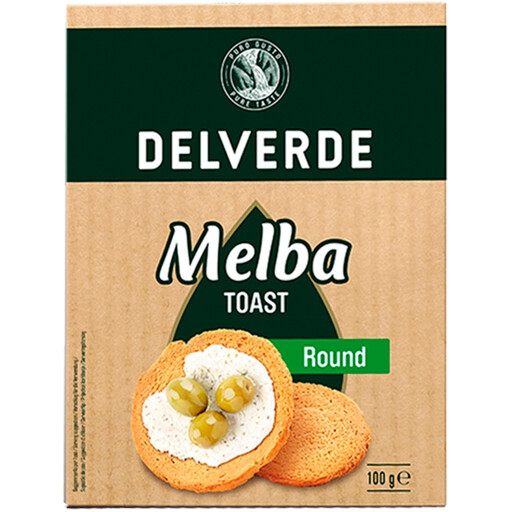 Image unavailable
The round shape is an option for topped toast at a special occasion.
Check the current packaging for allergens and nutritional values. Before serving, consider whether the crisp texture is suitable for the person eating it.
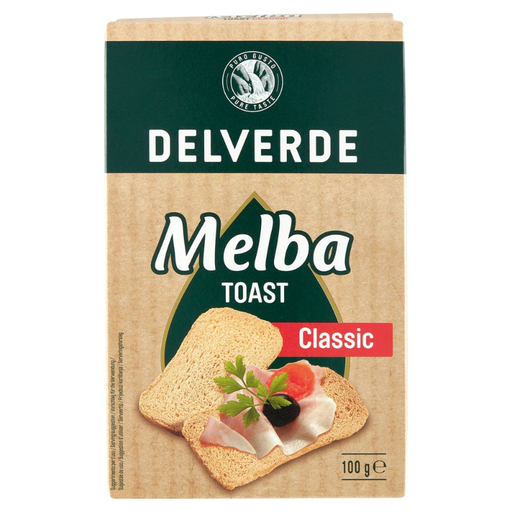 Image unavailable
This classic Melba toast is an option if you’re looking for a plain base to pair with different toppings.
The product information lists wheat and barley, and warns that traces of sesame, soya and mustard may be present. Check the current label and consider whether the hard, crisp texture is suitable for the person eating it.
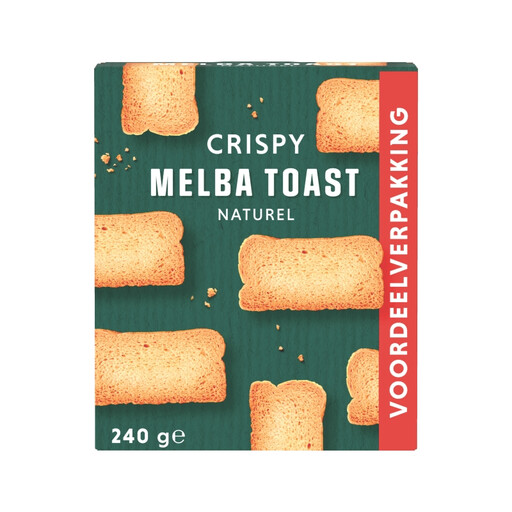 Image unavailable
The 240 g pack is an option if you’re planning to serve toast to several guests.
Before buying or serving, check the allergens on the packaging: the product information lists wheat, barley and soya as ingredients, but also includes conflicting allergen information. Also check that the crisp texture is suitable for those eating it.
No, it needs to be assessed for each individual. The Netherlands Nutrition Centre emphasises that older people are a diverse group; if someone is known to have chewing or swallowing difficulties, ask what texture has been agreed for them.
Keep the allergen information for each type of toast available to the people you’re serving. The Netherlands Food and Consumer Product Safety Authority says that allergen information for unpackaged products must be provided to consumers in a different way from information on packaging.
No. According to the Netherlands Nutrition Centre, there is no requirement in the Netherlands to bake bread with baker’s salt, so don’t assume it has been used just because a product is labelled ‘toast’, ‘multigrain’ or ‘organic’. Check the ingredients list if this matters to your choice.
Follow the instructions on the packaging for the option you’ve chosen. Albert Heijn recommends storing AH Biologisch Melba Toast in a sealed tin after opening; Van der Meulen Melba Multigrain Toast should be stored in a cool, dry place.