
Groups sharing drinks or lunch
A plain toast base leaves plenty of room for a variety of toppings. Albert Heijn lists its plain Melba toast in a 240 g pack containing 12 packs of 6 pieces, so you don’t have to open everything at once.


For a group, plain Melba toast in a multipack can be useful if you can open the individual inner packs separately. For a smaller group, a smaller pack means less is left over. If you want to compare fibre, check the salt and allergens for each variety too. Don’t assume that ‘medium sliced’ means a fixed thickness: check that the shape of the toast suits the toppings you want to serve.
A plain toast base leaves plenty of room for a variety of toppings. Albert Heijn lists its plain Melba toast in a 240 g pack containing 12 packs of 6 pieces, so you don’t have to open everything at once.
Wholemeal and multigrain Melba toast are options to compare with plain toast. Compare the nutritional information per 100 g and check which grains, soya and sesame are in your chosen variety.
A smaller pack may be a better fit for a short stay. Before shopping for everyone, check the ingredients and allergen information for each product, including any ‘may contain’ statements.
First, work out how much toast you expect to use during your stay and what you want to serve with it. Then check that the ingredients suit everyone in your group and compare the nutritional information if you wish.
| What to consider | What to check when buying | Who it matters to |
|---|---|---|
| Packaging and storage | Check the weight, whether there are individual inner packs and the storage instructions after opening. Albert Heijn lists its 240 g multipack as containing 12 packs of 6 pieces. | We’re only staying for a short time, so I don’t want to take lots of opened toast home. Having the right amount of food in stock matters most to around 31% of consumers. |
| Toppings and occasions | Choose between plain and flavoured varieties, and check whether the shape suits the toppings or dip you have in mind. | I want to use the same toast for lunch and drinks, with different toppings. Versatility is a priority for around 31% of consumers. |
| Ingredients and allergens | Before buying for everyone, check the ingredients, allergens and ‘may contain’ statements on the current pack. | If a guest needs to avoid certain ingredients, I need to know whether the toast is suitable for them. Checking ingredients is the top priority for around 23% of consumers. |
| Fibre and salt | Compare fibre and salt per 100 g across the varieties, then check the ingredients again. | I want to compare the fibre content of different Melba toasts without overlooking salt or ingredients. This is the deciding factor for around 15% of consumers. |
A mild flavour says nothing about whether a product is suitable for someone with an allergy. The plain toast described by Albert Heijn contains wheat, barley and soya, among other ingredients, and may contain sesame.
Before you set off, check the current label, including the ‘may contain’ statement, before buying one pack for all your guests.
Individual inner packs are most useful when you can leave the remaining portions sealed. According to the Netherlands Nutrition Centre, the printed best-before date applies to an unopened pack.
Only open what you need, and follow the pack’s storage instructions for any opened toast. Albert Heijn recommends storing its Melba toast in a sealed tin after opening.
According to Jumbo’s product information, Van der Meulen Melba Wholemeal Toast contains 9.7 g of fibre per 100 g. This variety also contains wheat, soya and sesame, among other ingredients, so the product name alone doesn’t answer every ingredient-related question.
Compare fibre and salt per 100 g, then read the full allergen information on the pack you choose.
According to the Netherlands Nutrition Centre, bakers aren’t required to use baker’s salt. Seeing ‘salt’ on a toast label doesn’t confirm that it’s baker’s salt.
If you want to know whether a particular toast contains baker’s salt, check the label or ask the manufacturer.
Albert Heijn lists its plain Melba toast in a 240 g multipack containing 12 packs of 6 pieces.
Jumbo describes Van der Meulen Melba toast in plain, wholemeal, multigrain and sesame varieties, among others, in packs ranging from 100 to 120 g.
ALDI Netherlands describes Sun Snacks Plain Melba Toast as toasted bread in a 240 g pack.
These Joybuy products offer Melba toast in 100 g and 240 g packs. Choose an amount that suits your group, compare the shape, and always check the current label before sharing.
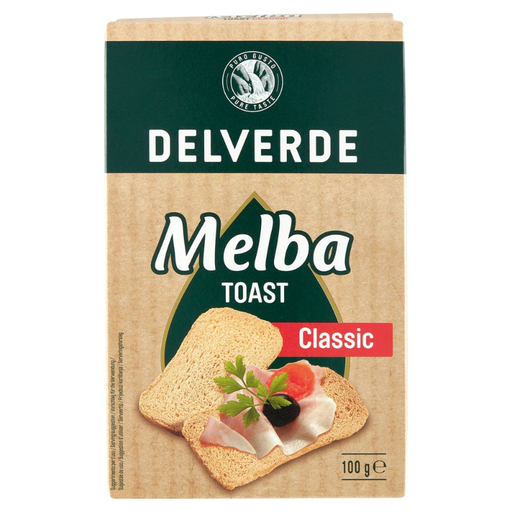 No image available
A 100 g pack is worth considering if you want to buy less toast at a time for a smaller group.
Check the current label for wheat, barley and possible traces of sesame, soya and mustard to make sure it suits everyone. Check how many pieces are in the pack if you want to plan portions in advance.
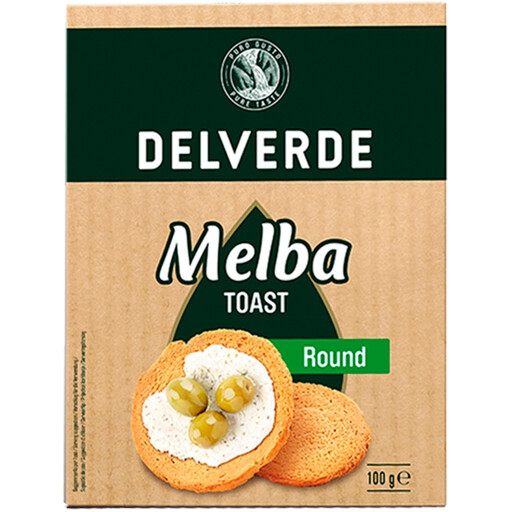 No image available
The round shape is handy when planning small topped toasts. Check that this is the shape you’re looking for, rather than thin, elongated slices.
Check the current label for wheat, barley and possible traces of sesame, soya and mustard. The hard toast may pose a choking hazard for young children.
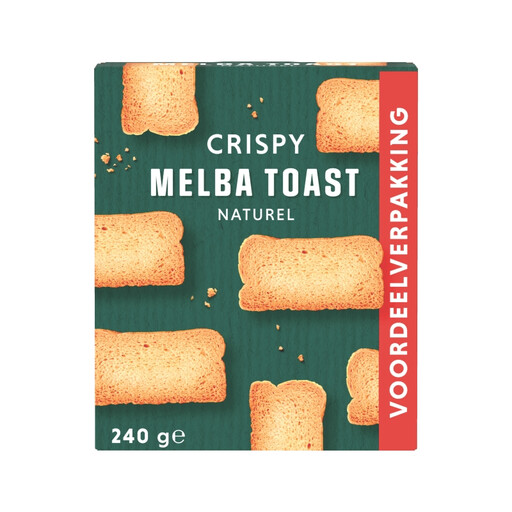 No image available
The 240 g pack may suit several shared meals. Check the number of pieces and whether there are inner packs if portion sizes and storage are important to your choice.
The allergen information for this toast is contradictory. Only buy it for guests with allergies if the current pack clearly confirms whether it contains wheat, barley and soya, among other ingredients.
Don’t assume the term means one fixed thickness. Jumbo describes Melba toast as thin, toasted slices of bread. Before buying, check the product’s shape, weight and number of pieces.
No, you can’t assume that. According to the Netherlands Nutrition Centre, bakers aren’t required to use baker’s salt. For a specific product, check the label or ask the manufacturer.
Check the full allergen information for each Melba toast you choose, including details of wheat and other grains, soya and sesame. Plain toast can contain allergens too, so always check the current pack for ingredients.
Follow the storage instructions for the product you choose and keep any opened toast well sealed. Albert Heijn recommends storing its Melba toast in a sealed tin after opening. According to the Netherlands Nutrition Centre, the printed best-before date applies to an unopened pack.
No. Treat Melba toast as toast and consider your usual bread choice separately. According to Jumbo, the wholemeal Melba toast reviewed contains 9.7 g of fibre per 100 g. For bread, the Netherlands Nutrition Centre recommends replacing white bread with wholemeal or brown bread as much as possible.