
Setting up your first store cupboard
You want to stock up on toast without buying more than you’ll use. Compare pack sizes and think about whether you’ll eat toast regularly or just occasionally.


For your first food shop, choose a pack of Melba toast that suits how much you’ll actually eat; a larger pack is no use if you won’t finish it. If you’re looking for an everyday breakfast or lunch staple, compare toast with wholemeal or brown bread too: the Netherlands Nutrition Centre recommends these types of bread over white bread. Always check the current label for ingredients, allergens and nutritional information.
You want to stock up on toast without buying more than you’ll use. Compare pack sizes and think about whether you’ll eat toast regularly or just occasionally.
A smaller pack may suit you better if you only eat toast now and then. Also check how to keep the pack dry and sealed after opening.
You’re looking for more than a crunchy addition. The Netherlands Nutrition Centre recommends wholemeal or brown bread over white bread, and identifies bread as an important source of iodine. Don’t assume toast has the same nutritional make-up without checking the label.
First decide whether toast is an occasional extra or something you’ll eat every day. Then choose a pack size and check the information on the packaging.
| What to consider | What to look for | Who it’s for |
|---|---|---|
| Pack weight for your first shop | Compare the weight of packs of the same type of product and work out how much you’re likely to use. | When I’m setting up my store cupboard, I don’t want to buy more toast than I’ll use straight away. For around 36% of consumers, getting the first shop right is a priority. |
| Pack size and storage | Choose a pack that suits how much you use, and follow the storage advice on the label once opened. | If I only eat toast occasionally, I want to avoid leaving an opened pack sitting around. For around 29% of consumers, choosing the right pack size matters most. |
| Everyday meals | Think of Melba toast as a crunchy extra, rather than bread for an everyday breakfast or lunch. | For my everyday breakfast or lunch, I want to know whether toast should replace ordinary bread. Around 21% of consumers put this choice first. |
| Label and ingredients | Check the current ingredients, allergens and nutritional information; if needed, compare the stated salt per 100 g. | If I need to avoid certain ingredients, I can’t rely on the variety name alone. For around 14% of consumers, the label is the first thing they consider. |
A 240 g pack won’t necessarily suit a one-person household or occasional use. Toast left in an opened pack can lose its crunch.
Choose a pack to suit how often you eat toast, and store it according to the instructions on the packaging once opened.
Melba toast for toppings and bread for an everyday breakfast or lunch don’t necessarily serve the same purpose. The Netherlands Nutrition Centre recommends wholemeal or brown bread in particular.
Decide when you’ll eat it, and compare toast and bread as different product choices.
Ingredients and allergens vary between products. The terms ‘multigrain’ or ‘wholemeal’ don’t tell you which allergens or nutritional values apply to a specific pack.
Check the current label before use, especially if certain ingredients aren’t suitable for you.
The own-brand range includes AH Melba toast natural in a 240 g pack, as well as an organic sesame variety.
A Melba toast brand with natural and multigrain varieties, among others; the packs checked at Jumbo contain 120 g.
An ALDI brand offering Melba Toast Naturel in a 240 g pack.
The 240 g pack of Melba toast reviewed is listed on the product page as available in store only.
An alternative to consider if you’re actually looking for Dutch crispbread (beschuit), crackers or crispbread (knäckebröd) rather than Melba toast.
This Joybuy pick is a 100 g pack of Melba toast for anyone who only eats it occasionally. If you order online, check the current delivery terms too.
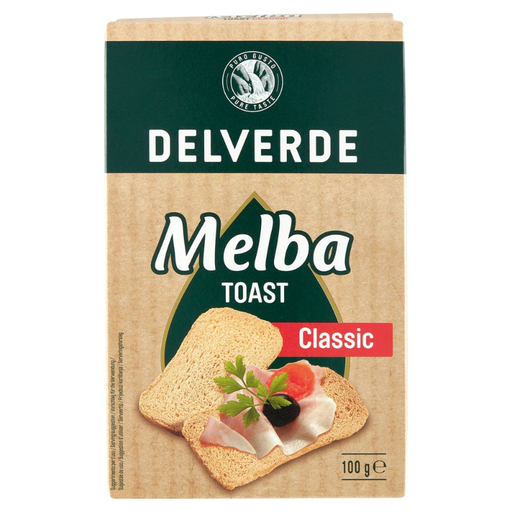 Image unavailable
The 100 g pack may suit you if you only eat Melba toast occasionally.
According to the product information, this variety contains gluten from wheat and barley. If you have an allergy, always check the current packaging.
Don’t assume that Melba toast serves the same purpose as wholemeal bread. The Netherlands Nutrition Centre recommends wholemeal or brown bread over white bread, so decide whether you’re buying toast as a crunchy extra or looking for bread for everyday meals.
You can’t assume this is true of every type of toast. The Netherlands Food and Consumer Product Safety Authority explains that iodine compounds may only be present in bread, bread substitutes and other bakery products through baker’s salt. Check the ingredients of the specific product if this matters to your choice.
Check the allergen information on the current packaging of the variety you choose. The product information reviewed for Delverde Classic Melba Toast lists gluten from wheat and barley; don’t assume this applies to other varieties.