
If you like putting together a savoury snack
Melba toast makes a handy base if you want to choose your own topping or dip. What you add also affects the nutritional value of the complete snack.


Choose Melba toast if you want a crisp base for toppings or dips; choose a digestive if you’re after a sweet biscuit to enjoy on its own. When comparing plain, wholemeal and multigrain Melba toast, check both the fibre and salt content. And when deciding on your final snack, consider the portion, toppings and allergens too.
Melba toast makes a handy base if you want to choose your own topping or dip. What you add also affects the nutritional value of the complete snack.
Wholemeal and multigrain Melba toast are options worth comparing if fibre matters to you. Remember to check the salt content and ingredients of the variety you choose as well.
A digestive is a good choice if you want a snack to enjoy without toppings, perhaps with a cup of tea or coffee. It’s a different type of product from Melba toast.
First decide whether you want toast to add toppings to or a sweet biscuit. Then compare the nutritional information per 100 g and consider how much you’ll actually eat.
| What to consider | What to check before buying | Who it matters to |
|---|---|---|
| Toast or biscuit | Choose between a base for toppings or dips and a biscuit to eat on its own. If you choose toast, factor in the topping too. | If I want to put together a savoury snack, a base I can add toppings to gives me that choice; this is a priority for around 29% of consumers. |
| Fibre | Compare the fibre and salt content per 100 g of plain, wholemeal and multigrain Melba toast. | For a crisp late-night snack, I mainly want to know how much fibre my chosen variety contains; around 29% of consumers feel the same way. |
| Portion and sugars | Compare the nutritional information per 100 g, then consider the portion you’ll actually eat, including any toppings. | When I’m considering something sweet, I want to weigh up how much I eat against the sugar content; this is the main concern for around 21% of consumers. |
| Salt and allergens | Check the salt content per 100 g and read the current ingredients and allergen information. | If certain ingredients aren’t suitable for me, I need to be able to check the packaging carefully; this matters most to around 21% of consumers. |
Melba toast is designed to be topped or served with a dip. The digestive product described by Albert Heijn is a biscuit containing ingredients such as sugar and sunflower oil.
First decide whether you want a snack to add toppings to or a sweet snack. If you choose toast, consider what you’ll put on it too.
The wholemeal Melba toast listed by Albert Heijn contains 9.7 g of fibre and 1.9 g of salt per 100 g. The multigrain variety listed by Jumbo contains 7.5 g of fibre and 1.5 g of salt per 100 g. So the name alone won’t tell you how much salt a variety contains.
Compare the fibre and salt content of the varieties you’re considering on the same basis: per 100 g.
The nutritional information for a piece of toast doesn’t automatically cover the complete snack with toppings. Ingredients and allergens also vary from product to product.
Check the current packaging if the ingredients matter to you, and assess the topping separately.
Offers wholemeal and multigrain Melba toast, among other options, for anyone looking for toast to add toppings to.
Lists both own-brand Melba toast and an own-brand digestive: two different types of snack.
Lists a Van der Meulen multigrain Melba toast for anyone looking specifically at this type of toast.
Its range includes crispbreads and crackers: related categories to explore if you’re actually looking for something other than Melba toast or digestives.
This product selection is for anyone looking for Melba toast as a base for their own toppings or dip.
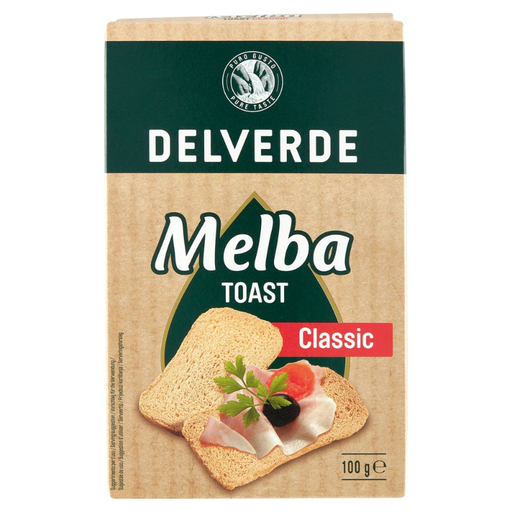 Image unavailable
For anyone looking for crisp toast as a base for their choice of toppings.
Check the packaging for the nutritional information per 100 g and allergen details before comparing this toast with another variety.
No. Albert Heijn describes Melba toast as toasted bread for toppings, and its digestive as a biscuit containing ingredients such as wholemeal wheat flour, sugar and sunflower oil. Choose between them based on the snack you want to eat.
Not necessarily: fibre is only one factor to consider. The Van der Meulen wholemeal variety listed by Albert Heijn contains 9.7 g of fibre and 1.9 g of salt per 100 g. Also consider your portion, toppings and the ingredients.
Start with the nutritional information per 100 g, then consider how much you’ll actually eat. The Netherlands Nutrition Centre explains that the nutrition table lists information such as energy, fat, sugars and salt per 100 g. If you’re having Melba toast, remember to include the toppings too.
Don’t assume this is the case for an individual toast product. The word ‘salt’ on its own doesn’t tell you whether iodised baker’s salt has been used. Check the product packaging or ask the manufacturer if this matters to your choice.