For generous or heavier toppings, a sturdy cracker is worth considering, provided its larger size works for your appetisers. Bolletje describes its Meerzaden Ontbijtcrackers as sturdy, but they are crackers, not toast slices confirmed to be thick-cut. For lots of small bites with light toppings, melba toast is a better fit. If anyone has dietary restrictions, always check the packaging of the specific variety you choose.
Which type of toast is right for you?
If you want to serve generous toppings
For a thick layer of topping, the key thing is whether the base is sturdy enough. Bolletje describes its Meerzaden Ontbijtcrackers as sturdy; bear in mind that a breakfast cracker is larger than a small canapé toast.
If you’re making lots of small bites
For a selection of light toppings, small pieces of toast are more practical for serving as individual portions. Albert Heijn describes AH Melba toast naturel as a base for toppings, while Van der Meulen describes its melba toast as thinly sliced and toasted.
If you need to consider allergens
Ask which ingredients matter to your guests and read the allergen information on the exact product packaging. A gluten-free label alone tells you nothing about the presence of ingredients such as soya, egg or sesame.
What should you look for when choosing?
First, decide how much topping each bite needs to hold. Then choose a suitable size and compare the ingredients and nutritional information of the varieties you’d like to serve.
| What to consider |
What to check when buying |
Who it matters to |
| Sturdiness for toppings |
Check the size and description of the texture. If you’re serving heavy toppings, try the product first to see if it can support them. |
If I want to serve generous toppings, I want to avoid the base breaking under each bite. Around 36% of consumers would put sturdiness top of their list. |
| Small, light bites |
Check how many pieces of toast are in the pack and whether the size suits the toppings you want to serve. |
For a platter with several types of light topping, I want to be able to serve small bites. Small, light bites are the top priority for around 22% of consumers. |
| Fibre and wholegrain |
Check the ingredients list for wholemeal flour and compare the fibre per 100 g in the nutrition table. |
When I’m looking for a wholegrain variety, its ingredients matter more to me than the thickness of the toast. Around 21% of consumers would put fibre and wholegrain first. |
| Ingredients and allergens |
Read the full ingredients and allergen information for your chosen variety, even if it is labelled gluten-free. |
If a guest needs to avoid certain ingredients, I first choose something that suits their dietary restriction, then consider the size. This would be the most important consideration for around 21% of consumers. |
Common mistakes
-
Assuming ‘crunchy’ means thick-cut
A crunchy piece of toast doesn’t have to be thick or suitable for a heavy topping. Van der Meulen describes its melba toast as thinly sliced, while Albert Heijn describes the JP by Jos Poell toast reviewed as light and airy.
If you’re serving generous toppings, don’t choose based on the name alone. Consider a sturdy cracker or try the toast with the topping you plan to serve.
-
Looking only for ‘gluten-free’
A gluten-free label doesn’t rule out other allergens. According to Albert Heijn’s product information, the Schär crackers reviewed contain soya; Jumbo lists egg and oats in the Gluten Free Bakery Holland toast reviewed.
Ask about your guest’s specific dietary restriction and check the full allergen information on the packaging of that exact variety.
-
Assuming all toast contains iodised baker’s salt
The product category doesn’t tell you which type of salt was used in an individual product. The Netherlands Food and Consumer Product Safety Authority outlines the conditions for adding iodine through baker’s salt in bakery products.
If the type of salt used matters to you, check the ingredients information or ask the manufacturer.
-
Only looking at the serving size
When you’re serving several pieces of toast, the amount you eat may differ from the serving size stated on the packaging. Toppings also contribute to what ends up on the table.
Compare the salt per 100 g listed for each variety of toast and decide how many pieces you’d like to serve each guest.
Brands to consider
JP by Jos Poell
According to Albert Heijn’s product page, the Krokant toast reviewed is a light and airy canapé toast for toppings.
- The plain variety reviewed is described as suitable for different types of topping.
- No thickness is specified for this variety. It contains wheat; according to the product information, it may also contain milk, egg and sesame.
Albert Heijn
AH Melba toast naturel is a light type of toast, supplied in a pack containing twelve small packs of six pieces.
- The small packs can be handy if you want to set out toast in portions.
- The listed ingredients include wheat, soya and barley; the product isn’t described as thick-cut.
Van der Meulen
The wholemeal melba toast reviewed is an option if you want to compare nutritional values as well as size.
- The product information on Albert Heijn’s website lists 9.7 g of fibre per 100 g for this variety.
- Van der Meulen describes the bread as thinly sliced before toasting. The listed ingredients include wheat, sesame and soya, among others.
Bolletje
The Meerzaden Ontbijtcrackers reviewed are an alternative if sturdiness matters more than a small toast size.
- Bolletje describes these breakfast crackers as sturdy.
- A breakfast cracker isn’t thick-cut canapé toast. Check the ingredients, including cereals containing gluten and sesame.
Schär
The crackers reviewed are a separate product option for anyone specifically looking for a gluten-free label.
- Albert Heijn’s product information describes these crackers as gluten-free and wheat-free.
- The crackers reviewed contain soya. A gluten-free label says nothing about whether the toast is thicker or sturdier.
Toast on Joybuy
This melba toast is worth considering if you want to serve small bites with light toppings. If you’re serving generous toppings, check separately whether the texture is sturdy enough.
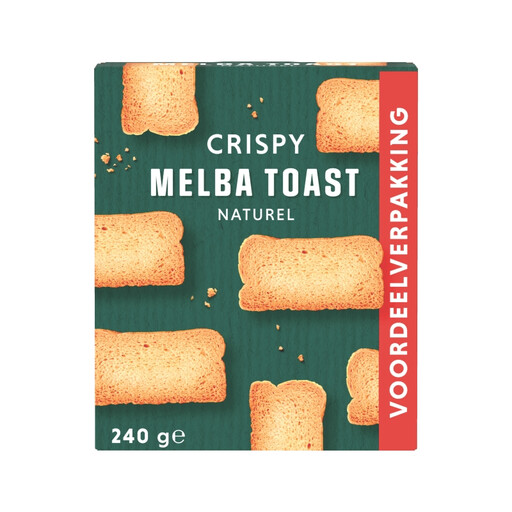 Image unavailable
Crispy Melba Toast 240 g
Melba toast to consider for small bites with light toppings.
If you’re serving heavier toppings, check the sturdiness for yourself. If you have dietary restrictions, check the current packaging: the available information about ingredients and allergens is contradictory.
View on Joybuy
Frequently asked questions
Is melba toast suitable if I’m looking for thick-cut toast?
Not if a demonstrably thick slice is your main requirement. Van der Meulen describes its melba toast as thinly sliced, while Albert Heijn describes AH Melba toast naturel as light and crunchy. Melba toast can still work well for small bites with light toppings.
When should I top the toast for my friends?
If you want to keep the toast crunchy, add moist toppings shortly before serving. Store any unused toast according to the instructions on the packaging; Albert Heijn recommends keeping opened packs of AH Melba toast naturel in a sealed tin.
Does toast in the Netherlands automatically contain iodine?
No, you can’t tell from the product name. The Netherlands Food and Consumer Product Safety Authority outlines the conditions for adding iodine through baker’s salt in bakery products. Check the ingredients information for the toast you choose or ask the manufacturer which type of salt was used.
Is gluten-free toast suitable for every guest with an allergy?
No, gluten-free doesn’t mean that other allergens are absent. According to Albert Heijn’s product information, the Schär crackers reviewed contain soya; Jumbo lists egg and oats in the Gluten Free Bakery Holland toast reviewed. So always check the full allergen information for the variety you choose.


