
Coffee drinker who loves toppings
You want to give sweet or savoury toppings centre stage with your morning coffee, so you’re looking for plain Melba toast.


Choose plain Melba toast when you want the topping to provide the flavour, a wholemeal variety if you’re looking for more fibre, or sesame toast if you’d like the toast itself to add flavour. According to the Netherlands Nutrition Centre, wholegrain products contain more fibre than white-grain products, but ‘multigrain’ does not automatically mean wholegrain. Before buying, check the ingredients, nutritional information and allergen details on the current packaging.
You want to give sweet or savoury toppings centre stage with your morning coffee, so you’re looking for plain Melba toast.
You’re considering a wholemeal variety for your regular coffee break. According to the Netherlands Nutrition Centre, wholegrain products contain more fibre than white-grain products. With multigrain toast, check separately whether it’s also wholegrain.
You’re looking for a variety such as sesame or multigrain for a coffee break with fewer toppings, so the toast itself adds more flavour.
First decide whether you want the topping or the toast itself to provide the flavour. Then check the exact grain description and the information on the packaging.
| What to look for | What to check before buying | Who it matters to |
|---|---|---|
| Neutral base | Check whether the variety is labelled plain and read the ingredients on the packaging. | When I’m adding a sweet or savoury topping, I don’t want the toast to overpower its flavour. A neutral base is the top priority for around 40% of consumers. |
| Choice of grains | Check that the product is genuinely wholegrain; compare nutritional values on the same basis, for example per 100 g. | If I eat toast with my coffee regularly, I want to know that I’m choosing a wholegrain product. Around 30% of consumers prioritise the choice of grains. |
| Flavour of the toast | Check the ingredients in sesame or multigrain varieties, and look at the allergen information for sesame. | With fewer toppings, I want the toast to have a flavour of its own. Around 20% of consumers prioritise this. |
| Allergens and dietary requirements | Read the current packaging before serving and check any dietary claim against the specific product. | If ingredients matter to me or my guests, I want to be able to check the label. For around 10% of consumers, allergens or specific dietary requirements are the first consideration. |
A product containing several types of grain doesn’t automatically mean the toast is wholegrain. According to the Netherlands Nutrition Centre, wholegrain products contain more fibre than white-grain products; the actual type of product matters when making this comparison.
Look for the wholegrain description and check the ingredients and nutritional values on the label.
Albert Heijn says that product ingredients, nutritional values and allergen information can change. That means an earlier product listing may not match the pack you’re serving.
Read the packaging of the product you actually buy, especially if certain ingredients or allergens matter to the people eating it.
Sesame gives the toast its own flavour, which may not work with every subtle topping. The Netherlands Food and Consumer Product Safety Authority also highlights the importance of clear allergen information on labels.
Choose sesame if you want that flavour in the combination, and check the current allergen information before serving the toast.
A cracker and Melba toast are different types of product. A suitable dietary label doesn’t, in itself, tell you anything about the size or whether it will work with your chosen topping.
Check the descriptions on the packaging and consider separately whether the cracker suits the coffee break you have in mind.
Jumbo and Albert Heijn list Van der Meulen Melba toast in varieties including plain, wholemeal, multigrain, sesame and 7-grain.
Albert Heijn lists its own-brand plain Melba toast and an organic variety with sesame seeds.
Jumbo lists its own-brand Melba toast with tomato and basil, among other options, as well as Melba varieties from Van der Meulen.
Bolletje lists rusks, crackers and snacks in its range. These are worth considering if you’re looking for something different from Melba toast to enjoy with your coffee.
These Joybuy products are Melba toast options for anyone looking for a base for toppings with their morning coffee. As well as the size, check the ingredients and allergens on the packaging.
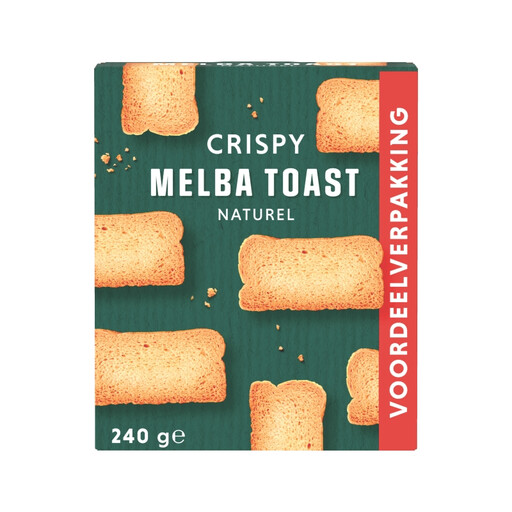 No image available
Melba toast to consider as a base for toppings with your coffee. The pack contains 240 g; check the current ingredients and allergens before serving.
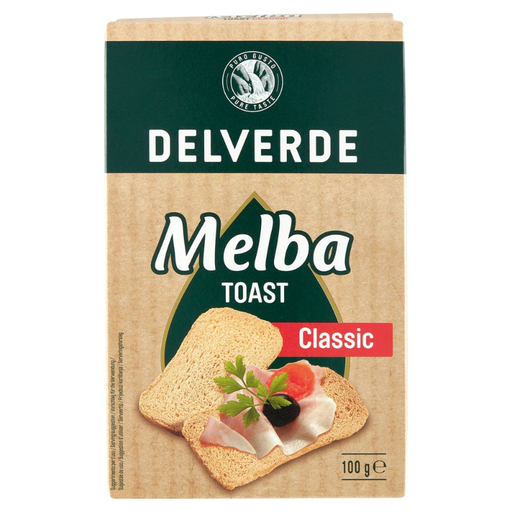 No image available
Classic Melba toast to pair with sweet or savoury toppings. The pack contains 100 g; read the current allergen information and supervise young children when they’re eating hard, crunchy toast.
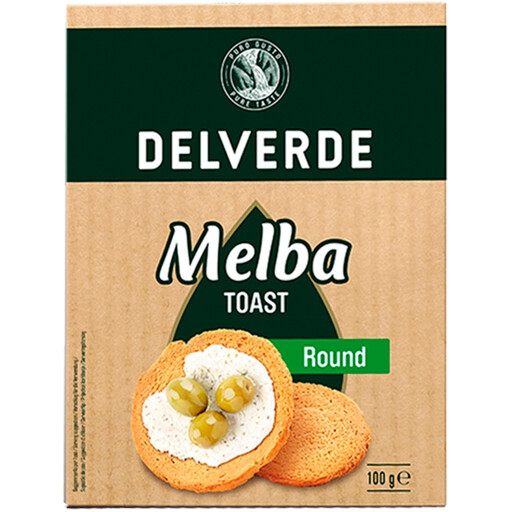 No image available
The round shape can be handy when you want to serve small pieces of toast with toppings. The pack contains 100 g; check the current allergen information and supervise young children when they’re eating hard, crunchy toast.
Not if you’re mainly looking for a neutral base for toppings; plain toast may suit your taste better. According to the Netherlands Nutrition Centre, wholegrain products contain more fibre than white-grain products. Check the packaging to make sure the toast is labelled wholegrain.
Check whether the sesame flavour works with your topping and read the current allergen information. The Netherlands Food and Consumer Product Safety Authority stresses that allergens must be clearly listed on the labels of prepacked foods.
Use the website to compare products, but check the packaging before serving. Albert Heijn says that product information, including ingredients and allergens, can change.