
Parents who want to serve wholemeal
You’re looking for toast labelled as wholemeal, and want to be able to check the ingredients and allergen information on the pack too.


If you want to serve wholemeal Melba toast, choose a pack that is clearly labelled ‘wholemeal’. For a group of fussy eaters, serving wholemeal and plain Melba toast in separate bowls may be more practical than trying to find one product that suits everyone. Ask about allergies in advance, and check the ingredients and allergen information on both packs.
You’re looking for toast labelled as wholemeal, and want to be able to check the ingredients and allergen information on the pack too.
You want to cater for children who prefer a familiar type of toast, while still offering a wholemeal option to the rest of the group.
You’re serving snacks to several children and want to find out in advance about any allergies or other dietary requirements. The Netherlands Nutrition Centre advises asking about these.
A good fit if: the children are happy to eat wholemeal toast and a wholegrain base is your priority.
Consider: ‘multigrain’ doesn’t mean the same as ‘wholemeal’; check the allergens in your chosen product too.
A good fit if: a familiar option for fussy eaters is your main priority.
Consider: plain doesn’t automatically mean wholemeal or allergen-free.
A good fit if: you want a mixed group to choose between two clearly distinguishable types of toast.
Consider: two bowls mean checking the ingredients separately and paying attention to the toppings on both.
Decide which toast options are right for the children, ask about dietary requirements, then compare packs to make sure you have enough.
| What to consider | What to check when buying | Who it matters to |
|---|---|---|
| Wholegrain base | Look for the word ‘wholemeal’ and read the ingredients; don’t assume ‘multigrain’ means the same thing. | If I want to serve wholemeal toast, that needs to be clear on the pack. This is the top priority for around 40% of consumers. |
| Choice for fussy eaters | Check the variety, shape and any seeds; consider serving plain and wholemeal toast in separate bowls. | When children have different preferences, I don’t want to limit everyone to one type of toast. Around 30% of consumers put this choice first. |
| Allergens and dietary requirements | Ask about requirements in advance, then check the ingredients and allergen information on the packs you buy. | When I’m catering for a group of children, I want to know which snacks are suitable for each of them. This is the main consideration for around 20% of consumers. |
| Portions and packaging | Compare the net weight and, if stated, the number of pieces or individual packs. | I want to prepare enough snacks without having lots left over. The quantity needed is the first consideration for around 10% of consumers. |
Using several types of grain doesn’t automatically make a piece of toast wholemeal. According to the Netherlands Nutrition Centre, a product can only be called ‘wholemeal’ if it is made entirely from wholemeal flour.
Use the product description as your first guide, then read the ingredients list.
Ingredients vary between products. Albert Heijn lists wheat and sesame, among other ingredients, in Van der Meulen Melba Toast Wholemeal; this information doesn’t necessarily apply to other types of toast.
Ask about allergies before the party, check the current label and keep the packaging to hand while serving the snacks.
These product ranges and shop selections give you a starting point for comparing plain and wholemeal options. Always check the specific pack.
The Melba range includes plain and wholemeal toast to compare.
Albert Heijn’s range includes its own-brand plain Melba toast.
Jumbo lists several Van der Meulen Melba toast varieties, including plain, wholemeal and round options.
ALDI lists plain and wholemeal options; Sun Snacks Toast Cups Naturel is a separate plain variety.
Lidl lists Tastino Luxe Crackers Volkoren as a crisp alternative to consider separately.
You can consider these Melba toast products as separate options alongside a wholemeal variety of your choice. Check the pack to see which grain description and allergens apply to the specific product.
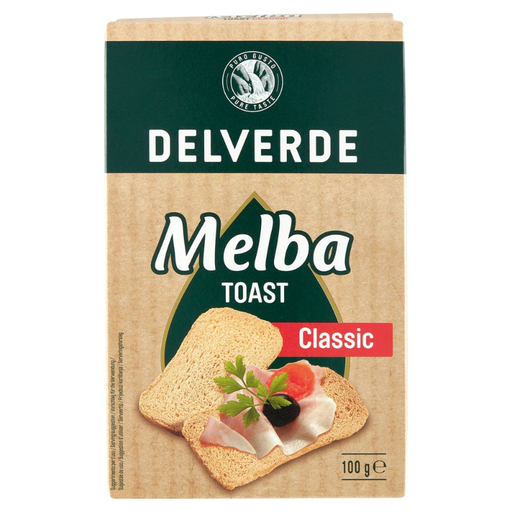 Image unavailable
Consider this Melba toast if you’d like to put together a second bowl alongside a wholemeal option. The pack contains 100 g; check the label for the grain description, allergens and number of pieces. Supervise young children while they’re eating hard, crunchy toast.
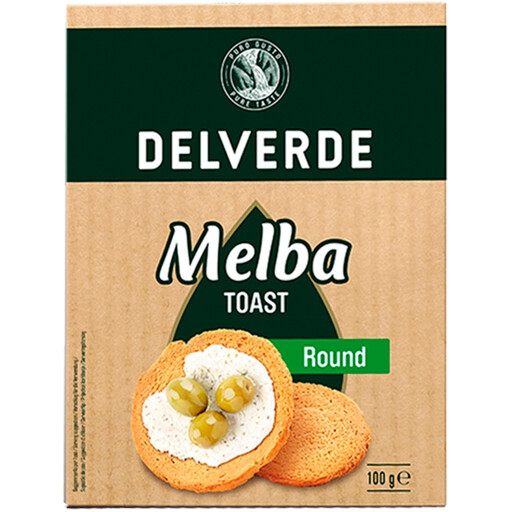 Image unavailable
Compare this round Melba toast if presentation matters for your party snacks. The pack contains 100 g; check the label for the grain description, allergens and number of pieces. Supervise young children while they’re eating hard, crunchy toast.
No. ‘Multigrain’ means that several types of grain have been used; it doesn’t mean the product is made entirely from wholemeal flour. According to the Netherlands Nutrition Centre, it’s the latter that determines whether a product can be labelled ‘wholemeal’.
Yes. Ask in advance about any allergies or other dietary requirements the children may have. The Netherlands Nutrition Centre recommends doing this when preparing party treats for children; then check the labels on the products you actually buy.
It varies by product. Check the pack for cereals containing gluten and any other allergens, among other things. The Netherlands Food and Consumer Product Safety Authority explains how allergens are listed on the labels of prepacked foods. Don’t assume the ingredients are the same as those in another variety.
Base it on the number of children and whether the toast is one of several snacks. Then compare the net weight and the number of pieces or individual packs, if this information is shown on the packaging.