
Regular melba toast eaters
If you often have melba toast for lunch or with drinks, you could consider a larger pack. Just think about whether you’ll finish it after opening.


If you buy melba toast as part of your regular shop, start by choosing a pack that suits how often you eat it. Then compare the same type of product and check the label if wholegrain, ingredients or allergens matter to you. A larger pack is little use if you won’t finish it.
If you often have melba toast for lunch or with drinks, you could consider a larger pack. Just think about whether you’ll finish it after opening.
If you only eat melba toast now and then, a smaller pack may suit you better than a bulk pack.
Wholegrain claims, ingredients, nutritional information and allergens may all influence your choice between different types of melba toast.
First decide what type of toast you want and how much you’ll use. Then check the pack for each option and, if the ingredients matter to you, read the label.
| What to consider | What to check | Who it matters to |
|---|---|---|
| Regular use | Compare the pack weight of the same type of melba toast and consider whether you’ll finish it. | If I eat melba toast often, I want a pack that suits my needs without leaving any to go to waste. This is likely to be the main consideration for around 50% of consumers. |
| Right-sized portion | Check the weight, storage instructions after opening and where you can buy the product. | For a get-together, I don’t want to buy more toast than I expect to use. Getting the right amount is likely to be the priority for around 30% of consumers. |
| Ingredients | Check the wholegrain claim, ingredients and allergens; compare fibre and salt per 100 g. | When choosing between options, I want to know which ingredients they contain and which allergens are listed. This is likely to be the main consideration for around 20% of consumers. |
The colour of the toast or a multigrain label doesn’t tell you whether it’s wholegrain. According to the Netherlands Nutrition Centre, toast can only be called wholegrain if it is made entirely from wholemeal flour.
Check the product description and, if needed, read the ingredients list too.
Products from the same brand can have different ingredients. Jumbo lists wheat, sesame, barley, rye and soya as allergens in Van der Meulen Melba Wholegrain Toast.
Check the allergen information on the pack of the product you’re buying.
ALDI lists Sun Snacks plain melba toast in a 240 g pack.
Albert Heijn lists 240 g packs of AH plain melba toast in its range of snacks to serve with drinks.
Jumbo lists Van der Meulen plain and wholegrain Melba Toast in 120 g packs.
Bolletje’s range includes products such as rusks, crackers and crispbread.
Lidl lists 240 g melba toast as a product available in store only.
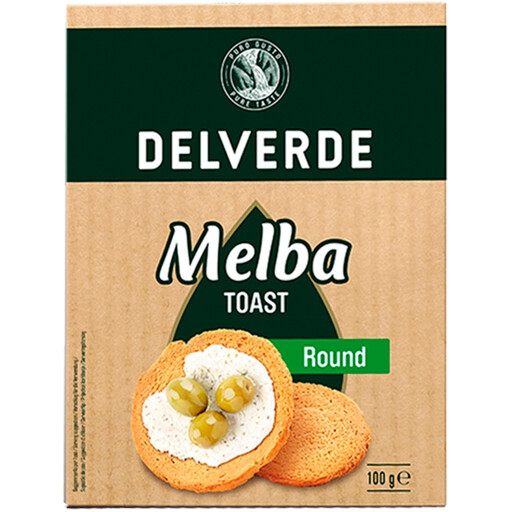
This 100 g pack of melba toast is an option if you’re looking for a smaller amount. Compare the pack size with how much you use and check the label for the ingredients.
 No image available
The 100 g pack may suit you if you only eat melba toast occasionally.
If they affect your choice, check the current pack for ingredients, allergens and the product description.
Choose an amount that suits how often you eat melba toast. Compare packs of the same type of product and consider whether you’ll finish it after opening.
No. The colour and the multigrain label don’t prove that toast is wholegrain. The Netherlands Nutrition Centre explains that toast can only be called wholegrain if it is made entirely from wholemeal flour. Check the product description and ingredients list.
Follow the storage instructions on the pack of your product. For Conimex Delverde Melba Toast Round, Joybuy recommends keeping the pack tightly closed after opening and storing the toast in a cool, dry place.