
Anyone putting together a breakfast platter
You want to serve a range of toppings in bite-sized portions. Plain toast leaves room for both sweet and savoury combinations.


Choose plain Melba toast if you’re serving a variety of toppings, wholemeal Melba toast if you mainly want to compare fibre content, and flavoured toast if you want the toast itself to add to the flavour combination. For every variety, check the nutritional information and allergens on the packaging; a premium look won’t tell you anything about these.
You want to serve a range of toppings in bite-sized portions. Plain toast leaves room for both sweet and savoury combinations.
You want the toast itself to add flavour. In that case, matching it to the toppings you plan to serve matters more than choosing a base that goes with everything.
You compare fibre and salt, or need to take ingredients and allergens into account. The exact variety and packaging matter more than the word ‘premium’.
Decide whether the toast is mainly a base for toppings or should add flavour itself. Then compare the nutritional information and ingredients of the varieties that fit the bill.
| What to consider | What to check when buying | Who it matters to |
|---|---|---|
| Plain base | Check the flavour and shape; look for portion packs if you’re serving the toast in small quantities. | If I’m serving both sweet and savoury toppings, I don’t want the toast to dictate the combination. For around 40% of consumers, a plain base is the top priority. |
| Flavour of the toast | Compare the flavourings listed with the toppings you plan to serve. | With simple toppings, I want the toast itself to add flavour, as long as it doesn’t clash with what goes on top. Around 30% of consumers prioritise this role for flavour. |
| Label and nutritional information | Compare fibre and salt per 100 g. If you need to avoid allergens or gluten, read the label for the exact variety. | If fibre, salt or certain ingredients determine my choice, I want to know what’s in the pack before buying. This is the top priority for around 30% of consumers. |
Premium packaging doesn’t tell you how much fibre a toast contains. Regular Melba toast and a wholemeal variety don’t necessarily have the same fibre content.
If fibre content is important to your choice, compare the nutritional information per 100 g on the packs you’re considering.
Toast flavoured with ingredients such as olives or herbs plays a part in the combination itself. It might distract from toppings that you want to serve on a neutral base.
For a varied platter, choose a plain base and serve flavoured toast with toppings that you’ve deliberately matched to its flavour.
A gluten-free cracker can still contain other allergens. For example, the gluten-free Scrocchi variety described by Albert Heijn contains soya.
If you need gluten-free food, check the claim on the exact pack and read the full ingredients and allergen information too.
According to the Netherlands Nutrition Centre, using baker’s salt in baking isn’t compulsory. So you can’t tell which salt has been used just because a product is called toast.
If baker’s salt is relevant to your purchase, check the ingredients information for the toast you’ve chosen.
Stocks AH Plain Melba Toast and a range of other luxury toast products.
Includes wholemeal Melba toast with sesame, for anyone who wants this style of toast and to compare fibre content.
Stocks crisp plain toast and a variety with green olives and basil.
Stocks Melba toast and party toast.
Stocks Sun Snacks Plain Melba Toast as a neutral toast option.
Worth considering if you’re looking at other breakfast bases as well as toast, such as crackers or crispbread.
This Melba toast suits anyone looking for a plain base to serve with a variety of toppings at Sunday breakfast.
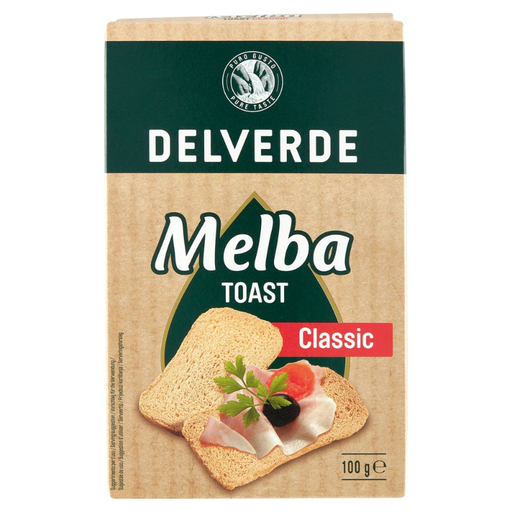 Image unavailable
Plain Melba toast for a breakfast platter with a variety of sweet and savoury toppings.
The pack contains 100 g. The product information lists wheat and barley, and possible traces of sesame, soya and mustard; if you have allergies, check the current label.
Once opened, store the toast in a tightly sealed container in a dry place to keep it crisp.
No, the word ‘premium’ says nothing about fibre content on its own. If fibre is one of your buying criteria, compare the nutritional information per 100 g for the exact varieties.
No, you can’t assume that all toast is made with baker’s salt. The Netherlands Nutrition Centre says that using baker’s salt in baking isn’t compulsory; check the ingredients information if this matters to your choice.
Don’t serve regular Melba toast without checking the label on the exact pack first. The regular and wholemeal varieties mentioned contain wheat and barley; if you need gluten-free food, look for a product explicitly labelled gluten-free and check for other allergens too.
Store opened Melba toast in a tightly sealed container in a dry place. A sealed tin is recommended for AH Melba Toast; Delverde toast should also be stored in a dry place after opening.
Because the toppings can also contribute to the amount of salt on your breakfast platter. Compare the salt content per 100 g of the toast varieties and consider what you plan to serve on top.