
Hosting guests with a variety of toppings
If you’re serving dips and toppings inspired by different cuisines, plain Melba toast lets the toppings shine. Jumbo describes the variety reviewed as suitable for toppings and dips.


Choose plain Melba toast when you want a variety of toppings to provide all the flavour. Multigrain Melba toast is an option if you want to consider the grains and fibre content; flavoured party toast works better with simple toppings when you want the toast to add flavour. For every variety, check the current ingredients and allergen information on the packaging.
If you’re serving dips and toppings inspired by different cuisines, plain Melba toast lets the toppings shine. Jumbo describes the variety reviewed as suitable for toppings and dips.
With simple toppings, toast flavoured with rosemary, olive oil, or tomato and herbs can bring some of the flavour itself. Consider how those flavours will work with the rest of your menu.
If your guests need to avoid certain allergens, or you want to consider fibre, salt or iodine, compare the packaging information for the variety you choose. Melba toast and flavoured toast can differ in the grains used and the allergens they may contain.
First, match the flavour of the toast to your toppings. Then compare the ingredients and nutritional information for the varieties that suit your menu.
| What to consider | What to look for | Who it matters to |
|---|---|---|
| Neutral base | Check whether the toast is plain and intended for toppings or dips. Ideally, add moist toppings just before serving. | When serving a variety of strongly flavoured toppings, I want the toast to stay in the background. A neutral base is the top priority for around 42% of consumers. |
| Flavour in the toast | Compare flavourings such as rosemary or tomato with the toppings you’re serving. | If my toppings are simple, I’m happy for the toast itself to add flavour. Around 33% of consumers put the toast’s own flavour first. |
| Label and nutritional information | Read the ingredients and allergen information; compare fibre and salt per 100 g. Check separately for any mention of baker’s salt. | If allergens are a consideration or I want to compare nutritional values, I need to be able to check the packaging. Around 25% of consumers give this label information top priority. |
Rosemary or tomato in the toast will change the flavour of the whole appetiser. That can work well with a simple topping, but less so if you want the herbs in a topping to stand out.
For a table of very different flavours, choose a plain base and add a flavoured variety only if it complements a particular topping.
Different types of toast may contain different grains, soya or sesame. Warnings about possible traces can also vary from product to product.
Read the ingredients and allergen information on the packaging of the exact variety you’re buying and serving.
According to the Netherlands Nutrition Centre, bakers aren’t required to use baker’s salt. The style or name of a toast product therefore doesn’t tell you whether iodised salt was used.
If iodine content is relevant to your choice, check the ingredients list or ask the manufacturer.
Lidl lists the Melba toast and party toast varieties reviewed as available in store only. An online listing doesn’t necessarily mean a variety is available at your local branch.
Check current availability before planning your menu around one particular type of toast.
The Melba varieties described by Jumbo include plain, multigrain and organic sesame toast.
Albert Heijn’s luxury toast range includes party toast and toast crackers.
Bolletje Ciabatta Crackers Tomato & Herbs are snack crackers flavoured with tomato and herbs, rather than plain Melba toast.
Jumbo lists both Van der Meulen Melba toast and its own-brand varieties.
Lidl lists Melba toast and party toast, including plain and sesame varieties.
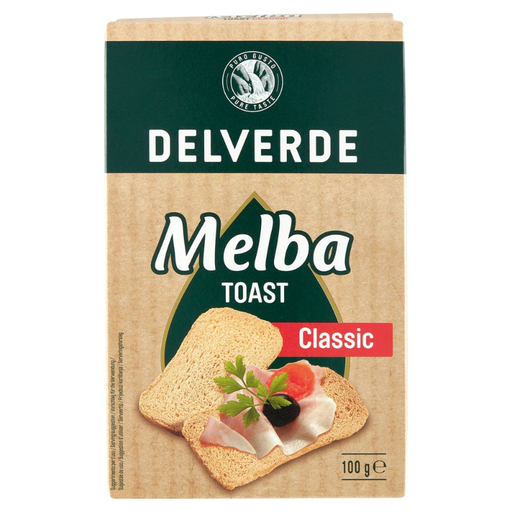
This Melba toast is a good choice if you’re looking for a neutral base for a variety of international toppings. Check the packaging against any ingredients and allergens relevant to your guests.
 No image available
Consider this Melba toast as a base for a variety of toppings when you want their own flavours to shine.
100 g pack. If you have allergies, check the current ingredients and allergen information on the packaging; also look for any mention of baker’s salt.
No. The plain Melba toast described by Jumbo contains wheat, barley and soya; the ingredients may differ in other varieties. Check the ingredients and allergen information on the current packaging of the product you’re serving.
No, you can’t tell from the product category. According to the Netherlands Nutrition Centre, bakers aren’t required to use baker’s salt. Check the ingredients information for the toast you’ve chosen or ask the manufacturer.
Ideally, add the topping just before serving so it doesn’t sit on the crisp base for too long. If you’re preparing appetisers in advance, keep the toast and topping separate until then.
Look for an explicit gluten-free statement on the packaging, and read the ingredients and other allergen information too. Don’t assume it’s suitable based on the product name or type of toast alone.