Choose plain melba toast if you’re serving a range of toppings. If you’d like the toast itself to add more flavour and crunch, consider savoury toast. The search term ‘medium sliced’ doesn’t tell you how thick a piece of toast is, so check the product description and compare the packaging, allergen and nutritional information too.
Which toast is right for you?
For hosts serving lots of toppings
If you want to serve fish, cheese, charcuterie and vegetarian spreads on small pieces of toast, plain melba toast makes a good base. A pack with individually wrapped portions can be handy if you don’t need to use them all at once.
For hosts looking for a toast with more flavour
If you’re mainly serving simple toppings or dips, you could choose savoury toast with a more distinctive flavour of its own. For heavier or wetter toppings, check that the shape and texture are suitable for your bites.
For shoppers checking ingredients
If you’re buying for guests, you’ll want to check the ingredients and allergens for each variety. Salt and fibre content also vary between the plain, multigrain and savoury toast varieties reviewed.
What should you look for when choosing?
First, decide what you want the toast to do: provide a neutral base or add flavour of its own. Then check the label and work out how much you’ll need for your group.
| What to consider |
What to check when buying |
Who it matters to |
| Toppings and crunch |
Compare melba toast and savoury toast for flavour, shape and suggested uses. If you’re serving heavy or wet toppings, consider whether the toast looks sturdy enough. |
I’m serving lots of different toppings and don’t want the base to dictate the flavour each time. Around 42% of consumers would put choosing a suitable base for their toppings first. |
| Ingredients and nutritional value |
Check the current allergen information and compare fibre and salt per 100 g across the varieties you’re considering. |
I need to be able to check which ingredients are in the toast I’m serving to guests. Around 33% of consumers would prioritise checking ingredients and nutritional information. |
| Pack contents |
Compare the weight in grams and, where listed, the number of pieces of toast or individual packs. |
I want to put out enough toast without opening more packs than necessary. The amount needed would be the main consideration for around 25% of consumers. |
Common mistakes
-
Assuming ‘medium sliced’ means a set thickness of toast
The term alone won’t tell you whether you’re getting thin melba toast or savoury toast in a different shape. You’ll notice the difference most when you have a particular type of topping in mind.
Check the product description and packaging. Match the shape and texture to your toppings rather than choosing based on the search term alone.
-
Treating ‘plain’ or ‘multigrain’ as allergen information
The Van der Meulen multigrain variety reviewed contains wheat, oats, rye, soya and sesame, among other ingredients. Allergens may also be listed among the ingredients or as possible traces in plain toast.
Check the ingredients and allergen information on every pack, especially if you’re buying for guests with allergies.
-
Assuming the type of toast tells you about its iodine or salt content
The name of a type of toast won’t tell you what kind of salt has been used or how much salt the product contains per 100 g.
Compare the nutritional information on the packaging. If iodine content matters to you, check the information for the specific product.
Brands to consider
Albert Heijn
The own-brand products reviewed offer a choice between AH Melba Toast Naturel as a neutral base and AH Borreltoast zeezout for those who want the toast itself to add flavour too.
- According to Albert Heijn, AH Melba Toast Naturel contains 12 packs of 6 pieces of toast in a 240 g pack.
- AH Borreltoast zeezout lists 2 g of salt per 100 g. Check the current allergen information for both varieties.
Van der Meulen
The melba toast reviewed is available in plain and multigrain varieties. This lets you weigh up a neutral base against a variety made with different grains and seeds.
- Jumbo lists 45% wholemeal wheat flour and 7.5 g of fibre per 100 g for Van der Meulen Melba Meergranen Toast.
- The multigrain variety reviewed contains sesame, soya and several gluten-containing grains, among other ingredients. Read the label if you’re buying for guests with allergies.
JP by Jos Poell
JP by Jos Poell Krokant toast is an option for those who want to compare a crunchy toast with melba toast and savoury toast.
- The pack reviewed contains 100 g; the ingredients list includes wheat flour, sunflower oil and salt, among other ingredients.
- According to Albert Heijn’s product information, this toast contains wheat and may contain traces of milk, egg and sesame.
Melba toast for Friday drinks at Joybuy
These products are melba toast options for anyone looking for a base for party snacks. Compare the pack sizes and check the current allergen information. Choose between melba toast and savoury toast based on your toppings and the flavour you want the toast itself to bring.
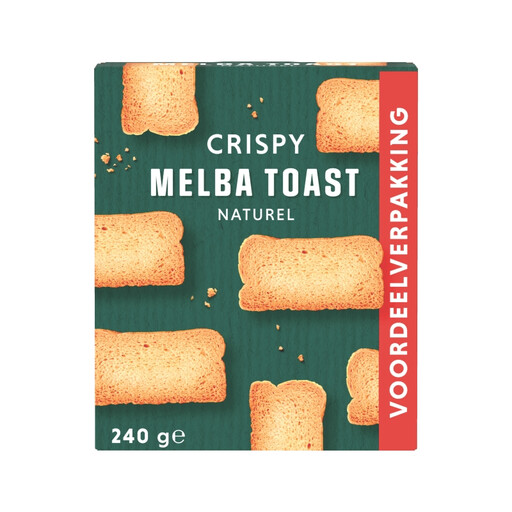 Image unavailable
Crispy Melba Toast, 240 g
Melba toast for anyone who wants to serve a range of toppings on a party platter. The pack contains 240 g.
Before serving to guests with allergies, check the current packaging: the product information available contains conflicting allergen details.
View at Joybuy
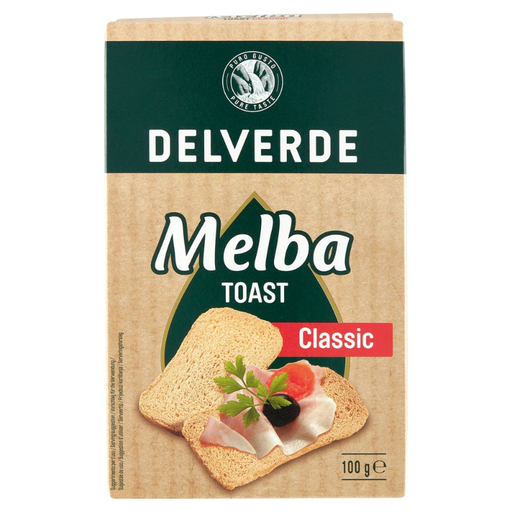 Image unavailable
Delverde Classic Melba Toast, 100 g
Melba toast to consider as a base for party snacks. The pack contains 100 g.
Joybuy’s product information lists gluten from wheat and barley. Check the current packaging if you’re buying for guests with allergies.
View at Joybuy
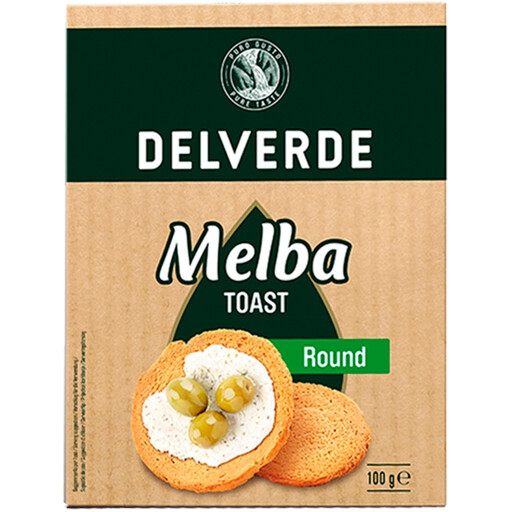 Image unavailable
Conimex Delverde Melba Toast Round, 100 g
Round melba toast for anyone who wants to consider the shape of the toast when putting together party snacks. The pack contains 100 g.
Check the ingredients and allergen information on the current packaging before serving.
View at Joybuy
Frequently asked questions
Is melba toast the same as savoury toast?
No, the names don’t necessarily refer to the same type of toast. Albert Heijn describes its Melba Toast Naturel as a base for toppings and its Borreltoast zeezout as toast to serve with things such as cheese and dips. Choose according to your toppings and the flavour you want the toast itself to have.
How should I store toast after opening?
Follow the instructions on the packaging of the product you buy. For AH Melba Toast Naturel, Albert Heijn recommends storing it in a sealed tin after opening. For AH Borreltoast zeezout, it says to close the pack securely after use and store the product in a cool, dark, dry place.
Where can I check allergen information when buying toast for guests?
Check the ingredients list and allergen information on the current packaging for each variety. The Netherlands Food and Consumer Product Safety Authority explains that allergens specified by law must be clearly identified on the label. A name such as ‘plain’ or ‘multigrain’ is no substitute for checking.
How do I compare the salt content of melba toast and savoury toast?
Compare the amount of salt per 100 g on both packs, and consider how much toast you plan to serve. Albert Heijn lists 1.93 g of salt per 100 g for AH Melba Toast Naturel and 2 g per 100 g for AH Borreltoast zeezout; these figures apply to these specific varieties.


