If you want to serve aniseed sprinkles on bread instead of Dutch rusks, choose pre-sliced bread with intact slices that suit your topping. If you’ll also eat the bread regularly afterwards and prefer wholemeal, check that the packaging labels it ‘wholemeal’. Also consider the quantity and, if relevant to you, the ingredients and allergen information.
Who is this choice relevant to?
Everyday wholemeal shopper
You’re looking for bread for serving toppings and for the days afterwards. If wholemeal flour and fibre matter to you, check the type of bread and its nutritional information. According to the Netherlands Nutrition Centre, wholemeal bread is made from 100% wholemeal flour.
Planner of a celebratory treat
You want to serve aniseed sprinkles or another sweet topping on slices of bread without having to cut it yourself. Check whether the bread is pre-sliced, and make sure the slices are intact and the thickness is right for you.
Label-conscious shopper
You want to know which allergens are listed or whether baker’s salt has been used before you buy. Read the packaging on pre-packed bread; for unpackaged bread, ask for product information.
What should you look for when choosing?
First decide whether you’re mainly looking for bread for everyday use or for serving toppings. Then check the slices and choose an amount you can use or store after your guests have left.
| What to consider |
What to check when buying |
Who it matters to |
| Type of bread and fibre |
Look for the label ‘wholemeal’ and, if you wish, compare the fibre content per 100 g in the nutritional information. |
I want to eat the bread regularly after serving toppings for a celebration, and I deliberately choose wholemeal flour. For around 42% of consumers, everyday bread choices are the main priority. |
| Easy-to-handle slices |
Check whether the bread is sliced and whether the slices are intact and suitable for your topping; ‘fine’ doesn’t in itself tell you how thick the slices are. |
When serving, I want slices I can top without cutting them myself. Around 33% of consumers prioritise this practicality. |
| Quantity and availability |
Compare half loaves and whole loaves, and check where you can buy or collect the option you’ve chosen. |
I’m buying for a small gathering and don’t want to come home with more bread than I can use. For around 25% of consumers, quantity and being able to get the bread in time are the main concerns. |
Common mistakes
-
Reading ‘fine’ or ‘brown’ as ‘medium-thick sliced wholemeal’
‘Fine’ doesn’t tell you how thick the slices are. Bread’s colour alone doesn’t tell you whether it’s wholemeal, either.
Check the actual slices before serving toppings. If you want wholemeal bread, look specifically for the label ‘wholemeal’ on the packaging.
-
Assuming every loaf contains baker’s salt
According to the Netherlands Nutrition Centre, baker’s salt contains added iodine, but bakers don’t have to use it.
If baker’s salt matters to your choice, check the ingredients or ask the baker which salt they use.
-
Buying a whole loaf for a small gathering
If you only need a few slices, you’ll have the rest left over. The Netherlands Nutrition Centre says you can store wholemeal bread in the freezer.
Consider buying half a loaf or freezing slices in portions if you won’t use the bread quickly.
-
Checking for allergens only on packaged bread
Even when bread isn’t packaged, you’ll want to know which ingredients and allergens matter to you before buying.
Read the label on packaged bread, and ask for the allergen information for the specific product when buying unpackaged bread. The Netherlands Food and Consumer Product Safety Authority explains which allergens must be listed on labels.
Brands to compare
These retailers’ ranges give you a starting point for comparing types of bread and packaging. For the loaf you choose, check separately whether it’s sliced and whether the slices suit your topping.
Albert Heijn
Albert Heijn lists various types of bread online, including sliced bread.
- You can compare product options before making your choice.
- Check the slices on the specific loaf; ‘sliced’ doesn’t tell you whether they’re the thickness you want.
Jumbo
Jumbo lists fine wholemeal loaves, including half loaves.
- A half loaf can be a good fit if you’re buying for a small group.
- Don’t take ‘fine’ as confirmation that the slices are medium-thick.
Lidl
Lidl describes Knip wholemeal as sliced bread weighing 800 g.
- This product is listed as sliced and its pack weight is provided.
- Lidl says this product is sold in store; check the slices and current range there.
Aldi
ALDI offers a range of fresh daily bread, including sliced loaves.
- For your chosen product, you can check the type of bread and whether it’s sliced.
- Check which option is available at your local store.
PLUS
PLUS lists round fine wholemeal bread in half and whole loaves.
- Choosing between a half and a whole loaf helps you decide how much to buy.
- Check each product to see whether it’s sold sliced and what the slices look like.
Dirk
Dirk lists types of bread including wholemeal, white, multigrain and sourdough.
- Start with the type of bread you want and look for a suitable product.
- Check the packaging, slices and availability at your local branch for that product.
Bread products on Joybuy
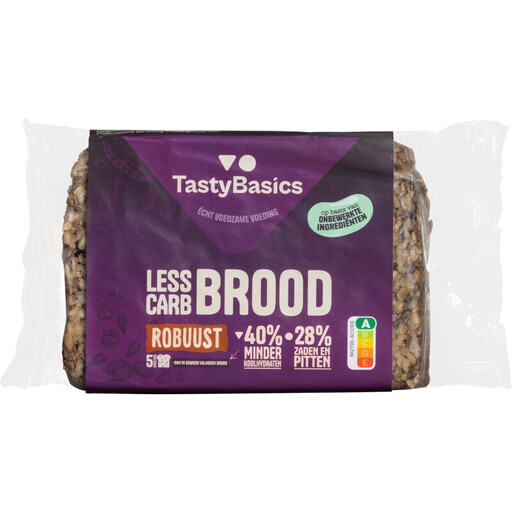
This five-piece pack is an option to consider if you’re looking for bread for a small gathering. Check the slices, type of bread and packaging information to make sure it suits your needs.
 No image available
TastyBasics Rustic Bread, 5 pieces
The five-piece pack could be suitable for a small gathering. Before buying, check that the shape and thickness are right for serving bread with aniseed sprinkles. Read the packaging if the type of bread or allergens matter to you.
View on Joybuy
Frequently asked questions
Does ‘wholemeal’ mean the bread is made entirely from wholemeal flour?
Yes. According to the Netherlands Nutrition Centre, bread labelled ‘wholemeal’ is made from 100% wholemeal flour. Check the label on the bread you want to buy; its colour or a name such as ‘fine’ isn’t a substitute for checking.
Does all bread contain iodine from baker’s salt?
No. The Netherlands Nutrition Centre says iodine is added to baker’s salt, but using baker’s salt isn’t compulsory. Check the ingredients on your chosen bread or ask the baker.
How can I check for allergens in unpackaged bread?
Ask for the allergen information for the specific bread before you buy it. You can check the label on pre-packed bread; the Netherlands Food and Consumer Product Safety Authority explains the requirements for listing allergens on food labels.
How can I store wholemeal bread if I only need a few slices?
It’s best to freeze the slices you want to use later in individual portions. The Netherlands Nutrition Centre says wholemeal bread keeps for 2 to 4 days in a kitchen cupboard and 1 to 3 months in the freezer. Always check the bread before using it.


