If you want to make a sandwich or toastie quickly, start with pre-sliced bread and check that the slices are the thickness you’re after: the word ‘sliced’ alone doesn’t mean the bread is medium-sliced. Choose wholemeal specifically if fibre is your priority. If you only eat bread occasionally, look for a half loaf or freeze portions. Always check the label on the product you choose for ingredients, allergens and iodised baker’s salt.
Who might find this choice useful?
Anyone who wants to make something quickly late in the evening
If you don’t want to slice bread before making a sandwich or toastie, look for a pre-sliced loaf. Check the slices themselves if a medium thickness is important: ‘sliced’ doesn’t tell you how thick they are.
Anyone looking for a wholemeal base
If you want to focus on the type of bread and its fibre content for a late-night snack, look for the word ‘wholemeal’. The Netherlands Nutrition Centre describes wholemeal bread as the type of bread with the most dietary fibre, vitamins and minerals.
Smaller households that don’t eat bread every day
If you won’t get through a whole loaf quickly, a half loaf or freezing individual portions may be more practical. Several supermarket ranges include half wholemeal loaves; check that the version you want is available.
What should you look for when choosing?
First decide what matters most for your late-night snack: having a suitable slice ready to use, choosing wholemeal bread or making sure the rest of the loaf doesn’t go to waste. Then check the packaging of the specific loaf.
| What to consider |
What to check when buying |
Who it matters to |
| A slice that’s ready to use |
Look for ‘sliced’ or ‘medium-sliced’, and check the thickness if it matters for your toastie or filling. |
If I’m making a sandwich or toastie late in the evening, I don’t want to slice the bread myself, and the slice needs to suit what I’m making. Convenience is the top priority for around 40% of consumers. |
| Wholemeal and fibre |
Look specifically for ‘wholemeal’ and read the ingredients and allergen information for the bread you choose. |
The type of bread matters more to me than just the slice thickness; I want wholemeal as the base for my snack. For around 30% of consumers, this is the top priority. |
| Portions and storage |
See if there’s a half loaf available; follow the storage instructions on the packaging if you want to freeze portions. |
I only eat bread in the evening now and then, and don’t want to be left with a whole loaf. That’s why around 30% of consumers prioritise portion size and storage. |
Common mistakes
-
Mistaking brown bread for wholemeal bread
Brown bread can be made from a mixture of wholemeal flour and white flour. The Netherlands Nutrition Centre distinguishes it from wholemeal bread, which it identifies as the type of bread with the most dietary fibre, vitamins and minerals.
If wholemeal is what you’re looking for, choose bread labelled specifically as ‘wholemeal’ and check the ingredients and allergen information too.
-
Assuming every loaf is made with iodised baker’s salt
According to the Netherlands Nutrition Centre, bread doesn’t have to be made with baker’s salt. So the type of bread or the shop won’t automatically tell you what kind of salt is in the product you choose.
Check the ingredients for baker’s salt or iodised salt. If you’re buying unpackaged bread, ask for the product information.
-
Buying a whole loaf for just a few snacks a week
The Netherlands Nutrition Centre’s Storage Guide recommends keeping opened wholemeal bread in a kitchen cupboard for 2–4 days. That may be a short time if you only have a slice now and then.
Check whether the bread you want is also available as a half loaf, or freeze portions soon after buying it, following the packaging instructions.
Bread that isn’t eaten or frozen in time may end up being thrown away.
-
Reading ‘sliced’ as ‘medium-sliced’
A product may be sold as sliced without the available information specifying the thickness of the slices. This matters especially if the bread needs to fit in a toastie maker or you’re looking for a particular ratio of bread to filling.
Check the shelf label or packaging, and look at a slice before buying if you need to.
Brands to consider
These supermarket ranges give you options to compare bread types and loaf sizes. Check the slice thickness and packaging information for the specific loaf.
Albert Heijn
Worth considering for half and whole wholemeal loaves, as well as sliced sourdough.
- Albert Heijn’s wholemeal range includes half loaves, among other options. A product page for sliced sourdough lists ingredients, allergens and nutritional values.
- Check the current packaging: Albert Heijn notes that product information can change, and a sliced option isn’t necessarily medium-sliced.
Jumbo
Worth considering for different types of bread, including fine wholemeal in whole and half loaves.
- Jumbo includes Fijn Volkoren and Fijn Volkoren Half in its bread range.
- Check the actual slice thickness of the loaf you choose; ‘fine wholemeal’ doesn’t specify it.
Lidl
Worth considering if you’re looking for a fine wholemeal loaf to buy in store.
- Lidl lists a product called Fijn volkoren, weighing 800 g, and says it’s available in store only.
- Check the slice thickness in store, and read the packaging for ingredients and allergen information.
Aldi
Worth considering for sliced fine wholemeal and a separate extra-fibre option.
- ALDI describes its Fijn Volkoren as sliced and also lists a whole extra-high-fibre wholemeal loaf.
- These are different products, so check the slices, ingredients and nutritional information for the version you choose.
Plus
Worth considering for fine wholemeal in whole and half loaves, as well as sourdough.
- PLUS lists Rond fijn volkoren heel and Rond fijn volkoren half in its bread range.
- Check the slice thickness and ingredients of the specific product you want to buy.
Dirk
Worth considering for half wholemeal loaves, including a range of different varieties.
- Dirk lists Boeren volkoren half, Casino volkoren half and Extra vezels volkoren half, among other options.
- A range name doesn’t confirm the exact slice thickness or allergens, so check the product information.
Bread products for your snack
These Joybuy products are bread options sold in packs containing multiple pieces. Don’t choose them based on the name alone if you’re specifically looking for medium-sliced bread, wholemeal bread or bread made with iodised baker’s salt. Check the information and packaging for the exact product.
 No image available
TastyBasics Rye Bread, 9 pieces
A rye bread option if you’re looking for a pack of 9 pieces for your late-night snack. Check that the slices are the thickness you want, and read the packaging for ingredients, allergens and the type of salt used.
View at Joybuy
 No image available
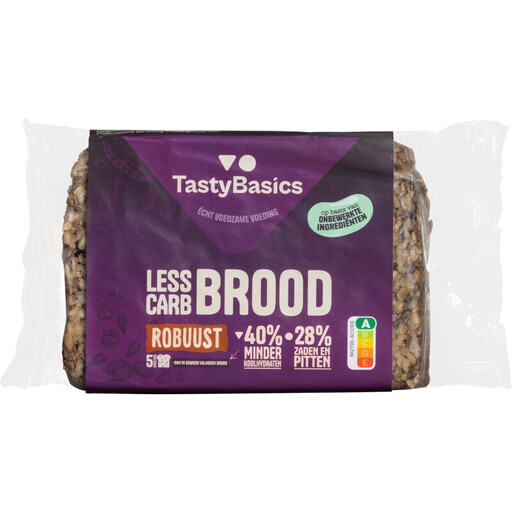
TastyBasics Rustic Bread, 5 pieces
A bread option in a pack of 5 pieces if you don’t want a larger pack for your snack. Check the product information to see whether the type of bread, slice thickness, ingredients and salt used suit your needs.
View at Joybuy
Frequently asked questions
Does all Dutch bread contain iodised baker’s salt?
No, you can’t assume that: according to the Netherlands Nutrition Centre, bread doesn’t have to be made with baker’s salt. For packaged bread, check the label; for unpackaged bread, ask about the ingredients.
How should I store wholemeal bread if I only have a late-night snack now and then?
Freeze portions if you don’t expect to eat the bread within a few days. The Netherlands Nutrition Centre’s Storage Guide recommends keeping opened wholemeal bread in a kitchen cupboard for 2–4 days and in the freezer for 1–3 months. Follow the instructions on your bread’s packaging too.
Is brown bread the same as wholemeal bread?
No. According to the Netherlands Nutrition Centre, bread can be made from wholemeal flour, white flour or a mixture of the two. So look specifically for the word ‘wholemeal’ if that’s the type of bread you want to buy.
Where can I check the allergens in bread?
Read the allergen information on the packaging of the exact loaf you’re buying. Albert Heijn notes in its product information that ingredients and allergen details can change, so a product page isn’t a substitute for checking the current packaging.


