Who should consider this choice?

Households buying bread for several days

If you don’t get through a whole loaf quickly, it helps to decide in advance how many slices you’ll need at a time. The Dutch Nutrition Centre says opened wholemeal bread keeps for longer in the freezer than in a kitchen cupboard.

People who eat bread every day and want wholemeal

If you often have bread for breakfast or lunch, look for the ‘wholemeal’ label rather than relying on a dark colour or the name ‘multigrain’. If you’re unsure, compare the nutritional information per 100 g.

Shoppers who need to check allergens

If you have coeliac disease, a wheat allergy or another food allergy, the information on the packaging determines whether a loaf is suitable. The slice thickness you want tells you nothing about its ingredients or allergens.

What should you look for when choosing?

First decide which type and quantity of bread your household needs. Then check how the specific product is sliced and packaged.

What to consider What should you check? Who is it important for?
Wholemeal and nutritional information Look for the ‘wholemeal’ label. Compare the ingredients and nutritional value per 100 g. If I eat bread every day and want to choose wholemeal, I don’t rely on colour or the name ‘multigrain’ alone. This is the top priority for around 33% of consumers.
Quantity and storage Choose an amount you can use or divide into portions and freeze straight away. Follow the storage advice on the packaging. A whole loaf might be left uneaten in my household if not everyone eats bread every day. Around 33% of consumers say reducing waste is their top priority.
Slice style and use Check whether the bread is sliced and whether the slices suit your toppings, lunchbox or toastie. For breakfast and lunch, I want slices I can use without any extra cutting. This convenience comes first for around 20% of consumers.
Ingredients and allergens Read the allergen information. If you follow a gluten-free diet, also check for the ‘gluten-free’ label. If I need to avoid an ingredient, the bread must meet that requirement first, whatever the slice thickness. For around 14% of consumers, this is the first requirement when buying bread.

Common mistakes

  • Assuming dark or multigrain bread is wholemeal

    According to the Dutch Nutrition Centre, ‘multigrain’ doesn’t automatically mean that a loaf is wholemeal. The colour of the bread doesn’t tell you that either.

    Look for the ‘wholemeal’ label and, if you’re unsure, compare the ingredients and nutritional value per 100 g.

  • Leaving a whole loaf out without dividing it into portions

    In a household where people eat bread at different times, a whole loaf can go stale before it’s finished. The Dutch Nutrition Centre says opened wholemeal bread keeps for 2–4 days in a kitchen cupboard and 1–3 months in the freezer; its quality may deteriorate while frozen.

    Freeze the bread in suitable portions after buying it if you plan to eat it later, and take out only the slices you need. Throw away mouldy bread.

  • Assuming ‘medium-sliced’ always means the same thing

    Albert Heijn, Jumbo, Lidl and ALDI offer different types of bread packaging and slicing. Lidl also says that its fresh range may vary from one store to another.

    Check the individual product to see whether it’s sliced and whether the slices are suitable for how you plan to use them.

  • Prioritising slice style over allergens

    Sliced bread isn’t automatically suitable for someone who needs to avoid gluten or another allergen. Ingredients can also vary between loaves intended for the same use.

    Always read the allergen information. If you follow a gluten-free diet, look for a clear gluten-free label and consider the risk of cross-contamination if that’s relevant to you.

Supermarket chains to consider

Albert Heijn

Its online bread range includes wholemeal, spelt, multigrain and gluten-free loaves.

  • You can compare different types of bread and sliced options side by side.
  • Check the slicing and packaging information for each product.

Jumbo

Jumbo’s online range includes whole and half loaves, both sliced and unsliced.

  • The choice between a whole or half loaf is useful when you’re planning how much bread you’ll need for the week.
  • Check the slicing style offered for the specific loaf.

Lidl

Lidl’s range includes freshly baked bread, prepacked bread and bake-at-home bread.

  • This distinction is helpful when choosing between bread you can eat straight away and other types during your weekly shop.
  • Lidl says its fresh range may vary from one store to another.

Aldi

ALDI offers white and wholemeal loaves, as well as sliced bread.

  • Sliced bread is worth considering if you want to portion it in advance.
  • Check the slice thickness, ingredients and allergens for the product you choose.

PLUS

PLUS’s online bread range includes wholemeal, brown, multigrain and sourdough, in whole and half loaves.

  • You can compare types and quantities of bread for delivery or collection.
  • Check the individual product listing for the slicing style.

Dirk

Dirk’s bread range includes white, wholemeal, multigrain and sourdough loaves.

  • The range of bread types gives you a starting point for comparing your everyday options.
  • Check the quantity, slicing style and nutritional information for each loaf.

Bread products on Joybuy

These products may suit a shopping list that includes bread, but check both to make sure their product format and slice thickness match the medium-sliced bread you’re looking for.
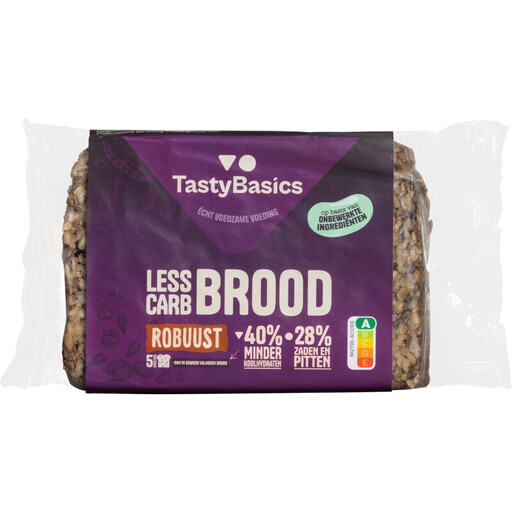
TastyBasics Rustic Bread, 5 pieces

TastyBasics Rustic Bread – 5 pieces

If you’re looking for a smaller quantity of bread for the week, this pack of five could be a good option. Check that the quantity is enough and that the format, slice thickness and allergen information suit your needs.

View on Joybuy
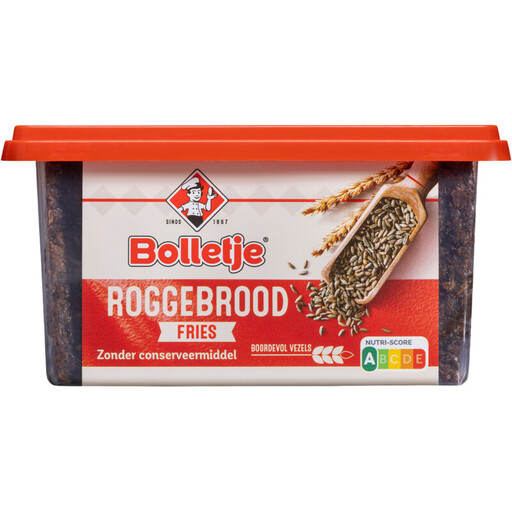
Bolletje Rye Bread Bun, 500 g

Bolletje Rye Bread Bun – 500 g

This rye product could be a good fit if you’re looking for a 500 g pack for the week. Before buying, check whether the pack contains bread rolls or sliced bread, and whether the format and slice thickness suit the way you plan to use it.

View on Joybuy

Frequently asked questions

How should I store wholemeal bread bought for the whole week?

Freeze the portions you won’t use straight away after buying the bread. According to the Dutch Nutrition Centre, opened wholemeal bread keeps for 2–4 days in a kitchen cupboard and 1–3 months in the freezer; it may become drier if frozen for longer. Follow the instructions on the packaging too.

Is multigrain bread also wholemeal?

No, the terms don’t mean the same thing. According to the Dutch Nutrition Centre, ‘multigrain’ means that several types of grain are used; it doesn’t automatically mean the bread is made with wholegrains. If you want wholemeal bread, look for the ‘wholemeal’ label and, if necessary, compare the nutritional information per 100 g.

Is ordinary sliced bread suitable for someone with coeliac disease or a wheat allergy?

The way bread is sliced says nothing about whether it’s suitable for someone with coeliac disease or a wheat allergy. If you have coeliac disease, check that the bread is clearly labelled gluten-free. If you have a wheat allergy, read the ingredients and allergen information on the current packaging. Also check for cross-contamination information if necessary.

Does all bread in the Netherlands contain iodine because of baker’s salt?

No, don’t assume that every loaf contains baker’s salt with iodine. The Netherlands Food and Consumer Product Safety Authority says iodine compounds may be present in bread through the addition of baker’s salt, with a maximum of 65 mg of iodine per kg of salt. Check the ingredients on the packaging of a specific loaf.
