
Shoppers comparing fibre content
You’re looking for bread for everyday use or a visit to a Christmas market, and want to compare wholemeal products by their nutritional information rather than relying on the bread’s name alone.


For the Christmas market, choose bread whose slicing style you can check for each product: the word ‘sliced’ alone does not confirm that it is medium-sliced. If fibre is your priority, compare wholemeal loaves by their fibre content per 100 g. If you’re serving gluten-free bread, keep it and the utensils separate from regular bread. Before buying, check the ingredients, allergens and number of portions you’ll need.
You’re looking for bread for everyday use or a visit to a Christmas market, and want to compare wholemeal products by their nutritional information rather than relying on the bread’s name alone.
You’re buying bread for a small event and want to plan how much you’ll need each day. A pre-sliced loaf that you can freeze in portions could be a practical choice.
You’re choosing bread for someone who needs to avoid gluten, or you’re serving unpackaged bread to guests. In that case, the product description, ingredients and allergen information are key. If someone has a wheat allergy, be sure to check specifically for wheat too.
Start with the required slicing style and any dietary or allergen requirements. Then compare the nutritional information and work out how many slices you’ll need for each serving time.
| What to consider | What to check when buying | Who it matters to |
|---|---|---|
| Fibre | Check the ingredients and compare the fibre content per 100 g of wholemeal products. | I want to choose an everyday loaf and am particularly interested in its fibre content. For around 45% of consumers, fibre is the top priority. |
| Slicing style and portions | Ask how thickly the loaf is actually sliced; check its weight and, if stated, the number of slices. Also check the storage instructions. | I’m serving bread at several different times and want to know in advance how many slices I can set out. Around 33% of consumers give this kind of portion planning top priority. |
| Diet and allergens | Read the ingredients and allergen information; if needed, check for a gluten-free label and see whether baker’s salt is listed. | If a guest needs to avoid gluten or has an allergy, I need to choose the bread and serving method accordingly. For around 22% of consumers, dietary or allergen requirements matter most. |
According to the Voedingscentrum, the word ‘multigrain’ alone does not mean that a loaf is entirely wholemeal.
Check the product name and ingredients, and compare the fibre content per 100 g.
The Voedingscentrum says that bakers are not required to use baker’s salt. So the type of bread or its name in the shop won’t tell you whether it contains it.
Check the ingredients on the packaging or ask the baker whether baker’s salt has been used.
Bread that isn’t used in time can dry out or go off. The Voedingscentrum says you can also freeze wholemeal bread.
Plan how much you’ll need for each serving time, and freeze any portions you don’t need straight away after buying them.
When selling unpackaged bread, guests must be able to get allergen information before they buy. The Netherlands Food and Consumer Product Safety Authority lists 14 allergens.
Keep the ingredients and allergen information for every type of bread you offer to hand, and check how you’ll provide it to guests at your stall.
These supermarket ranges can help you compare types of bread. Always check the slicing style and nutritional information for the specific product you choose.
Albert Heijn’s bread range includes sliced OerDesem loaves.
Jumbo’s range includes Fijn Volkorenbrood.
Lidl sells freshly baked bread as well as pre-packed loaves.
PLUS offers a range of wholemeal breads, including whole and half loaves.
Dirk’s range includes whole and half loaves from Bakker van der Akker.
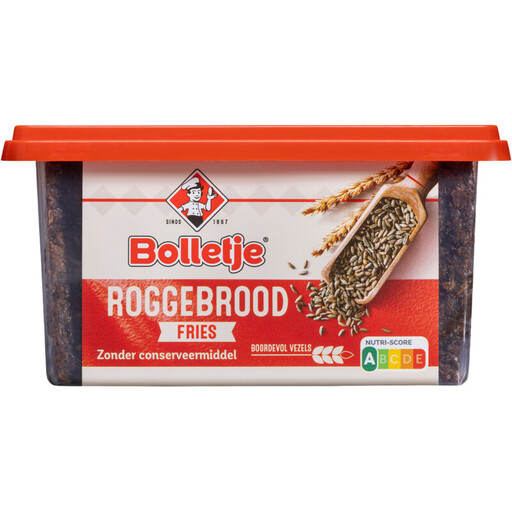
This Bolletje rye bread product may be worth considering if you’re looking for a 500 g pack. Before buying, check whether the bread is sliced and whether the slices suit the portions you want to serve.
 No image available
A rye bread product to consider when planning how much bread you’ll need for the Christmas market.
Pack weight: 500 g. Check the packaging for the slicing style, ingredients, allergens and any mention of baker’s salt.
No. ‘Sliced’ only confirms that the bread has been cut, not how thick the slices are. Ask the shop about the slicing style or check the bread before deciding how much to buy for the Christmas market.
No. According to the Voedingscentrum, bakers are not required to use baker’s salt. Check the ingredients or ask the baker if its presence matters to your choice.
When selling unpackaged bread, guests must be able to get allergen information before they buy. The Netherlands Food and Consumer Product Safety Authority lists information on 14 allergens, so keep details for every type of bread available and check how you need to provide this information at your stall.
Freeze wholemeal bread in portions after buying it if you won’t use it soon. The Voedingscentrum recommends keeping wholemeal bread for 2 to 4 days in a kitchen cupboard or 1 to 3 months in the freezer. For packaged bread, also follow the storage instructions and date on the packaging.
No. Choose bread with a clear gluten-free label for someone with coeliac disease, and prevent contact with regular bread during preparation and serving. If someone has a wheat allergy, also check the ingredients and allergen information specifically for wheat.