Start by checking your camera’s mount, then decide how much of the medal or engraving you want in the frame. 1:1 is a useful starting point for small details, while higher magnification is mainly useful for even smaller crops. Next, check whether the working distance leaves enough room for your lighting. A higher maximum magnification won’t solve an incompatible mount or tricky reflections.
Who is this choice relevant to?
Online shop photographer with an existing camera
You’re looking for a lens with the right mount for your current camera, and want to capture both recognisable overall shots and sharp details of medals. Check the mount on the exact lens version you’re considering; Canon Europe, Sony Netherlands and Sigma list the mount for each model or version.
Photographer of fine engravings
You want to capture fine lettering or marks at a larger scale, and are weighing maximum magnification against ease of focusing. Canon Europe specifies a maximum magnification of 1.4× for the RF 100mm; Laowa Netherlands lists 2:1 for the Sony FE version reviewed, which uses manual focus.
Photographer of shiny medals
When photographing reflective medals, you need room and control to position your lighting without unwanted reflections or shadows. Sony Netherlands and Canon Europe highlight working distance and lighting considerations for macro photography.
What should you look for in a macro lens?
First check that the lens fits your camera, then choose the magnification you need. Finally, consider the space available for your lighting setup and other product shots.
| What to consider |
What should you check? |
Who is this important for? |
| Compatible camera mount |
Check your exact camera model and the mount on the lens version; a single brand may offer lenses with several different mounts. |
If you want to use the lens with your existing camera, you don’t want to find out that the mount isn’t compatible. Around 36% of consumers prioritise camera compatibility when buying. |
| Fine details |
Compare the maximum magnification of the exact version with the crop you need to capture lettering, edges or marks. |
If you want a small engraving to fill the frame, the magnification you need will be a key factor. Around 29% of consumers prioritise capturing fine details. |
| Working distance and lighting |
Check the working distance at your desired magnification, and allow enough room for your lighting. Sony Netherlands lists around 13 cm for the FE 90mm; Sigma specifies 141 mm at 1:1 for the 105mm. |
When photographing shiny medals, you’ll want to position your lighting and assess reflections in test shots. Around 21% of consumers prioritise control over lighting. |
| Different types of product shots |
Decide whether the same lens can also capture the overall shots you want. Consider the lighting and support you’ll need as separate parts of your setup. |
If you take overall shots as well as detail photos, versatility may be important, as long as the lens can capture the crop you need. Around 14% of consumers prioritise using one lens for several types of product shot. |
Pitfalls to avoid when buying a macro lens
-
Confusing minimum focusing distance with the clear space in front of the lens
Minimum focusing distance is measured from the sensor plane. It doesn’t tell you how much clear space there is in front of the lens for your lighting.
Look up the working distance for the exact lens at the magnification you want to use, and check where you can position your light source.
-
Assuming all versions of a macro lens are interchangeable
A lens range may be available with different mounts. The Laowa version reviewed for Sony FE uses manual focus, which also affects how you work.
Before ordering, check the full model name, mount and handling features against your camera model.
-
Comparing maximum magnification alone
High magnification isn’t necessary for every medal photo, and it can make focusing and lighting more difficult. An overall shot and a small engraving call for different crops.
First decide which details you want to show, then assess whether your setup can handle the focusing and lighting required.
High magnification can mean extra time spent on focusing, lighting and editing.
-
Assuming consumer protections automatically apply to a business purchase for your online shop
According to ACM, consumer protection does not apply when a contract is used mainly or exclusively for business purposes.
Before ordering, make clear whether you’re buying as a private individual or for business, and check the terms that apply to your purchase.
Different contractual terms may apply to a purchase made mainly for business purposes.
Macro lens brands to consider
Canon
The RF 100mm F2.8L Macro IS USM is designed for a compatible Canon RF camera and offers a maximum magnification of 1.4×, according to Canon.
- Canon Europe lists a maximum magnification of 1.4×.
- The stated minimum focusing distance is 0.26 m; this is not the clear working distance in front of the lens.
Sony
The FE 90mm F2.8 Macro G OSS is an option for Sony E cameras if you’re looking for 1:1 magnification and room around the lens.
- Sony Netherlands lists 1:1 magnification and a working distance of around 13 cm for this model.
- These specifications apply to the FE 90mm; don’t assume they apply to other Sony macro lenses.
Sigma
The 105mm F2.8 DG DN MACRO | Art is a 1:1 option for a compatible Sony E or L camera.
- Sigma lists a working distance of 141 mm at 1:1 for this model.
- Check which mount the version you choose comes with.
Nikon
The NIKKOR Z MC 105mm f/2.8 VR S is designed for a compatible Nikon Z camera and offers 1:1 magnification.
- Nikon lists vibration reduction and the option to focus manually.
- Check the mount and whether manual focusing suits the way you work.
Laowa
The 100mm f/2.8 2X Ultra-Macro APO version reviewed is for Sony FE and designed for high magnification.
- Laowa Netherlands lists 2:1 magnification for this version.
- This Sony FE version uses manual focus; specifications may vary depending on the mount.
Joybuy lenses for product and close-up photography
The Joybuy products below are Sony E lenses suited to product or close-up photography. Their stated magnification limits how well they can capture small medal details, so don’t consider them a substitute for a macro lens if you want those details to fill the frame.
 Image unavailable
Sony E 50mm f/1.8 OSS Black
The product description mentions product photography, but the stated magnification is limited for capturing small medal details. Check whether it can achieve the crop you want.
View at Joybuy
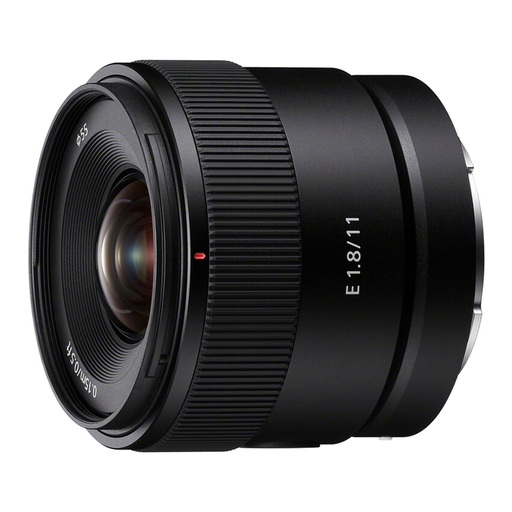 Image unavailable
Sony E 11mm F1.8/APS-C Wide Angle Prime Lens (SEL11F18)
The product description mentions close-up photography, but the stated magnification is limited for capturing small medal details. Check whether it can achieve the crop you want before choosing this lens as a macro solution.
View at Joybuy
Frequently asked questions about medal photography
Is a higher maximum magnification always better for a photo of the whole medal?
No, not necessarily. The maximum reproduction ratio tells you how much you can magnify, but what you want to include in the frame determines what you need: an overall shot and a tiny mark call for different magnifications.
How can you stop parts of a medal from appearing out of focus?
Keep the camera and medal steady, and check the focus across the area you want to show. If the depth of field isn’t sufficient for a raised design, focus stacking can combine several focus points; Nikon describes this technique. Bear in mind that it means taking extra shots and doing more post-processing.
What should you look for when lighting a shiny medal?
Check for reflections and shadows in a test shot, and make sure the working distance leaves enough room for your lighting setup. Canon Europe explains that working at close range can make lighting more challenging, so one type of flash won’t be right for every medal.
Do standard consumer rules apply when you buy a lens for your online shop?
Not necessarily. ACM states that a contract used mainly or exclusively for business purposes does not provide consumer protection. Before placing a business order, check which terms apply to your purchase and don’t automatically assume you have a consumer cooling-off period.
Which rules are relevant when you publish medal photos on your online shop?
When selling online, information about what you’re offering must be clear and accurate. Ondernemersplein also highlights copyright considerations for photos you publish on an online shop. These rules concern your offer and use of images, not your choice of lens.


