
Medal detail photographer
You want to capture small inscriptions and relief clearly. The magnification and mount of the lens you use are important factors in your choice.


Choose based on how large you want small inscriptions to appear in the frame and how much room you have for your camera and lighting. A compact camera can be a straightforward starting point; a mirrorless camera gives you more choice of lenses, but check the magnification of the lens you’ll actually use for capturing fine details. With either option, a stable setup and adjustable lighting are important when photographing shiny medals.
You want to capture small inscriptions and relief clearly. The magnification and mount of the lens you use are important factors in your choice.
You photograph reflective metal and want to be able to position the camera, lighting and support separately.
You want a straightforward setup for photographing whole medals and are weighing up the convenience of use against separate lenses and other equipment.
A good fit if: you want to try photographing both whole medals and close-ups with one camera, without a separate lens.
Bear in mind: the lens cannot be changed; at close range, there may be little room left to position your lighting.
A good fit if: you mainly photograph whole medals and want the option to choose a different lens later.
Bear in mind: a standard zoom lens is not automatically a macro lens; check the magnification of the included lens.
A good fit if: small inscriptions or relief are often your main focus and you want to choose a lens that fits your camera mount.
Bear in mind: the macro lens is a separate item; magnification alone won’t solve issues with reflections or limited depth of field.
| What to consider | What to look for when buying | Which consumers is this important for? |
|---|---|---|
| Magnifying small details | Compare your desired framing with the maximum magnification of the lens you’ll use; check the lens mount too. | I want small lettering or relief to show clearly in the frame, so I look at the lens magnification first. Around 33% of consumers prioritise magnifying details. |
| Managing reflections | Check whether there is room for adjustable lighting and diffusion; try different lighting positions with a medal. | I want to photograph shiny metal without reflections obscuring the details. Around 27% of consumers make managing reflections their top priority. |
| Keeping relief sharp at different depths | Look at the manual focusing options and how stable the setup can be; using multiple focus points involves extra steps. | I want relief at different depths to appear sharp, so I look for control over focusing. Around 20% of consumers prioritise depth of field. |
| Simple equipment | Check which lens is included and what support or lighting equipment you’ll need. | I want to know in advance how many items my setup will require, and weigh simplicity against the option to add other lenses. Around 20% of consumers choose mainly on the basis of a simple setup. |
A standard zoom lens and a macro lens can offer different magnifications. Canon quotes a maximum of 0.16× with autofocus or 0.26× with manual focus for the RF-S 18-45mm at 45 mm; that is not the same as 1:1.
Check the exact lens included in the offer and compare its stated magnification with the size of the inscriptions you want to photograph.
A suitable macro lens may be a separate item.
Small, shiny objects can show reflections and bright spots that obscure details. The position and spread of the light also play a part.
Try different lighting positions and diffusion with a medal like the one you want to photograph.
Your setup may also need lighting, diffusion or a stable support.
For detail shots, framing, stable positioning and sharpness across the relief don’t depend on the camera body alone.
Compare complete offers and check which lens and other items are actually included.
A lens, support, lighting and possibly focus stacking software may all be separate parts of your workflow.
For anyone considering an interchangeable RF or RF-S system, with a standard zoom lens for whole medals or a separate macro lens for greater magnification.
A mirrorless camera option for anyone looking to choose a compatible NIKKOR Z macro lens.
The Tough TG-7 is a compact camera option with a fixed lens and a close-up mode.
An E-mount system may suit anyone who wants to put together a camera and a compatible close-up lens.
This selection includes cameras for photos and video, as well as a mirrorless camera with a zoom lens. When choosing a camera for medal photography, always check its close-up capabilities and whether the lens suits your setup.
 No image available
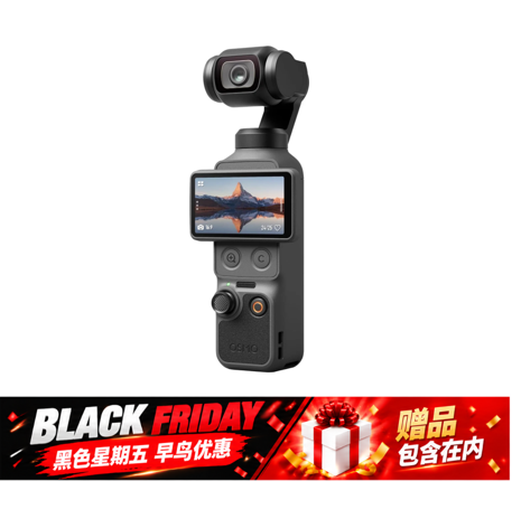
The product title describes this model as a pocket gimbal camera for vlogging and photography; check the camera’s close-up capabilities for small medal details.
The title lists a 1″ CMOS sensor, 2× zoom, 4K/240fps, 3-axis stabilisation and 107 GB of built-in storage.
 No image available
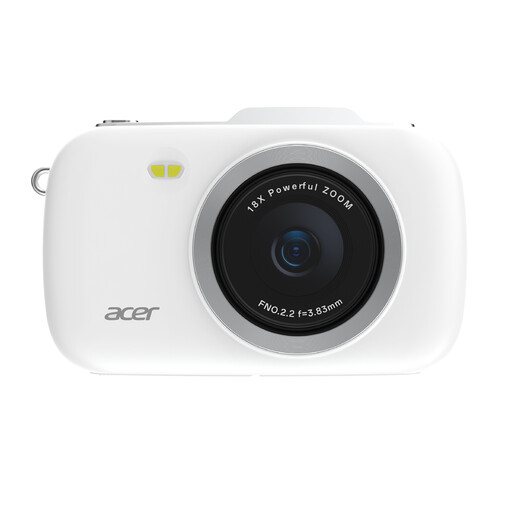
The product title presents this as a digital camera for photography; check whether its close-up capabilities suit the size of the medal details you want to capture.
The title lists 4K video, 80 MP and 18× zoom.
 No image available
The product title describes this model as a digital camera for photography; check separately whether the lens is suitable for the close-up you want to take of a medal.
The title lists 5K video, 80 MP and 18× zoom.
 No image available
This mirrorless camera is listed with a zoom lens; for medal photography, check whether the lens offers enough magnification for your desired framing.
The product information lists a 24.2 MP APS-C sensor, Sony E mount and an included E PZ 16–50mm lens. According to the product information, an adapter/charger and SD card are not included.
 No image available
The product title describes this as a digital camera for photography and vlogging; check its close-up capabilities before deciding whether it is suitable for small inscriptions.
The title lists 4K video, 64 MP, 12× optical zoom and Wi-Fi.
First check whether the lens you’re using can make the lettering large enough on the sensor. Canon Netherlands lists a different maximum magnification for the RF-S 18-45mm than for the separate RF 100mm macro lens; the megapixel count of a camera body doesn’t replace that lens specification.
Position the camera securely above the medal and take test shots with the lighting in different positions. A support for overhead shots with movable lights is one possible setup, not a necessary purchase.
First check the plane of focus and take some test shots. If a single image doesn’t give you enough depth of field, you can combine images taken with different focus points. Nikon calls this technique focus stacking and notes that it uses software.
According to ACM ConsuWijzer, a product must meet the expectations you could reasonably have for normal use. If it breaks down earlier than expected, the seller must put things right free of charge under the legal guarantee; a fixed two-year warranty period is not the general standard in the Netherlands.
According to ACM ConsuWijzer, when you buy online you often have up to 14 days from delivery to change your mind. Check which exceptions and returns terms apply to your order.