Who is this buying guide for?

Collector of small medals

You want to capture inscriptions, relief and signs of wear in sharp detail, so you pay attention to magnification, working distance and sharpness across the subject. Nikon Nederland, Sony Nederland and Canon Nederland explain the features and considerations involved in macro photography.

Shared workbench user

You want to set up and put away your camera and lighting quickly, without having to work out the background or framing from scratch each time. This use case ties in with information from OM SYSTEM, Ricoh Imaging Europe and Canon Nederland about compact cameras, lighting and a fixed setup.

Creator of consistent catalogue photos

You photograph medals repeatedly and want similar crops and exposure each time; in that case, a stable setup may matter more than speed for each individual shot. Canon Nederland describes a tripod as a way to keep composition consistent, and focus stacking as a way to combine shots taken at different focus distances.

What should you look for when choosing?

Compact camera with macro mode

A good fit if: you regularly need to share or put away your camera and want to take close-ups without a separate macro lens. OM SYSTEM lists a microscope mode for the TG-7; according to Ricoh Imaging Europe, the PENTAX WG-8 has adjustable lighting around the lens.

Bear in mind: the fixed lens cannot be changed. Test the framing and reflections on your medal; a short focusing distance does not guarantee that the whole medal will fit in the frame.

Mirrorless camera with a macro lens

A good fit if: you need to capture small lettering or relief accurately and want to choose a lens to suit the shot. Nikon specifies 1:1 magnification for the separate NIKKOR Z MC 50 mm f/2.8; Sony lists the same specification for the FE 90 mm f/2.8 Macro G OSS.

Bear in mind: check the lens mount, the exact lens and what’s included in the kit. For its 50 mm macro lens mentioned above, Nikon gives a distance of around 5 cm between the front of the lens and the subject at the closest focusing distance; macro shots can also have a shallow depth of field.

Consideration What to look for Who is this important to?
Capturing fine detail Compare the magnification of the exact lens or macro mode with the crop you want. Also consider how much space is available in front of the lens for lighting. I want to capture small inscriptions or chips around the edge clearly, even when the relief has depth. That’s why around 26% of consumers prioritise fine detail.
Reflections and lighting Take a test shot with the medal and the available workshop lighting. See whether you can adjust the position of the light and the background. I want the texture of the metal to show without distracting bright spots dominating the shot. Around 21% of consumers prioritise control over reflections and lighting.
Quick setup and pack-away Check how many parts you need to set up and put away, and whether the camera, tripod and lighting will fit in your workspace. I use the workbench between other tasks and want to be able to put the camera away quickly afterwards. Around 21% of consumers particularly value quick setup and pack-away.
Repeatable images Check whether you can position the camera securely and adjust the focus to suit the relief. Canon Nederland describes a tripod as a way to keep the composition consistent. I photograph a series of medals and want to keep the crop and focus as consistent as possible. Around 16% of consumers prioritise repeatable catalogue images.
Complete setup Check the exact camera, lens and included accessories for each offer. Compare a mirrorless camera with the macro lens you actually need. I want to know in advance which parts I need and what’s included in the kit, so I can assess the complete setup. Around 16% of consumers focus particularly on the contents and cost of the complete kit.

Buying pitfalls

  • Assuming ‘macro’ means every detail will fill the frame

    Magnification, focusing distance and compatibility are different things. A camera body is not automatically a complete macro setup.

    Check the magnification of the exact lens or macro mode and see whether it suits the crop you want.

    With a mirrorless camera, a macro lens may be a separate purchase, so check what’s included in the kit.

  • Comparing only the camera when photographing shiny medals

    Built-in lighting does not guarantee that reflections on your medal will disappear. The position of the light and the background can also affect what you see in the shot.

    Take a test shot using the actual surface and lighting. Adjust the position of the light if reflections obscure details.

    A fixed setup may need space for a tripod or separately positioned lighting.

  • Assuming there is a fixed statutory guarantee period in the Netherlands

    The Dutch government states that the Netherlands has no fixed statutory guarantee period; your statutory rights are separate from any manufacturer’s guarantee.

    Keep your purchase details and contact the seller if the product is faulty.

Relevant camera brands

OM SYSTEM

The Tough TG-7 is a compact option with a fixed lens and a microscope mode for close-ups without changing lenses.

  • OM SYSTEM lists a microscope mode for the TG-7.
  • The fixed lens cannot be changed; the macro mode does not guarantee that reflections will be captured well on every medal.

PENTAX

The WG-8 is a compact option to consider if adjustable ring lighting is relevant to you.

  • Ricoh Imaging Europe lists six LEDs around the lens with adjustable brightness.
  • Test the light on your medal’s surface; a ring light does not prove that reflections will disappear.

Canon

The EOS R50 is a mirrorless camera option to compare if you also want to assess focus bracketing.

  • Canon Nederland lists focus bracketing and an RF mount for compatible lenses.
  • Assess the separate lens and what’s included in the kit; the camera body alone does not specify macro magnification.

Nikon

The Z50II can be paired with the NIKKOR Z MC 50 mm f/2.8, which needs to be assessed separately.

  • Nikon lists 1:1 magnification for this lens, with around 5 cm between the front of the lens and the subject at the closest focusing distance.
  • Check whether the lens is actually included in the offer; the working distance can matter when positioning lighting.

Sony

The α6700 and separate E-mount macro lenses are worth considering when comparing a setup you can expand.

  • Sony lists 1:1 magnification for the FE 90 mm f/2.8 Macro G OSS.
  • That specification applies to the lens, not every α6700 kit; RAW shooting alone says nothing about reflections on medals.

Joybuy product selection

Joybuy product picks for photographing medals in a shared workshop.
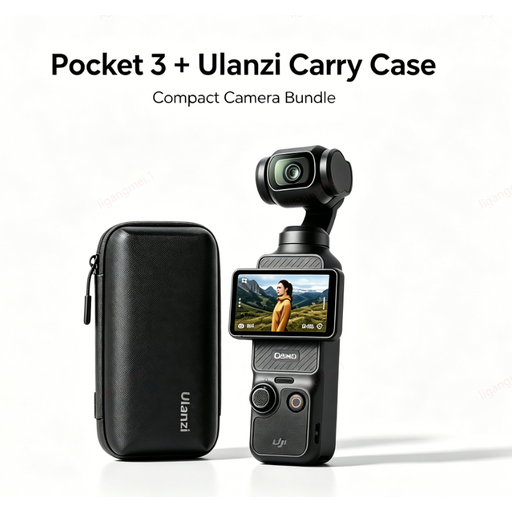
DJI Pocket 3 camera with Ulanzi Custom Storage Carry Case

DJI Pocket 3 camera with Ulanzi Custom Storage Carry Case

The compact design and included storage case are ideal if you want to put the camera away after a short session. Check whether the camera is suitable for the close-ups and focusing you need for medals.

The product description mentions handheld stabilisation and a storage case.

View at Joybuy

Frequently asked questions

Is a short focusing distance enough to photograph small lettering sharply?

No. Also compare the maximum magnification and the crop you want from the exact lens or macro mode. Close-ups can have a shallow depth of field, so check the sharpness across the relief of your medal.

How do you set up a temporary workbench arrangement?

Position the medal, background and camera securely, then take a test shot using the available light. A tripod can help you keep the crop consistent; adjust the position of the light if needed to assess reflections on the metal.

What can you do if the whole relief isn’t in focus?

First check the focus point and try different aperture settings. If a single shot doesn’t provide enough depth of field, you can combine shots taken at different focus distances. Check that your camera supports the sequence you want and allow for post-processing.

Do you automatically get a two-year statutory guarantee on a camera in the Netherlands?

No. According to the Dutch government, the Netherlands has no fixed statutory guarantee period. If a product is faulty, contact the seller to find a solution; what you can expect from a product depends, among other things, on the sales information, the price and whether it is new or second-hand.

Are you allowed to photograph identifiable colleagues or publish their images in a shared workshop?

When an employer photographs identifiable employees and publishes the images, the Dutch Data Protection Authority says there must be a legal basis; in most cases, this is consent. The source does not say that colleagues’ consent is needed for photos showing medals only. Agree what should stay out of shot in a shared workspace.
