
Editor who types a lot
You write and reorganise longer pieces at a sit-stand desk. Check that the keyboard’s height and distance suit a relaxed posture in both working positions.


Start by checking the keyboard’s height and position when you’re sitting and standing, and make sure the keys you use for edits are within easy reach. Then choose a layout and switch type to suit your desk and working environment. A more compact keyboard leaves you with more space, while a full-size one includes a number pad. Claims about noise depend on the specific version.
You write and reorganise longer pieces at a sit-stand desk. Check that the keyboard’s height and distance suit a relaxed posture in both working positions.
You don’t want to disturb housemates or colleagues while you type. Check the switch type on the specific model, rather than relying on the brand name or a description such as ‘quiet’.
You use the arrow keys to make edits and want to leave room for your mouse. Weigh up a 75% or TKL layout against whether you need a number pad.
First, decide which keys you need when editing and how much space you have available. Then compare the keyboard’s height and switch type with your posture and working environment.
| What to consider | What to check before buying | Who should pay particular attention? |
|---|---|---|
| Posture when typing for long periods | Check that the keyboard is at a suitable height when you’re sitting and standing, and that there’s room for your mouse. | When I’m writing long pieces, I want to type comfortably in both working positions without straining my wrists or shoulders. Around 31% of consumers make posture their top priority. |
| Noise and typing feel | Check the exact switch type; don’t treat a noise description as a measurement of how loud the keyboard will be in your space. | In a shared space, I want to weigh up the noise and typing feel against the feedback I prefer. Around 25% of consumers prioritise quieter typing. |
| Layout for editing text | Check the position of the arrow keys and function row, and whether you need a number pad. Also check the physical layout. | When moving the cursor and rearranging text, I want familiar keys to be within reach. Around 25% of consumers choose mainly for accessibility and an editing-friendly layout. |
| Connectivity and customisation | Check which connections are supported and whether hot-swap or key remapping is available on the version you’ve chosen. | If I switch between devices or want to customise keys later, I want to know in advance what the specific version supports. Around 19% of consumers make connectivity or customisation their top priority. |
Even with a slimmer keyboard, the position of your hands, arms and shoulders can still be uncomfortable if your desk is at the wrong height.
Check your typing posture separately when sitting and standing before assuming that keyboard height is the solution.
A product range may include different switches. A manufacturer’s description of sound dampening doesn’t tell you how loud the keyboard will be in your space.
Check the exact version and, if possible, try it in a similar environment.
A different physical layout changes the position of familiar keys. A model with a similar name or the same base number isn’t necessarily the same version.
Check the full model name, layout, switch type and connection method on the product page.
According to the Dutch government, there’s no fixed statutory warranty period in the Netherlands. A manufacturer’s warranty doesn’t remove your right to a product that meets legal standards.
Read the terms of any additional cover, and contact the seller if the product is faulty.
The MX Mechanical range includes a full-size keyboard and a Mini, with low-profile keys and a choice of switches for a writing workspace.
The EPOMAKER x AULA F75 is a 75% keyboard with arrow keys and a function row, designed for those who don’t need a number pad.
The K8 Pro has a TKL layout with arrow keys, Bluetooth and key-remapping options.
The wired MX BOARD 3.0S is an option for a fixed set-up, with a choice of switch types.
Razer positions the Pro Type Ultra as a productivity keyboard and describes its typing action as quieter.
This selection includes mechanical keyboards for editing text, from compact models to a wired version with 94 keys. Check the layout, connection and switch type for each model.
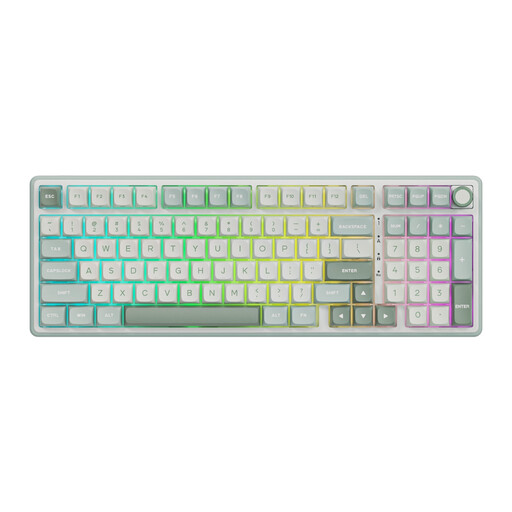 No image available
The 75% layout is an option if you’re looking for a more compact keyboard for editing text.
Wired; with number pad, volume knob and hot-swap.
 No image available
The 75% layout is designed for those who want to save desk space while keeping navigation keys.
QWERTY US layout; Reaper switches; wired, Bluetooth and 2.4 GHz.
 No image available
This wired version is an option if you’d like to use a wrist rest while typing.
94 keys; with phone stand and wrist rest. The product information lists hot-swap.
 No image available
The 75% layout keeps the arrow keys and function keys you need for editing text.
QWERTY US layout; wired, Bluetooth and 2.4 GHz; hot-swap and volume knob.
 No image available
The 75% layout is an option if you want to save desk space and prefer a compact layout.
Wired; QWERTY US layout; hot-swappable linear switches; 83 keys and volume knob.
Check that your shoulders are relaxed, your elbows are close to your body and your wrists stay in line with your forearms while you type. OSHA recommends keeping your wrists straight; this is a US ergonomic guideline, not a Dutch legal product specification. Check your posture again when you switch from sitting to standing.
Only if the specific version supports hot-swap. EPOMAKER lists this feature for the EPOMAKER x AULA F75; Keychron only offers hot-swap on the hot-swappable version of the K8 Pro. Also check which switches are compatible with your version.
Follow the care instructions for the specific model. The product information for the AULA F75 warns against liquid and moisture; this warning applies to that product information and isn’t general cleaning advice for all keyboards.
When you buy online from a business, you generally have a 14-day cooling-off period, according to the Dutch government; this rule doesn’t automatically apply to purchases from a private seller. You’re also entitled to a product that meets legal standards. The Netherlands doesn’t have a fixed statutory two-year warranty period: a manufacturer’s warranty is in addition to your legal rights, and the seller is your point of contact if a product is faulty.