What should you look for when choosing?
Start with the keys you actually use when editing and entering information, then consider the sound and feel of the version you’ve chosen. Arboportaal also describes screen-based work as involving repetitive hand movements and static strain, so a keyboard is part of your wider workstation setup.
| What to consider |
What to look for |
Who is this important for? |
| Typing feel and setup |
Check the switch type, keyboard height and space for the setup you want. |
If I edit a lot of catalogue copy, I want to be able to choose a typing feel and placement that suit my workspace. Around 33% of consumers put typing feel and setup first. |
| Layout and navigation |
Check the exact key layout and make sure the arrow, function and editing keys you need are within reach. |
If I often switch between text and files, I want to be able to find the keys I use straight away. Around 27% of consumers prioritise navigation and physical layout. |
| Typing sound |
Check the switch on the specific version; if possible, listen to the complete keyboard. |
If I work in a shared space, I want to take the typing noise into account before choosing a version. Around 20% of consumers prioritise keeping noise down. |
| Numbers and shortcuts |
Decide whether you need a numeric keypad, programmable keys or the ability to switch between devices, and check these features for each version. |
If I enter lots of stock numbers or repeat the same tasks, I want to know which features my workflow really needs. Around 20% of consumers put their workflow first. |
Joybuy products
These product picks include wired and wireless mechanical keyboards in different sizes, for anyone weighing up layout, connectivity or number entry, among other things.
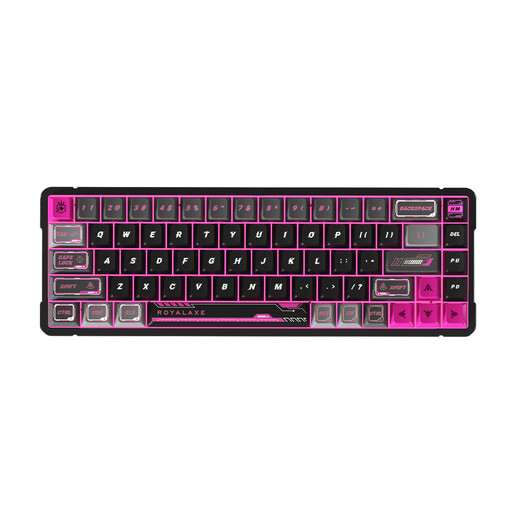 No image available
Royalaxe X68 Full Aluminum 65% — 68 keys, US layout
A compact wired version to consider if you’re looking at a 65% layout.
The product name lists 68 keys, Gateron HE magnetic switches and a US layout.
Joybuy
 No image available
REDRAGON Wired 94-Key Mechanical Keyboard
A wired option to consider if you’re looking for a version with more keys and a wrist rest.
The product name lists 94 keys, a phone stand and a detachable wrist rest.
Joybuy
 No image available
Redragon M68 — 68 keys, US layout
A compact version to include in your comparison if you’re looking for a 68-key keyboard.
The product name lists magnetic switches, a metal top plate, a wired connection and a US layout.
Joybuy
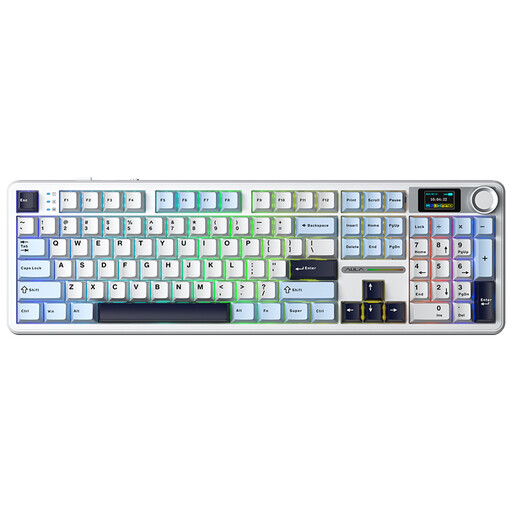 No image available
AULA F108 Pro — Bluetooth, 2.4G and USB-C
A wireless version to consider if you want to compare different connectivity options.
The product name lists Bluetooth, 2.4G and USB-C, an LCD screen, a rotary knob and hot-swappable linear switches.
Joybuy
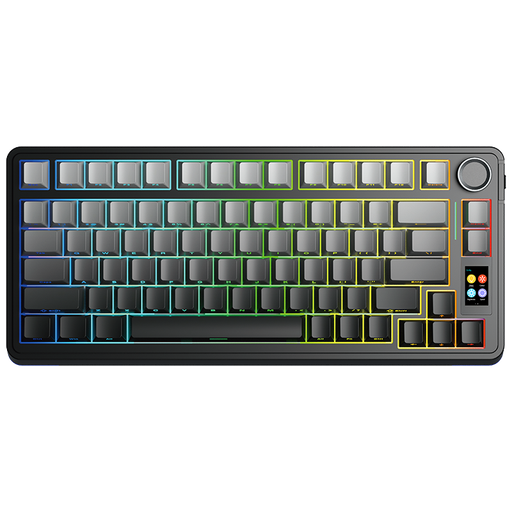 No image available
AULA S75 Pro 75% — tri-mode connectivity
A 75% version to consider if you’re weighing up a more compact size and multiple connectivity options.
The product name lists tri-mode connectivity, a TFT screen, a rotary knob and hot-swappable Star Vektor switches.
Joybuy
Frequently asked questions
Is a compact keyboard useful if I edit lots of captions and catalogue copy?
It depends on the keys you need. Before buying, check the position of the arrow, function and editing keys on the exact version. A TKL layout and a full-size layout make different trade-offs between desk space and the keys available.
How do I get started with a split mechanical keyboard?
Kinesis recommends that Freestyle Pro users start with the two halves close together, then gradually move them further apart or angle them. This is the manufacturer’s advice for this model, not a general treatment for physical complaints.
What should I look for when it comes to maintenance and customisation?
Check whether the exact version is hot-swappable before choosing individual switches. Keychron lists this feature for the K8 Pro ISO collection and Ducky for the One 3 Matcha; also check that the parts fit the version you’ve chosen.
What rights do I have when I buy a keyboard online?
For eligible online consumer purchases, the Dutch government generally states that you have a 14-day cooling-off period; exceptions and the type of seller may be relevant. Products must also conform to the contract. The Dutch government explains that there is no fixed statutory guarantee period; if there’s a fault, contact the seller.
Does Dutch law require a particular mechanical keyboard for my home office?
The Dutch rules described don’t require you to use a mechanical keyboard. Arboportaal states that for employees who work at a screen for more than 2 hours a day, the screen and keyboard must not be attached to each other. Whether these workplace rules apply to you depends on your working relationship and how you use the equipment.


