
Writer in a shared workspace
Writes long passages and wants a comfortable key feel without disturbing colleagues with unnecessary clicking. Compare the switch type, not just the model name.


Start with a layout and key feel that suit your writing; if you share your workspace, typing noise matters too. A compact keyboard can free up desk space, while a full-size model may be useful if you enter numbers regularly. Switching between devices is only relevant if you actually work across several devices, not simply because you use two screens.
Writes long passages and wants a comfortable key feel without disturbing colleagues with unnecessary clicking. Compare the switch type, not just the model name.
Keeps interview material on one screen and the text on the other. Wants to retain navigation keys, but may not have the space or need for a number pad.
Actually works across more than one device and wants to switch between them. That’s different from connecting two screens to a single computer.
First, decide which keys you need for writing and editing. Then consider key feel and sound, and only afterwards check whether you really need a multi-device connection.
| Consideration | What to look for | Who will value this? |
|---|---|---|
| Key feel and typing noise | Compare the exact switch type; a manufacturer’s description is not, by itself, an independent sound measurement. | If you write long texts in a shared workspace, you’ll want a key feel and sound that suit the environment. Around 36% of consumers rate key feel and typing noise as their top priority. |
| Desk space and navigation | Check the position of the arrow and function keys, and decide whether you need a number pad. | When editing, you want to move through text quickly without taking up more desk space than necessary. Around 29% of consumers prioritise space and text navigation. |
| Layout and device switching | Check the physical keyboard layout and, if you use multiple devices, which connection options and switching features the model offers. | If you want to enter punctuation without having to think about it, or regularly switch between computers, the exact layout or connection is key. Around 21% of consumers make this their top consideration. |
| Adjustable working position | Consider your entire workspace setup; a different keyboard does not, by itself, prove a health benefit. | If you want to adjust the position of your keyboard and hands on your desk, a different setup may be worth considering. Around 14% of consumers prioritise this adjustability. |
A device-switching feature is intended for separate devices; a second screen connected to the same computer does not, by itself, make one necessary.
Map out your setup: do you use one computer with two screens, or do you actually type on several devices?
Variants can differ in their switches, physical layout or included components. For example, the Keychron V1 Max is also available as a barebone version, without switches or keycaps.
Check the full variant name, switches, layout and box contents. A barebone version may still need switches and keycaps.
A different layout can affect the keys and shortcuts you use for writing and editing. ZSA’s guide explains that users of traditional keyboards need time to get used to the ErgoDox EZ.
Compare the key map with your usual shortcuts and consider whether you’re prepared to spend time adapting your typing habits.
According to Logitech, the MX Mechanical range includes a full-size model with a number pad and a more compact Mini.
Keychron describes the V1 Max as a customisable mechanical keyboard with a compact 75% layout.
NuPhy describes the Air75 V2 as a low-profile mechanical keyboard with a 75% layout.
The MX BOARD 3.0S is a wired keyboard available with different switches and lighting options.
According to ZSA, the ErgoDox EZ is a split mechanical keyboard for those who want to position its two halves independently.
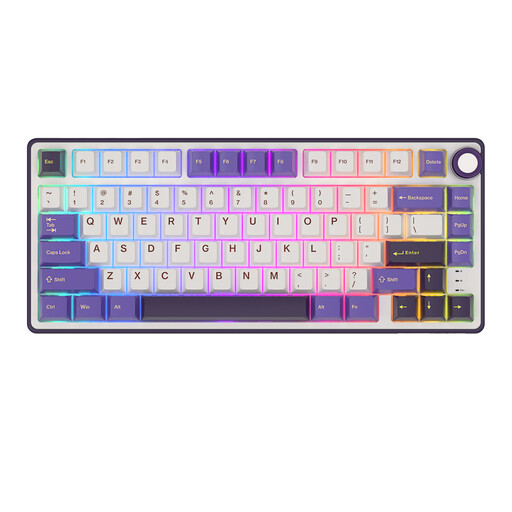
This selection features compact mechanical keyboards with a 75% layout, for anyone looking to free up desk space. Check the layout, switches and connectivity for each version.
 No image available
A compact 75% layout for anyone looking to free up desk space.
The title lists linear hot-swappable switches, PBT keycaps and a Cherry profile.
 No image available
A 75% layout for anyone looking for a compact keyboard.
The title lists a US QWERTY layout, Reaper switches and wired, Bluetooth and 2.4 GHz connections.
 No image available
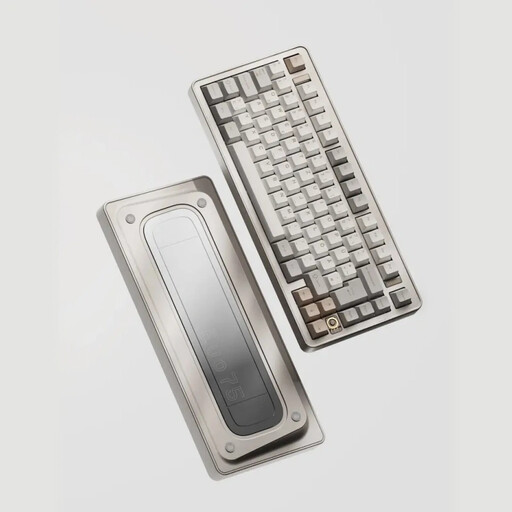
The 75% layout is designed for anyone looking for a compact keyboard.
The title lists a US layout, hot-swappable switches and wired, Bluetooth and 2.4 GHz connections. VIA compatibility and an 8000mAh capacity are also mentioned.
 No image available
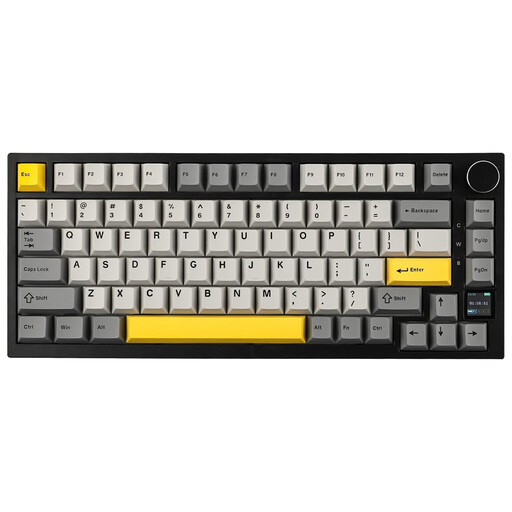
A compact 75% model for anyone looking for a smaller keyboard.
The title lists wired, Bluetooth and 2.4 GHz connections, a TFT screen and hot-swappable switches.
 No image available
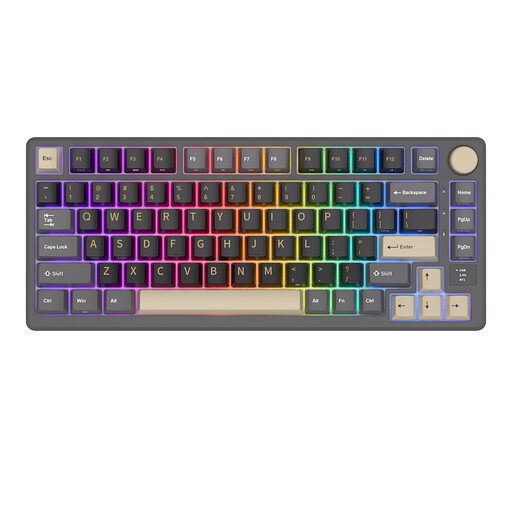
A compact 75% layout for anyone looking to free up desk space.
The title lists 81 keys, hot-swappable Cream switches and 2.4 GHz, USB-C and Bluetooth connections.
No, not if both screens are connected to the same computer. Switching devices is only a reason to buy if you actually type on separate computers or other devices; Logitech and Keychron describe this feature for the models mentioned above.
Consider your keyboard, screens and working posture as one setup. Arboportaal recommends an adjustable workspace; for employees who spend more than two hours a day working with a screen, it also describes rules requiring the keyboard and screen to be separate.
No, it depends on the version. Keychron lists hot-swappable switches for the V1 Max version described here; also check whether you’re choosing a fully assembled keyboard or a barebone version without switches or keycaps.
If you buy as a consumer in the Netherlands, you’re entitled to a product that works properly and can contact the seller if there’s a fault. According to the Dutch government, the Netherlands has no fixed statutory warranty period. Many distance purchases are also covered by a 14-day cooling-off period, subject to conditions and exceptions.