
Writers with limited desk space
You want to leave room beside your keyboard for things like notes or a mouse. Compare compact 65% and 75% layouts with the space available on your desk.


For a small desk, 75% is a sensible starting point if you want to keep the function row and arrow keys; Keychron describes this layout as having both. Choose 65% when every centimetre counts and you can manage with fewer dedicated editing keys, or TKL if a more spacious key layout matters more than the smallest possible width. Then compare the exact layout and switch type: RTINGS.com notes that your choice of switches affects the feel and sound of the keys, and these can vary between versions.
You want to leave room beside your keyboard for things like notes or a mouse. Compare compact 65% and 75% layouts with the space available on your desk.
You want mechanical keys, but also need to consider how much noise they make. The switch type plays a part: the word ‘mechanical’ alone won’t tell you how loud a particular version is.
When rewriting, you often use the arrow keys, function keys or other editing keys, and want to check whether they’re readily accessible on your chosen layout.
First, measure how much space the keyboard can take up. Then decide which keys you want to use directly while revising, and which switch type and connection suit your workspace.
| Consideration | What to look for | Who should pay extra attention? |
|---|---|---|
| Desk space | Measure the available width and depth, and allow room for your mouse and the cable. | If I want to leave room for notes or a mouse, I compare the dimensions of the exact version with my desk. Around 33% of consumers prioritise having clear desk space. |
| Sound and key feel | Check which switch types are available and, if possible, try the feel of the keys for yourself. | When I write in a shared space, I want to know in advance how loud the chosen switches are. Around 27% of consumers prioritise quiet typing. |
| Editing keys | Check the layout of the exact version and find out where the arrow, function and editing keys you use are located. | If I often move text around while revising, I want my usual keys to be within easy reach. Around 27% of consumers prioritise revision keys. |
| Connection | Check whether the version connects by cable, Bluetooth or receiver, and whether that option works with your devices. | If I want to switch between devices or keep a keyboard cable off my desk, I check the available connections. Around 13% of consumers prioritise connection options. |
The layout, switches and hot-swappable feature can vary between versions. As a result, one version may be configured differently from what you expect.
Before buying, compare the full version name, key layout, switch type and hot-swappable specification.
The percentage alone doesn’t tell you the keyboard’s dimensions or where the keys you need while revising are located.
Measure your desk and check the dimensions and key positions of the exact version.
The AJAZZ AK820 and AK820 Pro are different models. A listing for one version doesn’t confirm that the other is the same product.
Check the model name and version on the current product page before deciding to buy.
Keychron describes the K3 Max as a compact, low-profile 75% model with several connection options.
According to Logitech, the MX Mechanical Mini is a compact mechanical keyboard available with a choice of switch types.
CHERRY offers the KC 500 MX LP as a wired mechanical keyboard, including a TKL model without a number pad.
Ducky lists the One 3 RGB in a 65% version, among others, for anyone considering a smaller layout.
AJAZZ describes the AK820 series as a compact range of wired keyboards with hot-swappable switches and a volume dial.
These keyboards offer compact mechanical layouts for writing and revising in a smaller workspace.
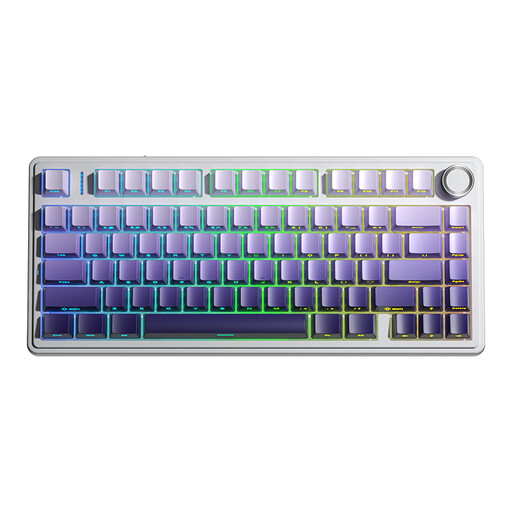 No image available
A 75% layout is one option to compare if you want a compact set-up with arrow keys.
Tri-mode: wired, Bluetooth and 2.4 GHz. US QWERTY layout.
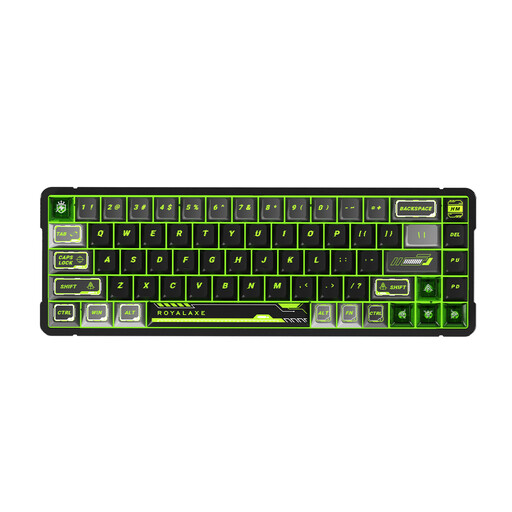 No image available
A 65% layout is a compact option to compare when desk space is a priority.
Wired mechanical keyboard with US layout and Gateron HE Magnetic Switch.
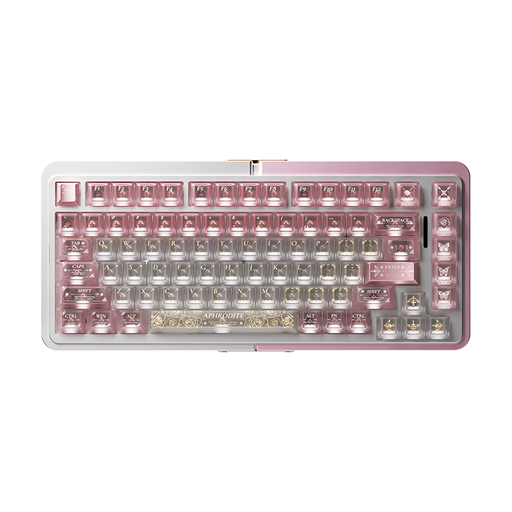 No image available
A 75% layout is worth comparing if you want a compact set-up while keeping the function row and arrow keys.
Wired; the product name specifies hot-swappable switches.
 No image available
This compact 68-key version is one to compare if you have limited desk space.
Wired mechanical keyboard with US layout and magnetic switches.
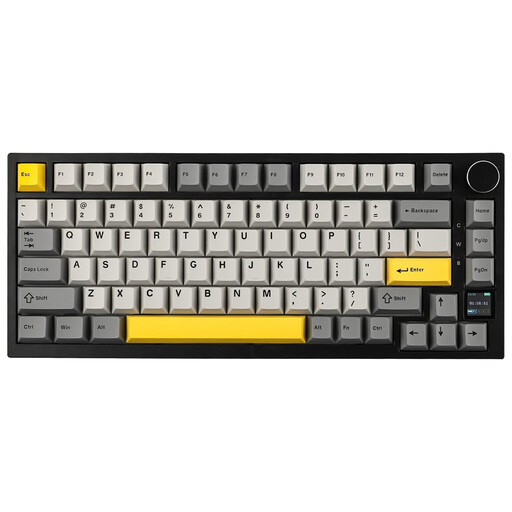 No image available
A compact 75% version is an option to compare for writing and revising at a small desk.
Wired, Bluetooth and 2.4 GHz; the product name specifies a TFT display and hot-swappable switches.
First, think about which keys you use to move and edit text. Keychron describes the 75% layout as having a function row and arrow keys; check where the other editing keys are on the exact version, too.
Only if the version you choose supports hot-swappable switches and the replacement switches are compatible. Ducky lists hot-swappable switches for the One 3 range; Keychron says this is available only on the specified version of the K3 Max. So check the exact model and version.
Check that the version you choose has the connection that suits your devices and workspace. CHERRY lists a detachable cable for the wired KC 500 MX LP TKL; for wireless models, make sure you check which connections the exact version supports.
According to the Dutch government, you generally have 14 days to change your mind when buying at a distance. You’re also entitled to a product that is of satisfactory quality, and you can contact the seller for a solution if something goes wrong. The Netherlands has no fixed statutory guarantee period that applies to all products.