
Writers with limited desk space
You want room beside your keyboard for a mouse, notes or your screen setup. Compare the dimensions of the version you’re considering and check that its layout will fit your desk.


For screenwriting at a small desk, a 75% layout is a sensible starting point if you want to keep the arrow and function keys close to hand. A smaller keyboard can free up more space, but you’ll need to be comfortable using keys and shortcuts that are less accessible. Then check the switch, key layout and connection to make sure they suit your workspace and computer.
You want room beside your keyboard for a mouse, notes or your screen setup. Compare the dimensions of the version you’re considering and check that its layout will fit your desk.
You often move around your text and want to know which arrow, function and editing keys are within easy reach. Check the key map for the exact version.
You’re looking for a mechanical typing experience that won’t draw unnecessary attention. Check which switch the version you’re considering uses; a ‘quiet’ label doesn’t mean the keyboard is silent.
Start by considering how much desk space you have and which keys you want within easy reach while writing and editing. Then weigh up the sound, key layout and connection options.
| What to consider | What to look for | Who is this important for? |
|---|---|---|
| Desk space and setup | Measure the space you have, including room for a mouse, and compare the dimensions of the exact version. Also think about where you’ll place your screen and notes. | If I need room for a mouse or notes beside my keyboard, I want to know the width of the whole keyboard; around 31% of consumers prioritise the desk space available. |
| Navigation and editing keys | Check the arrow keys, function row and relevant editing keys on the key map. Try the shortcuts in the writing software you use. | When I do a lot of editing, I want to move through text easily without having to use a function layer each time. Around 31% of consumers prioritise direct access to editing keys. |
| Typing feel and sound | Check the switch used in the exact version. Assess the sound in your own surroundings; manufacturers’ terms aren’t independent sound measurements. | If I write near other people, I don’t want my typing to draw unnecessary attention. Around 25% of consumers prioritise a more muted typing feel and sound. |
| Connection and key layout | Check whether it’s ANSI or ISO, the key legends, operating system support and whether you want to use Bluetooth, a receiver or a cable. | When I write on multiple devices, I want the connection and physical key layout to suit my computer. Around 13% of consumers prioritise this compatibility. |
Two compact keyboards can differ in which keys are within easy reach. A smaller size may also put editing keys behind a function layer.
Measure your available space and check the key map for the exact version before choosing between, for example, 65% and 75%.
Dampening materials and switch types are different features. Manufacturers don’t provide comparable sound measurements for the models mentioned.
Check which switch your version uses and assess the sound in the environment where you write.
Versions with the same model name can have different key layouts or switches.
Compare the full version, key map and switch before ordering; don’t base your choice on the model name alone.
The MX Mechanical Mini is a compact option with a low profile and a choice of switch versions.
The K3 Max ISO collection offers a 75% layout for anyone looking for a low profile and customisable key functions.
The EPOMAKER x AULA F75 is a 75% option with multiple connection methods and switch versions.
The MX-LP 2.1 Compact Wireless is a smaller option with low-profile switches.
The AK820 version described is a compact, wired 75% option for a dedicated writing space.
This selection focuses on mechanical keyboards with a 75% layout, for anyone looking to save space at a small desk with a compact keyboard.
 No image available
A good fit for anyone looking for a compact keyboard layout for a small writing space.
The product name lists wired, Bluetooth and 2.4 GHz connection options.
Check that the QWERTY US layout suits the way you use your keyboard.
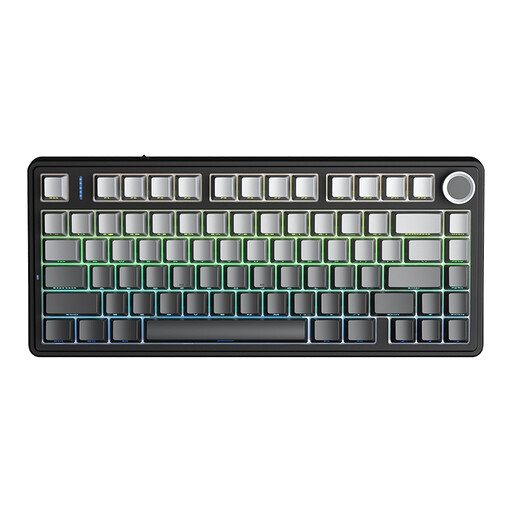 No image available
A 75% layout is a compact option worth comparing for a small writing space.
The product name lists wired and wireless connection options, as well as replaceable switches.
Check the US layout and the switch used in this version.
 No image available
The compact layout could suit a desk where you want to keep some space beside the keyboard.
The product name lists three connection methods: wireless and wired.
Check the QWERTY US layout before choosing.
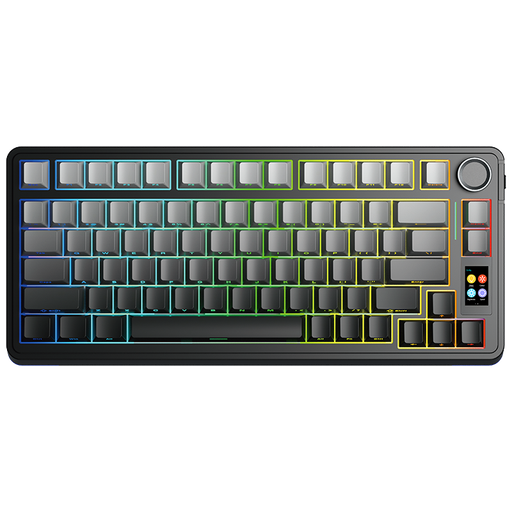 No image available
A compact 75% layout is worth considering if you’re weighing up desk space against the keys you want.
The product name lists tri-mode connectivity and replaceable switches.
Check the exact key layout of this version.
 No image available
The 75% layout could suit anyone looking for a compact keyboard for a small workspace.
The product name lists three connection methods and replaceable switches.
Check the US layout and specifications for this AK820 version.
For employees who spend more than 2 hours a day working with a screen, Arboportaal states that the screen and keyboard must not be attached to each other. A separate screen or keyboard must therefore be available when using a laptop; this doesn’t mean every personal writer needs a specific mechanical keyboard.
Don’t assume so. Arboportaal describes repeated finger and hand movements and static strain during screen work. Consider your entire workstation setup and bear in mind the workplace regulations that apply to your situation.
That depends on the version and its care instructions. EPOMAKER says that switches in a version with hot-swap sockets can be replaced without soldering; this doesn’t mean that every switch or keyboard is interchangeable.
For online purchases from a business, the Dutch government says that in many cases you have a 14-day cooling-off period; check the terms that apply to your purchase. If the product is faulty, contact the seller to find a solution, such as a free repair or replacement in line with your applicable legal rights.