
Designer who works standing up
You often switch between keyboard and mouse, and want enough room to position both comfortably as you adjust the desk height.


Start with the size: a compact keyboard can leave more room for your mouse, while a full-size model includes a number pad for frequent number entry. Then consider key height, switches and layout. No keyboard is a substitute for setting up your workspace properly when you alternate between sitting and standing.
You often switch between keyboard and mouse, and want enough room to position both comfortably as you adjust the desk height.
You write and edit names, quotations and captions. Familiar key positions and a suitable setting for punctuation and accents are important.
You design with other people nearby and want the feel of mechanical keys without unnecessarily loud switch noise.
A good fit if: you often switch between typing and using the mouse while working on layouts, and rarely enter numbers using a separate number pad.
The trade-off: a smaller keyboard can leave more room for your mouse, but may have fewer dedicated keys. A low profile does not automatically make a keyboard quiet or ergonomic for everyone.
A good fit if: you often enter numbers for tables or other parts of the wedding booklet and want to use a number pad.
The trade-off: a wider keyboard takes up more desk space, changing how much room you have for your mouse. Check the switch option too, as different versions in the same model range may vary.
| What to consider | What should you check? | Who should prioritise this? |
|---|---|---|
| Space and posture | Compare the width and whether it has a number pad. Check that you can reach both the keyboard and mouse comfortably while sitting and standing. | If I often switch between layout work and using the mouse, I want to position my mouse comfortably as my desk moves up or down. Around 33% of consumers prioritise space and posture above all else. |
| Characters and keyboard layout | Check the physical layout and the keys for accents, punctuation and navigation. Also check which input layout is set on your computer. | When writing and editing, I want the characters to appear where I expect them. Around 27% of consumers prioritise text entry and familiar key positions. |
| Switches and sound | Check the switch option for the specific version; don’t rely on the model name alone. | If I work in a shared space, I want to be considerate of others without losing the key feel I’m looking for. For around 20% of consumers, keeping keyboard noise down is the top priority. |
| Keyboard shortcuts and connectivity | Check that your preferred key settings work with your computer and layout software. See which connectivity options the model offers. | When repeating layout tasks or working across several devices, I want to know that the features suit my workflow. Around 20% of consumers prioritise shortcuts or switching between devices. |
Switches can differ in feel and sound across a model range, so the model name alone doesn’t tell you enough about the version.
Before buying, check which switch comes with the model you’ve chosen.
A number pad can be useful for entering numbers, but a wider keyboard changes how much space is left beside it.
Think about how often you enter numbers, and check where your mouse will sit both when you’re seated and when you’re standing.
Key height, switch noise and workspace setup are separate considerations. A keyboard alone doesn’t determine whether your working posture is suitable.
Consider the keyboard alongside your desk setup, and change your posture throughout the day.
The MX Mechanical range includes a Mini and a version with a number pad. This makes size an important consideration when deciding how much room you want to leave for your mouse.
The V6 Max is a full-size mechanical keyboard with customisable keys and replaceable switches, designed for those who want a number pad and the option to customise.
The MX BOARD 3.0S is an example of a wired mechanical keyboard available in different versions.
RTINGS includes the Air75 V3 in a comparison of low-profile keyboards, which may be a useful starting point if you’re looking into a compact, low-profile model.
These Joybuy products are compact mechanical keyboards with a 75% layout. They’re worth considering if you want to leave room for mouse use; some versions are listed with multiple connection options or replaceable switches.
 No image available
The compact layout may suit you if you want to leave room for mouse movement.
The product name lists a US QWERTY layout, Reaper switches and tri-mode connectivity: wired, Bluetooth and 2.4 GHz.
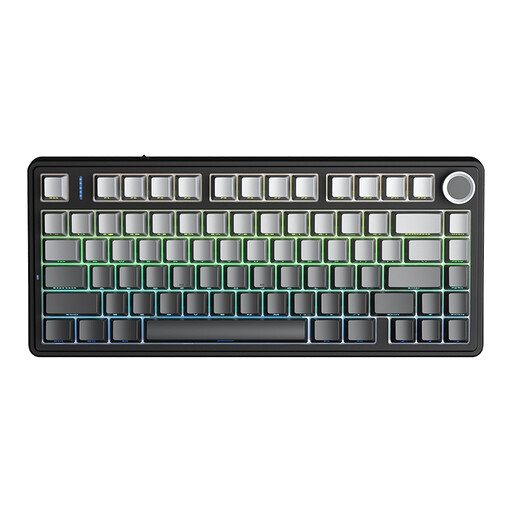 No image available
The compact layout can leave room for your mouse while you work on layouts.
The product name lists a US layout, hot-swappable switches, and wired, Bluetooth and 2.4 GHz connections. Check that the physical layout suits your input settings.
 No image available
The 75% layout may suit you if you’re looking for a compact keyboard for layout work that involves using a mouse.
The product name lists a wired connection, US QWERTY layout and hot-swappable linear switches.
 No image available
The compact layout can leave more room for mouse use while you work on layouts.
The product name lists a US QWERTY layout, wired, Bluetooth and 2.4 GHz connections, and hot-swappable switches. Check which physical layout you need.
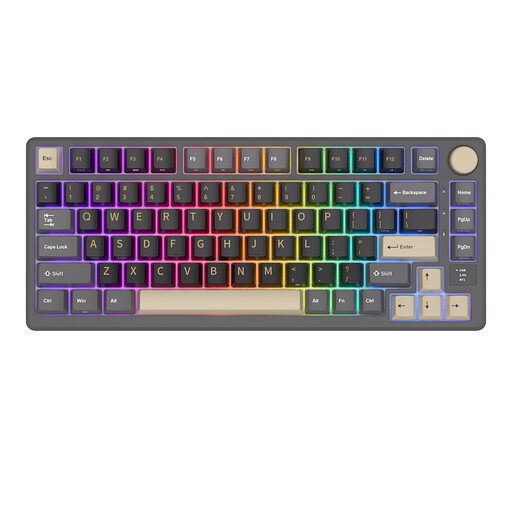 No image available
The compact layout may suit you if you want to keep room for your mouse while typing.
The product name lists 81 keys, hot-swappable Cream switches, and USB-C, Bluetooth and 2.4 GHz connections.
Not necessarily. Choose a size and key height that you can position comfortably when seated and standing, adjust your workspace and vary your posture. Arboportaal provides workplace advice, but this doesn’t prove that a particular keyboard prevents discomfort.
First, check the software input layout. Microsoft explains how to view installed layouts in Windows and add another one. Also check whether the physical keyboard layout matches what you’re used to.
For many online distance purchases from a business in the Netherlands, you have a 14-day cooling-off period. The Dutch government also outlines consumer rights to repair or replacement if there are problems with purchases from European online shops. Check which rules apply to your specific purchase.
Dutch government information on working with display screens does not specify a required ANSI, ISO or other keyboard layout. For employees who work with display screens for more than two hours a day, Arboportaal does specify that the screen and keyboard must not be attached to one another. This workplace requirement does not necessarily apply to personal use.