
Writer at a shared desk
You write longer pieces while other people can hear you typing. The sound and feel of the switches, along with the keyboard’s construction, are important factors to consider.


Start by choosing switches whose sound suits your workspace, and a layout that feels comfortable for writing and formatting. A compact keyboard can free up space for your mouse, while the ability to switch between devices is useful mainly if you work on more than one computer. Before buying, check the exact model and make sure its physical key layout matches your selected input language.
You write longer pieces while other people can hear you typing. The sound and feel of the switches, along with the keyboard’s construction, are important factors to consider.
You regularly switch between your keyboard and mouse while writing and formatting. A more compact layout can free up space, but check that your familiar navigation keys are still within easy reach.
You work on the newsletter on more than one computer and want to switch between them. Two screens connected to a single computer don’t, by themselves, make this feature necessary.
Start with the typing sound and layout that suit your workspace. Then consider whether switching between devices or customising keys would add anything to your day-to-day editing.
| What to consider | What should you check? | Who is this important for? |
|---|---|---|
| Typing sound and switch feel | Check the exact switch type and whether the case has sound dampening. A description such as ‘quiet’ doesn’t guarantee a silent keyboard. | At a shared desk, I want to type without the sound drawing unnecessary attention, and I also want to know how the keys feel. Around 36% of consumers put typing sound and switch feel first. |
| Layout and mouse space | Check the position of the navigation and function keys, and whether you need a number pad. | When editing, I want enough space for my mouse while keeping the keys I use often within easy reach. Around 29% of consumers prioritise layout and mouse space. |
| Connecting to devices | Work out how many computers you type on, then check whether the model uses Bluetooth, a receiver or a cable. | If I create the newsletter on different computers, I want to be able to switch easily; two screens connected to one computer aren’t a reason to do so. Around 21% of consumers prioritise connectivity and switching between devices. |
| Customising keys | Check whether the exact model supports key customisation or hot-swapping, and which switches are compatible. | For regular formatting tasks, I want to be able to customise keys or switches to suit the way I work. Around 14% of consumers choose customisability as their top priority. |
A keyboard feature for switching between devices adds little if you only type on one computer.
First count the computers you work on, then compare the available connection and switching options.
Switch feel and sound can vary between models. A ‘quiet’ description doesn’t mean that typing will be inaudible in your workspace.
Check the switch type on the exact model you’re considering and, where possible, try out how it feels to type on.
Saving space may mean that keys you often use for formatting are less accessible.
Before buying, think about how you use the arrow keys, function keys and, if applicable, the number pad.
The MX Mechanical Mini is a compact option, while the full-size MX Mechanical has a number pad.
The KW 300 MX is designed as a compact keyboard with a dampened case and Bluetooth.
According to Keychron, the K3 Max SE combines a compact 75% layout with connectivity and customisation options.
The One 3 Classic TKL RGB is a wired TKL option; a Dutch product listing specifies Cherry MX Silent Red switches.
This selection includes compact mechanical keyboards, including TKL and 75% layouts, for writing and editing where mouse space and easy-to-reach keys may be important.
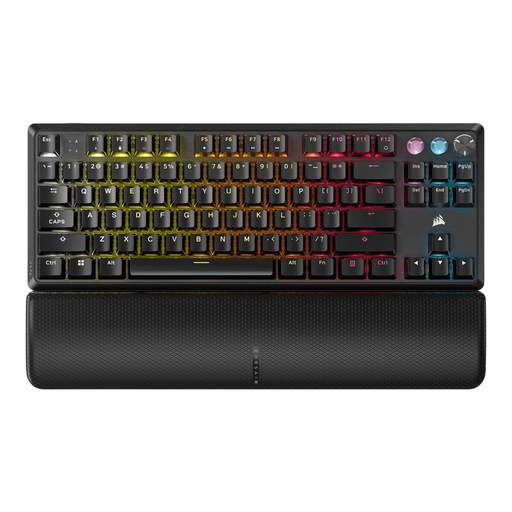 No image available
The TKL layout is worth considering if you can manage without a number pad and want to keep space free for your mouse.
The product information lists linear magnetic switches and two layers of sound-dampening foam. This is the US QWERTY version; check that the layout suits your selected input language.
 No image available
The 75% layout is designed for a more compact desk and, according to the product information, retains essential navigation keys.
This model has tactile Reaper switches and three connection options: wired, Bluetooth and 2.4 GHz. Check that the US QWERTY layout matches your selected input language.
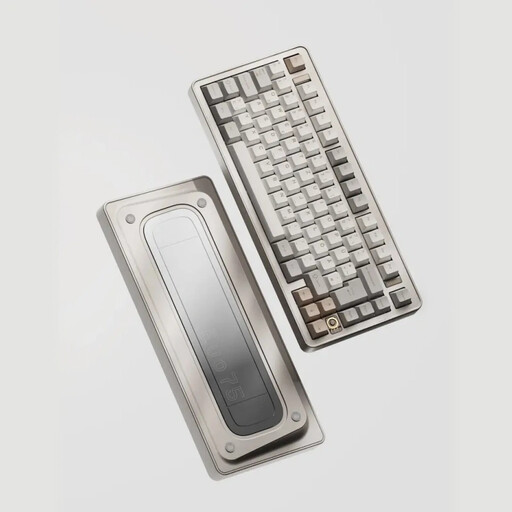 No image available
The 75% layout could be a good fit if you’re looking for a compact keyboard that takes up less desk space.
The product title lists hot-swapping, VIA compatibility and tri-mode wireless connectivity. Check that the US layout and listed features suit your computer and how you plan to use it.
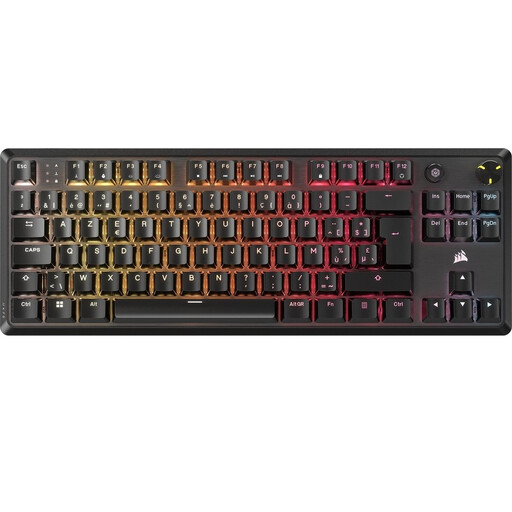 No image available
The TKL layout has no number pad and is worth considering if you want to keep desk space free.
The product information lists linear MLX Red switches, sound-dampening foam and a wired connection. This is the BE AZERTY version; check that its physical key layout matches your input settings.
 No image available
According to the product information, the 75% layout has 82 keys and retains the arrow and function keys, while leaving room for your mouse.
The listed connection options are Bluetooth, 2.4 GHz and wired USB-C. Check that the US QWERTY layout suits your selected input language.
No. Choose a keyboard for the computer you type on; connecting to multiple devices is mainly useful if you actually switch between computers.
Check both the physical key layout and the selected input layout. Microsoft Support explains how to manage the layout in Windows; on a Mac, Keyboard Viewer shows which keys enter accents and special characters, according to Apple Support.
No. Your choice of keyboard is just one part of your workspace setup. Arboportaal also recommends a relaxed posture and neutral wrists and forearms. For employees who work at a screen for more than two hours a day, Arboportaal describes requirements stating that the screen and keyboard must not be attached to one another; this isn’t a general requirement for every private buyer.
According to the Dutch government, when you buy online from a business, you will often have a 14-day cooling-off period; whether it applies depends on the purchase. If a product is faulty, you can ask the seller to put things right. The Netherlands doesn’t have one fixed statutory guarantee period that applies to every product.