
Vandaag of morgen in huis

Kwaliteit gegarandeerd

Welkomstaanbiedingen ontgrendelen: GRATIS bezorging | Tot 80% korting | Gratis 30 dagen JoyPlus-proefperiode
Download de app
A good meat tenderiser can help you cook chicken, steak or other cuts of meat more evenly. However, not every tool works in the same way. A meat mallet works differently from a needle tenderiser or a powder added to a marinade. If you focus only on a low price or bold marketing claims, you could end up with a product that is awkward to use, difficult to clean or unsuitable for your needs.
This buying guide will help you assess the differences based on verifiable features, such as material, dimensions, use and maintenance.
A meat mallet usually makes meat flatter and can mechanically break down tougher muscle fibres. A needle model pierces small openings in the meat. A powder is added to a marinade and therefore has a different application. The term meat tenderiser does not automatically tell you which type of product you will receive.
So always check whether it is a meat mallet, needle tenderiser, powder or a combination of functions.
A heavy meat mallet can be useful for thick cuts, but less suitable for a small kitchen or thin chicken breasts. A compact model is easier to store, but may offer a smaller striking surface. So look at the dimensions and weight, not just the product photo.
A metal head should be cleaned and dried thoroughly after use. If the handle is made of wood, it is sensible to follow the maintenance instructions and avoid prolonged soaking. With a needle model, the openings are particularly important: leftover meat residue can affect hygiene and usability.
Also check whether the product description explicitly provides information about the material, warranty and manufacturer. Missing information is not proof of poor quality, but it is a reason to compare products carefully.
First, choose the type of action that suits your cooking style:
A powder containing enzymes should not be treated like an ordinary kitchen herb. For example, the GZY Meat Tenderizer Powder states that the product is intended for marinating and that the meat must then be heated thoroughly. According to the product information, this powder contains papaya enzyme, salt, sugar, cornflour and spices, among other ingredients.
Clear material specifications are useful if you plan to use the tool frequently. According to the product description, the Maxcook meat tenderiser has a 304 stainless steel construction and a wooden handle. 304 stainless steel is often chosen for kitchen utensils because of its resistance to corrosion, but you should still pay attention to cleaning and drying.
According to the product information, the Alpina Meat Hammer is made of metal and has a length of 26 cm, a width of 4,70 cm, a height of 6,20 cm and a weight of 253 gram. Details like these make it easier to compare the tool with your available storage space and your preference for a lighter or heavier model.
For the occasional schnitzel or chicken breast, a compact meat mallet is often sufficient. Barbecue enthusiasts and home cooks who regularly prepare larger cuts may benefit more from a robust model or a meat tenderising tool with needles. When using a tenderiser intensively, pay particular attention to:
A meat tenderiser is not a substitute for proper cooking. Allow meat to rest after cooking, use a clean work surface and follow the food safety instructions on the packaging.
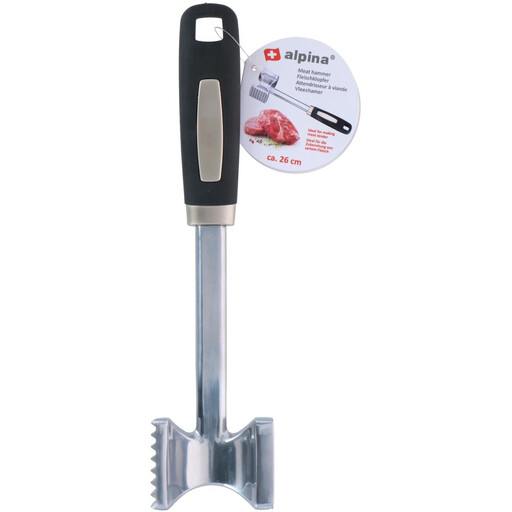
Why it suits this profile: A straightforward model for home cooks who want to try a classic meat mallet first, without additional functions or ingredients.
The product information lists the material, dimensions and weight. This means you do not have to rely solely on general terms such as “professional” or “powerful”.
Metal construction, a compact 26 cm size and a stated weight of 253 gram. The product information also states that a statutory EU warranty of at least two years applies.
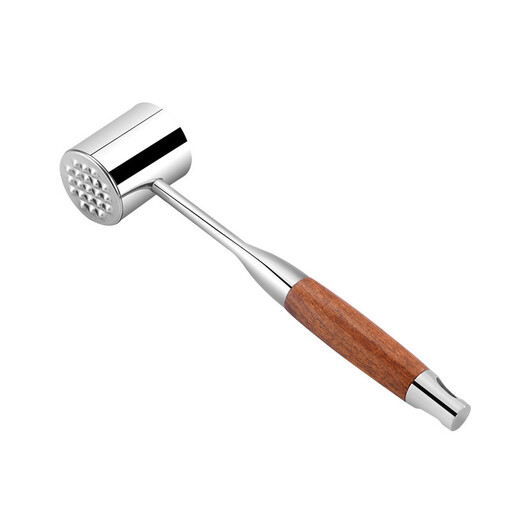
Why it suits this profile: Suitable for anyone who values a clearly specified material and wants to use a traditional mallet with a wooden handle for steak, chicken or schnitzel.
The description specifically mentions 304 stainless steel and a wooden handle. This makes the choice of material easier to verify than with an unspecified metal construction.
304 stainless steel construction and a classic design for manual tenderising. Before buying, check the current care information on the product label.
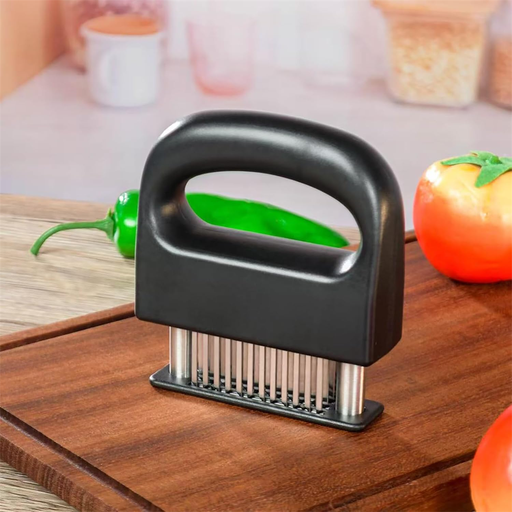
Why it suits this profile: An option for cooks specifically looking for a meat tenderiser that works on fibres and tendons, rather than just a mallet.
The name describes its specific use as a steak tenderiser and tool for working on tendons. Before ordering, check the dimensions and exact method of use on the product page.
Designed for working on steak and connective tissue. Its design differs from a traditional meat mallet, which may make it suitable for a specific preparation method.
We have put together a complete, up-to-date list of products that fully meet these strict selection criteria and the applicable European safety regulations.
A powder can be useful when you want to marinate meat without hitting or piercing it. According to the product information, HUASEED Tender Meat Powder consists of cassava starch and can be used for marinades, sauces, frying and baking. It is therefore not the same as an enzymatic meat tenderiser.
According to the label, WEI MEN Tenderizer Seasoning Powder should be left to marinate on the meat for 15 to 20 minutes. The ingredients list includes starch, salt, flavour enhancer and raising agents, among other ingredients. The amount of salt is therefore relevant: the product information states 17,1 grams of salt per 100 grams. Use the product according to the packaging and adjust your other seasoning accordingly.
Place the meat on a firm, clean surface and cover it with cling film if necessary. Strike in a controlled, even manner without using excessive force. Light treatment is usually sufficient, especially for thin cuts. Clean the meat mallet afterwards according to the care instructions for its material.
No. A meat mallet or meat tenderising hammer works on the meat through pressure and impact. A needle model creates small openings. These tools produce different results and also require extra attention when cleaning.
That depends on the material, construction, frequency of use and maintenance. A metal tool can last a long time if it is cleaned and dried after use. For powders, follow the use-by date on the packaging. Store opened powders in a cool, dry place in a tightly sealed container.
