
Vandaag of morgen in huis

Kwaliteit gegarandeerd

Welkomstaanbiedingen ontgrendelen: GRATIS bezorging | Tot 80% korting | Gratis 30 dagen JoyPlus-proefperiode
Download de app
There's something satisfying about slicing your own bread, cheese, or cured meats. The slices are exactly the thickness you want, and everything is noticeably fresher. But the search for the right home meat slicer can be frustrating. The market is flooded with models that promise a lot but often disappoint in practice. Before you make a purchase, it's crucial to know what to look for to avoid a costly mistake.
As a Joybuy Product Recommendation Officer, I see which appliances are returned daily and why. Many disappointments can be traced back to a few common pitfalls. These are the three most important mistakes you can avoid:
all-purpose slicer, but the reality is more nuanced. A blade that's perfect for bread isn't necessarily ideal for paper-thin carpaccio. A machine that can do everything "a little bit" often excels at nothing.To find a model that suits your needs, it's wise to look past the marketing and focus on a few key technical specifications. These determine the performance and lifespan of your electric slicer.
The power rating (expressed in watts) doesn't tell the whole story. The way the motor's power is transferred to the blade is at least as important. A machine with a gear drive is typically more durable and delivers more consistent torque than a model with a belt drive. You'll especially notice this when slicing harder foods. For most home cooks, a power rating between 100 and 160 watts with a good drive system is more than sufficient.
The blade is the heart of the machine. Pay attention to the following three points:
A solid construction is essential for safe and precise slicing. A metal housing offers significantly more stability than an all-plastic model. Also, check if the appliance has non-slip feet. A useful feature is a tilted carriage (often at a 15-degree angle). This allows gravity to lend a helping hand, so you need to apply less pressure for an even slicing result.
Not everyone has the same needs. One person might want a home slicer for daily bread, while another wants to impress with a perfect charcuterie board. Below are a few popular choices, matched to a specific user profile.
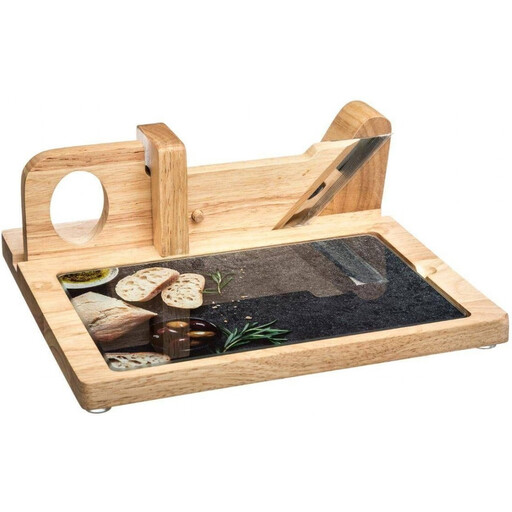
Why This Fits Their Persona: This user loves entertaining and enjoys presenting a beautiful charcuterie board. This manual charcuterie slicer is not only functional but also a stylish addition to the table. Perfect for slicing and immediately serving cured sausages and hard cheeses.
This is not an electric machine, so you don't run the risk of a burnt-out motor. It's a specialized product for a specific purpose and doesn't pretend to be an 'all-purpose slicer'.
Combines slicing and serving in one. The wooden design is aesthetic, and its manual operation means it can be used anywhere.

Why This Fits Their Persona: This user is looking for a reliable and versatile machine for daily use but has limited storage space. This foldable bread slicer is ideal for slicing bread, cheese, and deli meats in an average household.
According to the manufacturer Fritel, this model has a motor with a gear drive, which is more durable than cheaper alternatives. The foldable design solves the problem of bulky, large appliances.
Very compact for storage thanks to its foldable design. Equipped with a child-safe switch and a removable stainless steel serrated blade.
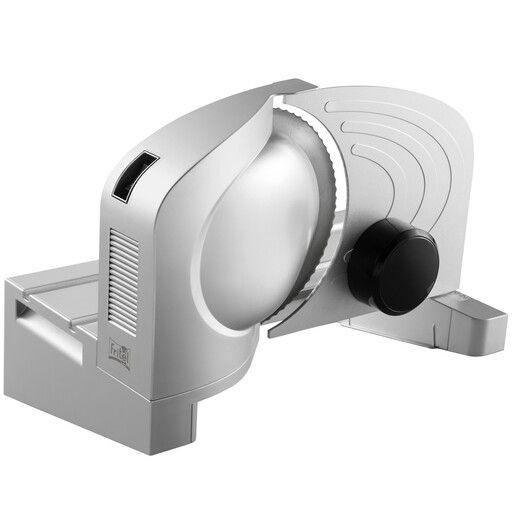
Why This Fits Their Persona: This user doesn't settle for less. Slicing large cuts of meat, homemade bread, or whole cheeses requires a powerful and stable machine. Precision and durability are paramount.
The metal housing and gear drive provide the stability and power that cheaper models lack. The 15° tilted carriage ensures efficiency and prevents the frustration of uneven slicing.
Robust, stable construction for intensive use. The slice thickness is continuously adjustable from 0 to 20 mm, providing maximum control.
We have compiled a complete, up-to-date list of products that meet these strict selection criteria and safety regulations.
Safety first: always unplug the appliance from the power outlet before you start cleaning. Turn the slice thickness knob to the '0' position so that the cutting edge of the blade is covered. According to most manuals, you can remove the carriage and the blade. Wash these loose parts by hand in soapy water. The housing and motor unit should never be submerged in water; wipe them down with a damp cloth.
This depends entirely on your primary use. A serrated blade is an excellent all-rounder. It effortlessly cuts through hard bread crusts and firm sausages. A smooth blade is the connoisseur's choice for slicing delicate products. It delivers paper-thin, non-frayed slices of roast beef, ham, or carpaccio. Some more advanced models offer the option to swap blades.
Don't get fixated on a high wattage. The efficiency of the motor and the type of drive system are more important. A well-designed 150-watt machine with a gear drive often performs better and lasts longer than a poorly designed 200-watt model with a fragile belt drive. Focus on the overall build quality and the drive type rather than just the power rating.
