
Vandaag of morgen in huis

Kwaliteit gegarandeerd

Welkomstaanbiedingen ontgrendelen: GRATIS bezorging | Tot 80% korting | Gratis 30 dagen JoyPlus-proefperiode
Download de app
A measuring cup may seem simple, but you’ll soon notice the difference between models in everyday use. Hard-to-read markings, an uncomfortable handle or material that isn’t suitable for hot liquids can quickly become frustrating. So, whether you’re a keen home baker, a hobby cook or cooking for a family, it’s worth looking beyond capacity and price.
In this buying guide, you’ll find out what to look for in a glass measuring cup, a plastic measuring cup, a measuring jug or a measuring cup set. We’ll also compare a few options for different needs.
A 500 ml measuring cup is handy for smaller quantities of milk, oil, batter or sauces. For soup, dough mixtures or larger portions, a 1000 ml measuring cup may be more practical. However, a larger capacity also means the cup takes up more space and can be heavier when full.
So, think about the portions you usually make. A set with, for example, 250 ml, 500 ml and 1000 ml sizes offers more flexibility than one large measuring jug.
A measuring cup with markings helps you measure ingredients, but how easy they are to read varies from one model to another. Check:
A transparent cup lets you see the level, but always read liquids at eye level. Water and other liquids curve slightly at the surface, forming what’s known as a meniscus. Read from the bottom of the curve for a more consistent result.
Not every glass or plastic measuring cup is suitable for hot ingredients, microwave use or sudden temperature changes. Borosilicate glass is often mentioned in product information because it resists thermal shock. Even so, you shouldn’t put a hot cup straight under cold water.
For plastic, check specifically whether it’s suitable for use in the microwave and dishwasher. Never use a measuring cup on a hob or direct heat source unless this is explicitly stated.
A glass measuring cup is transparent, generally doesn’t absorb odours and is suitable for mixing a wide range of ingredients. Borosilicate glass is a practical choice if you regularly work with hot liquids, provided the product description confirms it’s suitable.
A plastic measuring cup is often lighter and less fragile for everyday use in a busy household. Be sure to check the maximum temperature, whether it’s dishwasher-safe and how durable the markings are.
A capacity of 250 or 350 ml is often enough for small quantities. A 500 ml measuring cup is a good fit for everyday cooking and baking recipes. A 1000 ml measuring cup is more useful for large quantities of batter, stock or drinks.
A wide base usually provides more stability while mixing. A tall, narrow shape can save space, but may be less convenient when using a whisk or hand blender. Also check the height if you want to store the cup under a kitchen cupboard or in a drawer.
A sturdy handle makes it easier to pour hot or heavy liquids. A pouring spout helps prevent spills when transferring batter, oil or sauce. With a measuring cup set, it’s useful if the cups nest inside one another.
Before buying, check whether any removable parts are dishwasher-safe. If you’re using a hand blender or stick blender, also make sure the supplied beaker is large enough for the quantities you usually prepare. Always keep the motor unit of electrical appliances away from water.
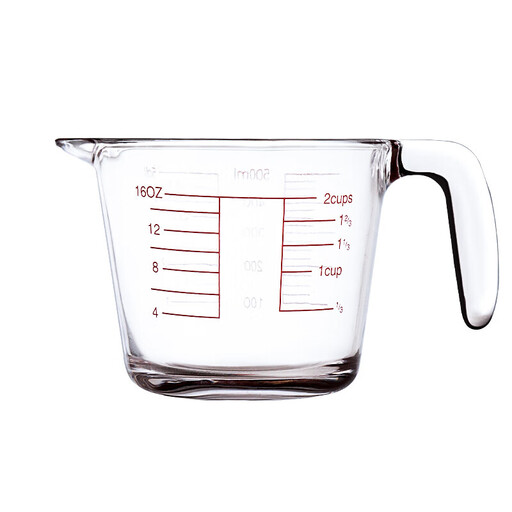
Why it suits this type of user: Its 500 ml capacity is ideal for many everyday recipes, while the glass design lets you see the level of the ingredients.
The markings are part of the product design, so you don’t have to rely solely on a separate kitchen scale. Before use, check which units are shown and follow the care instructions.
Glass design and 500 ml capacity with measuring marks.
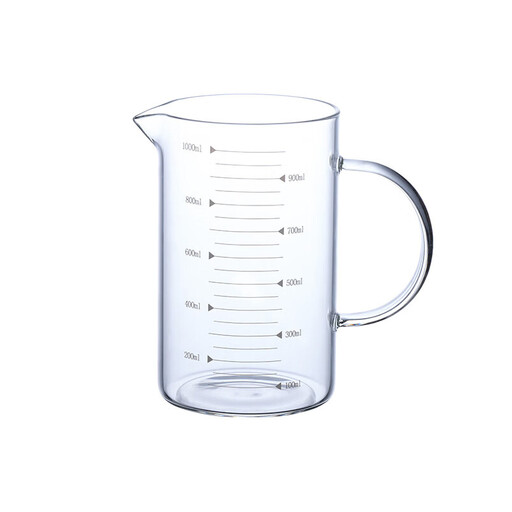
Why it suits this type of user: This measuring jug is designed for larger portions and for anyone who values a transparent cup with plenty of capacity.
The product description specifies borosilicate glass, clear markings and suitability for hot liquids. Even so, avoid sudden changes in temperature.
1000 ml capacity, borosilicate glass and markings for larger quantities.
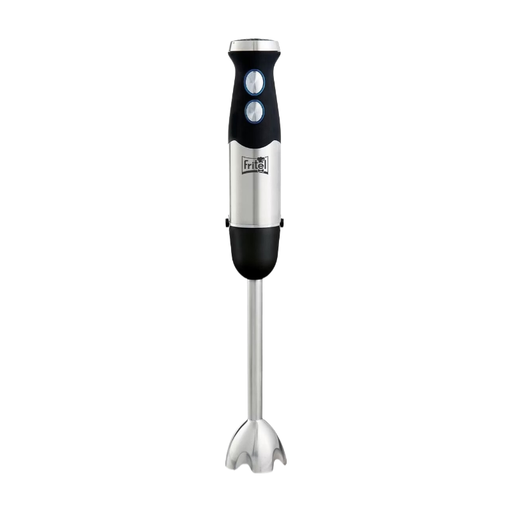
Why it suits this type of user: If you prepare soups, sauces and purées as well as measuring ingredients, this hand blender gives you a measuring beaker and several accessories in one set.
The set includes a 25 cm blending shaft, two speeds and a measuring beaker. The instructions limit continuous use to 60 seconds, so bear this in mind.
800 W, stainless steel shaft, chopper, measuring beaker and two beaters, according to the product information.
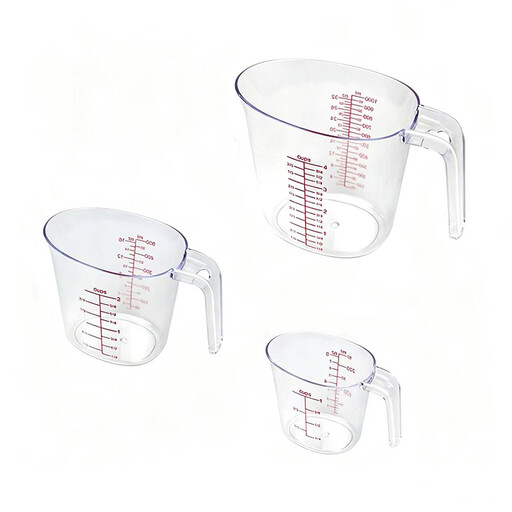
Why it suits this type of user: The three sizes—250 ml, 500 ml and 1000 ml—are useful for a wide range of recipes and portions.
You won’t need to use an oversized measuring jug for small quantities. When it arrives, check that the markings on each cup are easy to read.
Three transparent sizes: 250 ml, 500 ml and 1000 ml.
We’ve put together a full, up-to-date selection of products that meet these strict selection criteria and current European safety regulations.
That depends on the type of glass and the product instructions. Product information for borosilicate glass sometimes states that it can withstand high temperatures and thermal shock. Even so, let the cup cool gradually and don’t move it straight from a hot environment into cold water.
A 500 ml cup is a useful middle size for many household recipes. Choose 250 to 350 ml for small quantities and 1000 ml for larger portions. If you make a variety of recipes, a measuring cup set can make things more efficient.
Not always. Check the diameter, height and capacity of the cup. A tall measuring jug can help reduce splashing, but the hand blender needs enough room to move safely. Only use a hand blender in accordance with the instructions provided, and keep the motor unit away from water.
