
Vandaag of morgen in huis

Kwaliteit gegarandeerd

Welkomstaanbiedingen ontgrendelen: GRATIS bezorging | Tot 80% korting | Gratis 30 dagen JoyPlus-proefperiode
Download de app
A mattress may look clean, yet still retain dust, skin flakes, hair and moisture. A regular vacuum cleaner removes some surface dirt, but is not always convenient for bedding, mattresses or upholstered furniture. A dedicated mattress vacuum cleaner typically combines suction power with a vibrating brush, UV light, filtration or warm-air drying.
However, not every mattress cleaner is automatically suitable for your household. Focus on verifiable specifications rather than relying solely on terms such as “dust mite protection” or “hygienic”.
UV-C sounds persuasive in product titles, but its effectiveness depends on the distance from the fabric, the speed at which the device is moved and the appliance’s safety features. A UV lamp also does not replace thorough vacuuming or regularly washing your bedding.
According to Hoover’s product description, the built-in UV-C lamp helps reduce bacteria, allergens and mites. This is a brand claim, not a universally proven result for every use case. Xiaomi and ochama also mention UV functions on their models. Therefore, also consider suction power, the filter design and the user manual.
Important: Never look directly into a UV-C lamp. On various models, the lamp switches off when the device is lifted or tilted, but always verify this in the manual.
A value expressed in kPa, Pa, AW or watts does not tell the whole story. A higher motor rating does not automatically mean that the device will be more pleasant to use on a mattress. Brush width, airflow, filtration and sealing all affect everyday performance.
For example, a 12 kPa mattress vacuum cleaner may be sufficient for dust and hair, while a 15 kPa model offers more capacity for deeply embedded dirt. Only compare figures when they have been measured or specified in the same way.
An upholstery or spot cleaner that uses water may be suitable for sofas and carpets, but it is fundamentally different from a dry vacuum cleaner designed to remove dust mites. A damp surface that does not dry properly can make the mattress impractical to use immediately.
If you want to remove moisture from textiles, look for an explicit hot-air drying function. Use the drying function in accordance with the manual and check beforehand whether the material can withstand heat.
For a mattress cleaner, kPa or Pa, motor power and a moving brush are relevant specifications. Vibration cleaning can loosen dust and hair from the fibres before they are vacuumed up. The ochama mattress vacuum cleaner, for example, lists 12 kPa of suction power and a vibration frequency of 72,000 times per minute. The Lubluelu CM208 lists 15 kPa and a power rating of 500 watts.
These figures provide a technical indication, but do not guarantee a particular cleaning result. Move the bed vacuum cleaner slowly and evenly across the surface.
A well-sealed filtration system helps prevent extracted fine dust from being blown straight back into the room. Check:
According to the product information, the Lubluelu has a 650 ml dust container. The ochama features a dual 300 ml container for separating dust and mites. The Xiaomi Dust Mite Vacuum Cleaner Pro lists four filtration stages and a 0.5-litre container. A larger container means less frequent emptying, but it can also make the device heavier.
For a double mattress, a 2-metre cord can sometimes be limiting. Lubluelu lists a 4-metre cord, while ochama lists 5 metres. This can be more convenient when the power socket is not located next to the bed.
Also consider the weight. A device weighing around 2 kilograms is easier to use for longer periods than a heavier model. Warm air at 50 to 65°C can help dry a surface, but check the material-care instructions and keep the device moving.
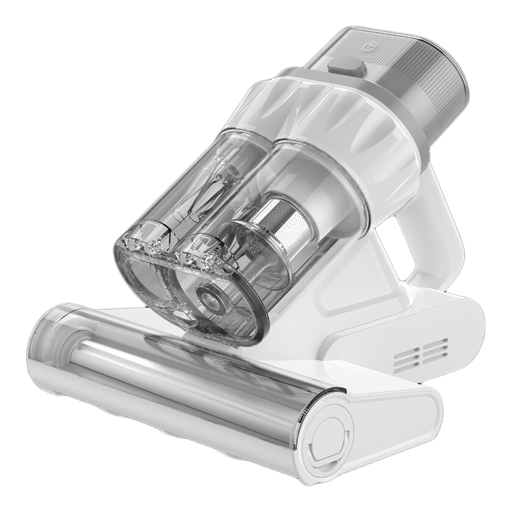
Why this profile is a good fit: A compact choice for households that mainly want to maintain mattresses, pillows and blankets without investing in a large appliance.
Alongside UV, the product information lists 12 kPa of suction power, 65°C warm air and a dual dust container. This makes the functions easier to compare on a practical basis.
Lists 300 watts, a 5-metre cord and a vibration frequency of 72,000 times per minute.
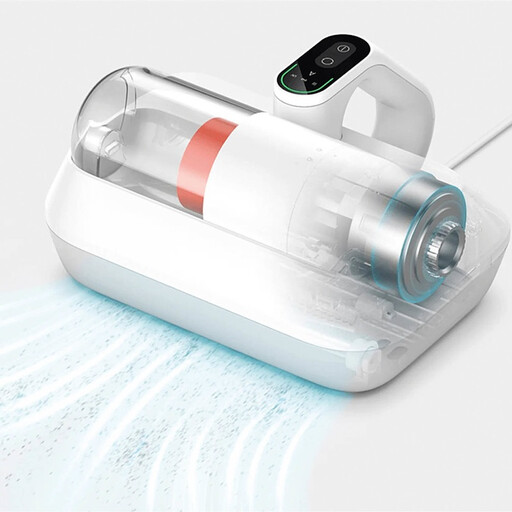
Why this profile is a good fit: Suitable for anyone who wants to tackle different textile surfaces and values multiple modes and status information.
The specifications list 14 kPa, three modes, a UV safety sensor, 55°C warm air and a four-stage filtration system.
Suitable for mattresses, sofas, pillows and other upholstered furniture; according to the listing, it weighs 2.06 kg.
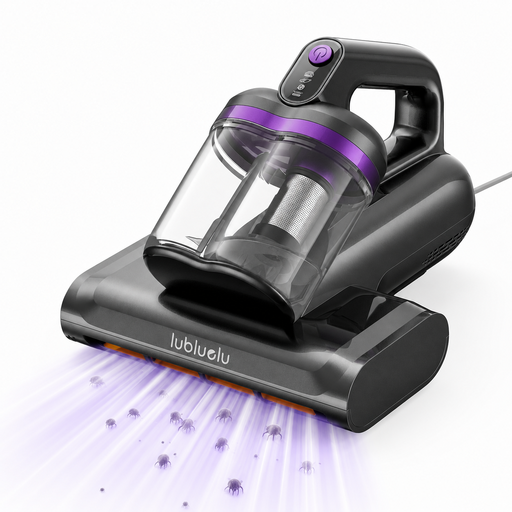
Why this profile is a good fit: A bed vacuum cleaner for anyone who regularly treats mattresses, sofas and other fabric surfaces.
The product description specifies suction power, dust capacity, cord length and warm air separately instead of relying solely on a general hygiene claim.
Lists 15 kPa, a 650 ml dust container, 55°C warm air and a 4-metre cord.
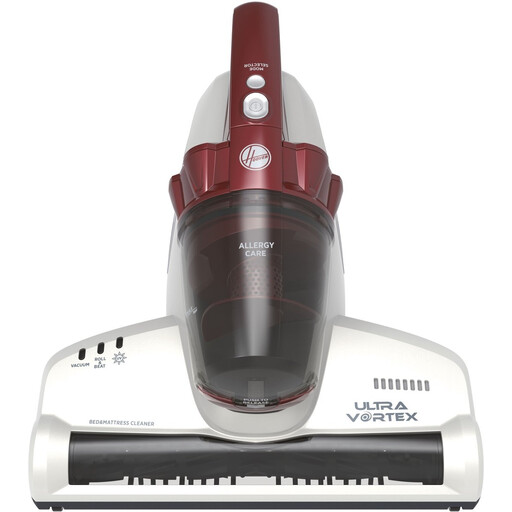
Why this profile is a good fit: Convenient for mattresses, pillows, sofas, armchairs, duvets and textiles where pets leave hair behind.
Alongside UV-C, Hoover specifies a Roll & Beat vibrating brush and a cyclonic system for dust separation. The lamp is not the only cleaning method.
500-watt motor, compact handheld design and, according to the product information, a statutory EU warranty of at least two years.
Explore a current selection of dust mite removers and compare models by suction power, filtration, UV functionality and warm-air drying.
A dust mite vacuum cleaner can remove dust, hair and other particles from textiles. This does not mean that every mite or allergen will be removed. Results depend on the device, filter, surface and method of use. Combine regular vacuuming with washing and thorough ventilation.
For many households, once a month is a practical starting point, with extra attention needed when you have pets, young children or intensive use. For delicate mattresses, always follow the manufacturer’s recommendations.
That depends on the power rating and how long the device is used. The models mentioned range from 300 to 500 watts. A short, targeted cleaning session generally uses less energy than prolonged operation, but always check the energy label or product specifications when available.
