
Vandaag of morgen in huis

Kwaliteit gegarandeerd

Welkomstaanbiedingen ontgrendelen: GRATIS bezorging | Tot 80% korting | Gratis 30 dagen JoyPlus-proefperiode
Download de app
A mattress vacuum cleaner with UV-C can be useful if you regularly want to clean mattresses, pillows, sofas or duvets. A standard vacuum cleaner removes visible dirt, but it isn’t always practical for deep-cleaning fabrics. A specialist dust mite vacuum cleaner often has a wide cleaning head, a beating or vibrating function and, sometimes, UV-C light or warm air.
Be wary of marketing claims. A UV lamp doesn’t automatically make a device suitable for every household. Performance also depends on suction power, filtration, contact with the fabric and correct use. If you only look at a high wattage or a percentage on the packaging, you could end up buying an inconvenient or expensive device.
A 500-watt motor rating doesn’t tell you exactly how much air the device draws through the fabric. The design of the cleaning head, air channels, filters and dust container also has an impact. That’s why mattress vacuum cleaners sometimes show a figure in kPa or Pa, while other brands focus mainly on motor power.
So don’t just compare 500 watts with 300 watts. Also look at:
According to their own product information, various brands say that UV-C light can reduce bacteria, allergens or mites. This isn’t a universal guarantee for every use. The light only works where the lamp is close enough to the surface and the device is moved slowly enough.
A good UV-C mattress cleaner should ideally combine several functions, such as suction, vibration or beating and, optionally, warm air. Never use UV-C on people, pets or plants. Don’t look directly at the lamp, and choose a model that switches the lamp off automatically when the device is lifted.
An anti-allergy vacuum cleaner that gets clogged quickly is less convenient to use and may also lose suction power. Before buying, check whether the filter is removable and washable, how often it’s recommended to replace it and whether dust can escape again when the container is emptied.
A well-sealed dust system is especially useful in households with pets. Pet hair can wrap around brushes, while fine particles can put a strain on the filter. A pet hair vacuum cleaner isn’t always a mattress cleaner, so check whether the manufacturer also recommends the device for soft fabrics and bedding.
When vacuuming a mattress, a flat cleaning head with good contact is important. A beating or vibration function can loosen dust and hair from the fibres before they’re sucked up. Product descriptions may call this Roll & Beat, vibration or give a stated frequency.
A higher figure isn’t automatically better. A powerful device may be heavier and harder to move across a large mattress. For occasional use, a compact model may be more practical than a heavy device with several settings.
Check the type of filter and how the container is emptied. A cyclone system separates dust from air in several stages, but the exact filter quality varies between models. Some products list four-stage or six-layer filtration; others clearly state that they don’t have a HEPA filter.
If you’re sensitive to dust, it’s worth checking the product specifications carefully. A filter is only effective if it’s maintained according to the instructions and put back completely dry.
Some models list UV-C wavelengths of around 254 nm or 253.7 nm. According to the relevant brands’ product information, UV-C is intended as an additional function during cleaning. Don’t treat it as a replacement for washing, airing or following the mattress manufacturer’s care instructions.
Warm air can help reduce residual moisture, but check the temperature and the material of your mattress. Models in this selection, for example, list 50°C, 55°C, 60°C or 65°C. Don’t use a heat function for long periods on heat-sensitive fabrics, and don’t treat wet surfaces unless the instructions specifically allow it.
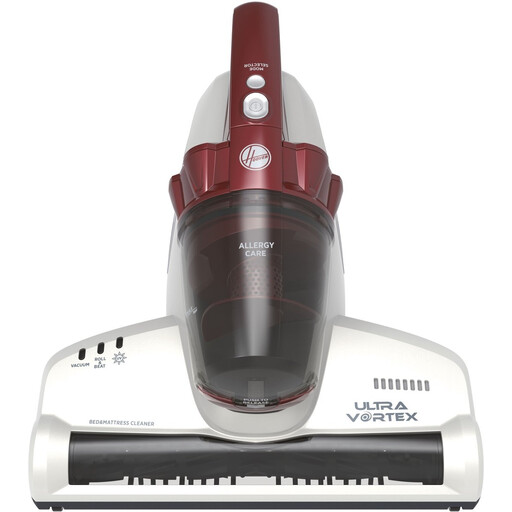
Why it suits this profile: This handheld model is designed for mattresses, pillows, sofas, duvets and carpets. It weighs 2.30 kg and has a power rating of 500 W, making it a good fit if you want one specialist device without moving up to a full-size stick vacuum cleaner.
As well as UV-C, the product description mentions Roll & Beat, cyclone separation and suitability for pet hair. That means your choice isn’t based solely on a UV claim.
500 W power, vibrating brush, compact design and a stated statutory guarantee of at least 2 years in the EU.
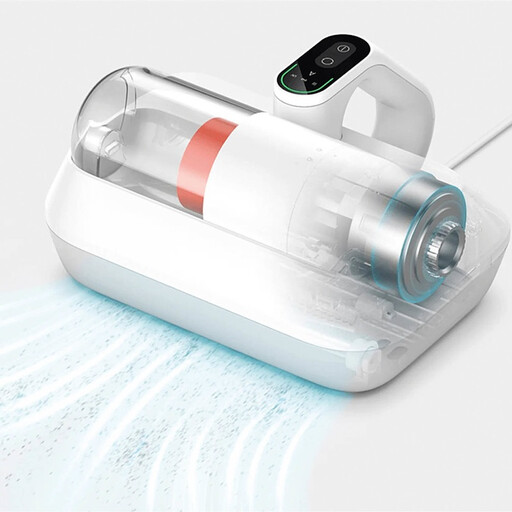
Why it suits this profile: This model has several settings, a display and a stated suction power of 14 kPa. It’s a good choice for households that regularly want to clean mattresses, sofas, pillows and other fabrics.
According to the product information, the UV-C lamp switches off when the device is lifted more than 5 cm. The warm-air function operates at 55°C, so take care when using it on delicate materials.
14 kPa suction power, 0.5-litre dust container, four-stage filtration, UV-C safety sensor and three settings.
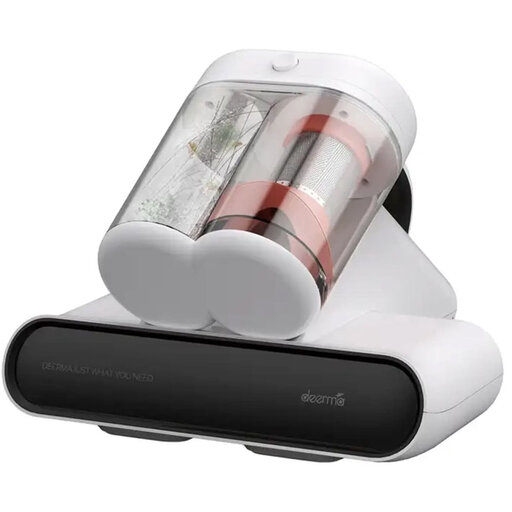
Why it suits this profile: The combination of UV-C, warm air, vibration and suction is aimed at users who want several cleaning functions in one mattress cleaner. The dual dust containers are handy for repeated use.
According to the product description, the UV function switches off automatically when necessary. The stated warm-air temperature of 60°C means it’s important to follow the instructions and check that the material is suitable.
Stated suction power of 13 kPa, 12,600 vibrations per minute, two dust compartments with a capacity of 0.6 litres each and a combined cleaning method.
Don’t use a mattress cleaner on liquids, hot ash, burning materials or sharp objects. With UV-C models, don’t look directly at the lamp.
We’ve put together a complete, up-to-date list of products that meet these strict selection criteria and the applicable European safety regulations.
According to brands’ own product information, UV-C light can help reduce mites or bacteria. The results depend on factors including distance, exposure time, movement and the fabric. Use it as an additional cleaning function, not as your only method.
That depends on how often it’s used, whether you have pets and how much dust there is in the bedroom. Many households choose to clean their mattress monthly, and more often if there’s visible dirt or pet hair. Washable bedding and good ventilation are also important.
A corded model uses electricity for as long as the motor or heat function is running. Consumption depends on the power rating and how long you use it. In theory, a 500W device uses 0.5 kWh for the motor in one hour, not including any differences in actual power consumption. A short, targeted clean will generally be more manageable than using it for a long time.
