
Vandaag of morgen in huis

Kwaliteit gegarandeerd

Welkomstaanbiedingen ontgrendelen: GRATIS bezorging | Tot 80% korting | Gratis 30 dagen JoyPlus-proefperiode
Download de app
A mattress vacuum cleaner can help remove dust, dead skin and pet hair from fabrics. However, not every appliance is suited to the same task. A compact handheld vacuum for mattresses works differently from a wet cleaner for sofas or an upright vacuum cleaner for the whole home.
For households with allergies or sensitive airways, the combination of suction power, filtration and ease of use is particularly important. A UV lamp or hot-air function can be useful extras, but on their own they don’t tell you enough about overall performance. Below, we cover the main pitfalls, specifications and product options.
Manufacturers may list wattage, pascals or a specific number of vibrations per minute, for example. These figures aren’t directly comparable. Wattage mainly tells you how much power the appliance uses, while real-world suction also depends on the brush, airflow, seals and filter.
A 500-watt mattress vacuum cleaner may therefore perform differently from a model with a lower stated power rating. So don’t focus on one big number; consider the full range of specifications.
A UV mattress vacuum cleaner is often presented as a solution for bacteria, mites and allergens. Always check exactly what the manufacturer says the function is designed to do. According to Xiaomi’s and Hoover’s own product information, certain models have UV-C lighting and claims about reducing or killing micro-organisms. These are brand claims, not a general guarantee for every use.
A UV lamp also doesn’t replace regular washing of your bedding, airing the room or following any advice from a medical professional. Check the safety features too. On several models, the lamp switches off when the appliance is lifted from the surface. Never look directly at a UV lamp, and don’t use the function on people or pets.
A water-based mattress cleaner may be suitable for stains and upholstery, but it introduces moisture into the fabric. This means you’ll need to dry it thoroughly afterwards. Don’t use a wet-and-dry model on a mattress unless the instructions say it’s suitable.
For dry mattress vacuuming, choose a model specifically designed for mattresses, pillows and other fabrics. An upholstery cleaner with a spray function is mainly useful for sofas, car seats and carpet stains.
For cleaning deeper fibres, the stated suction power isn’t the only thing to consider. A beating, vibrating or rotating brush can also make a difference. Hoover, for example, lists a Roll & Beat function for the MBC500UV. Xiaomi states that the Dust Mite Vacuum Cleaner Pro has a beating frequency of 48,000 movements per minute and a roller brush speed of 3,000 revolutions per minute.
These figures come from the product information. They give an indication of the technology, but don’t automatically guarantee results on every mattress or type of fabric. Move the vacuum slowly over the surface, following the instructions.
If you’re looking for a vacuum cleaner for dust mites or a vacuum cleaner for allergies, it’s worth checking the filtration system carefully. Look for:
According to the product specifications, the Xiaomi Dust Mite Vacuum Cleaner 2 has a four-stage cyclone filtration system, but no HEPA filter. The Xiaomi Dust Mite Vacuum Cleaner Pro lists a HEPA filter and four-stage filtration. This difference matters for households looking to keep as many fine dust particles as possible inside the appliance.
A mattress vacuum cleaner with a UV lamp may be worth considering if you’d like an additional function for fabrics as well as vacuuming. Check the wavelength, automatic shut-off and warnings in the instructions. The Xiaomi Dust Mite Vacuum Cleaner Pro lists a UV safety sensor.
Hot-air drying can help reduce residual moisture after use, but check the temperature and the material. Xiaomi lists 55 °C, Lubluelu 55 °C and ochama 65 °C. Don’t test an appliance on delicate fabrics without checking first, and don’t use a model on wet surfaces unless this is permitted.
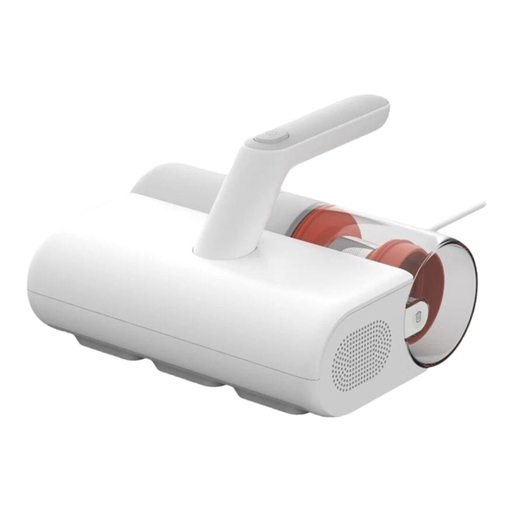
Why it suits this use: This model is compact and corded, and at 1.63 kg it’s relatively light for regular use on mattresses, pillows and sofas.
The product information lists both UV lighting and hot-air drying. It also clearly states that there’s no HEPA filter, so you can take this limitation into account when making your choice.
Stated suction power of 12,000 Pa, a four-stage cyclone filter and a 2-metre cord.
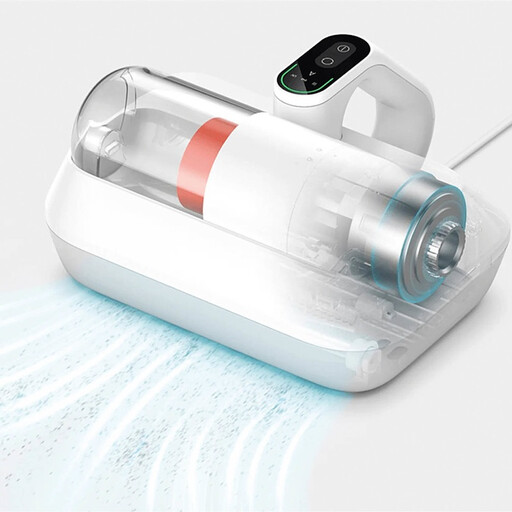
Why it suits this use: This model combines several functions for anyone who wants to clean mattresses, duvets, pillows and sofas regularly.
The specifications list the 14 kPa suction power, HEPA filter, UV safety sensor and 55 °C hot-air function separately. This lets you check the features rather than comparing marketing terms alone.
Three settings, a 0.5-litre dust container and an automatic UV function shut-off when the appliance is lifted.
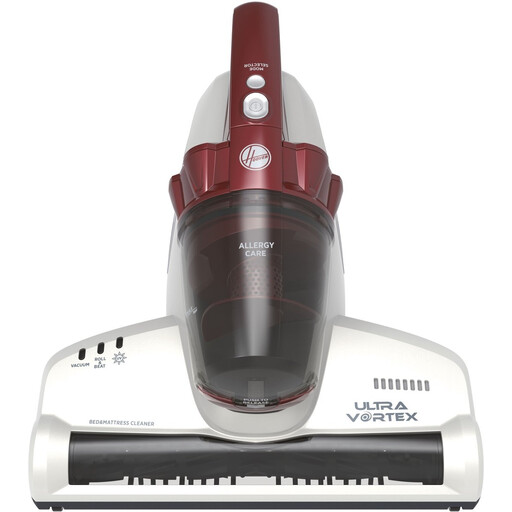
Why it suits this use: This handheld model is designed for mattresses, pillows, sofas, carpets and pet hair. It’s a good fit for households looking to clean fabrics with a specific purpose in mind.
According to the product description, it combines suction, Roll & Beat vibration and UV-C. The manufacturer claims it can reduce certain bacteria, allergens and mites by up to 99.9%; this remains a brand claim, not a universal result.
500-watt motor, cyclone dust separation, vibrating brush and a weight of 2.3 kg.
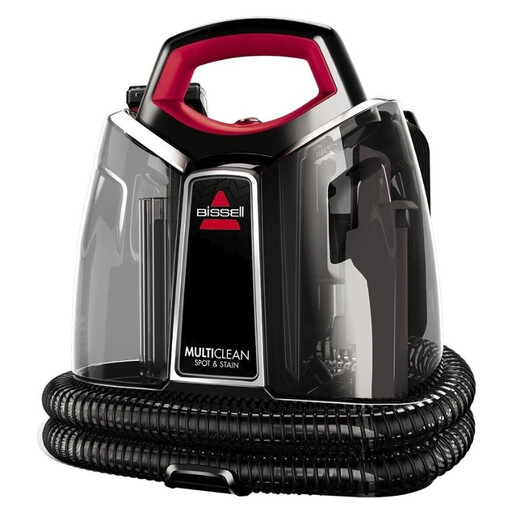
Why it suits this use: This isn’t a conventional anti-mite vacuum cleaner, but a wet cleaner for sofas, car seats, carpets and stains.
The separate clean- and dirty-water tanks make it clear that this appliance uses moisture. Follow the instructions for dosage, testing on materials and drying thoroughly.
330 watts of power, a 2.2-metre hose and four cleaning tools for different fabric surfaces.
We’ve put together a complete, up-to-date list of products that meet these strict selection criteria and the applicable European safety regulations.
For an even result, remove the sheets and blankets from your mattress first. Move the mattress vacuum cleaner slowly in overlapping passes, paying extra attention to seams and edges. Empty the dust container after use, and clean or replace the filter according to the instructions.
Never use a dry vacuum cleaner to pick up liquids. If you’re using a wet cleaner, empty and rinse both tanks afterwards. Let all parts dry completely before putting them back in place. Also check whether replacement filters or UV lamps are available separately. This affects the cost of use over time.
A mattress vacuum cleaner can pick up dust, dead skin and other dirt from fabrics. Some brands also claim that UV-C, heat or vibration can help tackle mites. Claims based on a brand’s own research or product information shouldn’t be taken as a guarantee that all dust mites will be removed. Regular washing, airing the room and suitable bedding remain important.
It depends on how often it’s used, whether you have pets and how sensitive you are to dust. Many households opt for regular cleaning, for example when changing the bedding. Don’t rush, and follow the care instructions for both the mattress and the appliance.
With a corded model, your main costs are electricity, filters and any replacement parts. A wet cleaner also uses water and cleaning solution. Before buying, check the price of replacement filters, the capacity of the dust container and whether accessories are available separately. This gives you a more realistic idea of the costs than the purchase price alone.
