
Vandaag of morgen in huis

Kwaliteit gegarandeerd

Welkomstaanbiedingen ontgrendelen: GRATIS bezorging | Tot 80% korting | Gratis 30 dagen JoyPlus-proefperiode
Download de app
A mattress vacuum cleaner can be useful for mattresses, pillows, sofas and other fabrics where dust, hair and skin flakes accumulate. However, not every model is suitable for regular use. Marketing terms such as “UV sterilisation”, “dust mite protection” and high suction power only tell you so much if you do not also consider filtration, handling and maintenance.
Households with pets, people with sensitive airways and users who want to clean their bedding more thoroughly should compare the product specifications carefully. Pay attention to these common pitfalls.
Manufacturers state suction power in kPa, wattage or sometimes other measurements. These figures are not always directly comparable. A motor with a higher wattage is not necessarily more efficient, and a higher kPa value says little about practical performance if the nozzle does not make proper contact with the fabric.
Also look at:
A bed vacuum cleaner with 12 to 15 kPa may be sufficient for everyday maintenance, while a model with a larger brush and better filtration can be more convenient for large mattresses or sofas.
UV-C lighting is often mentioned with a UV-C mattress cleaner or dust mite remover. According to the brands’ product information, UV-C may help reduce micro-organisms or mites. These claims are made by the brands and should not be regarded as a guaranteed result. Actual exposure depends, among other things, on the distance, the speed at which you move and contact with the surface.
Therefore, check whether:
Never look directly into a UV-C lamp and do not point it at people or pets.
A mattress cleaner with hot air blows warm air through or over the fabric. This can be useful after vacuuming, but a temperature of 50, 55 or 65 °C does not guarantee that a mattress will dry completely. Airflow, usage time and the thickness of the material all play a part.
Use hot air according to the instructions and take care with heat-sensitive fabrics. A mattress vacuum cleaner is also not a wet vacuum: the models mentioned must not be used to vacuum up liquids.
A vacuum cleaner for mattresses and sofas must loosen and remove fine dust from fibres. A beating or vibrating function helps dislodge material from the fabric. Product specifications may mention, for example, 48,000 to 72,000 movements per minute, but this is still mainly a technical indication. The combination of the brush, airflow and suction opening determines the results in use.
A relatively wide nozzle is practical for a large bed. A more compact handheld vacuum cleaner for bedding is easier to store and suitable for pillows, duvets and smaller surfaces.
Anyone looking for a vacuum cleaner for allergies should pay extra attention to the filter system. A HEPA filter can trap fine particles, but check whether the product is actually described as a HEPA model. For example, the Xiaomi Dust Mite Vacuum Cleaner 2 explicitly states that it does not have a HEPA filter, despite its four-stage filtration system.
Also consider:
A full dust container or blocked filter can reduce airflow. Regular maintenance is therefore just as important as motor strength.
A bed vacuum cleaner with hot air can become warm during use. Check the stated temperature and follow the safety instructions for delicate fabrics. Noise level is also relevant: the models in this selection range from a maximum of 65 to 78 dB. A quieter model may be more comfortable in a bedroom, especially if you clean frequently.
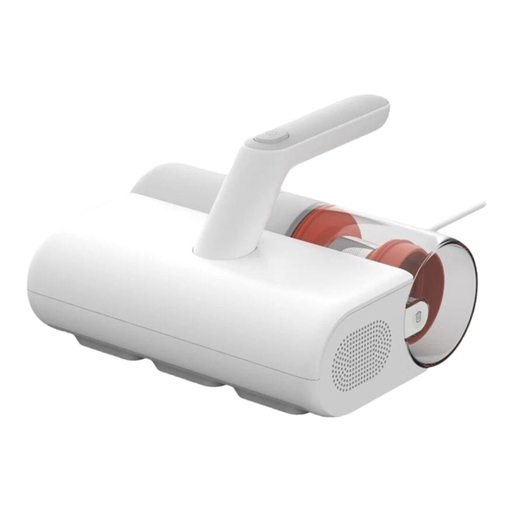
Why it suits this profile: This model is designed for users looking for a compact, corded upholstery vacuum cleaner for mattresses, pillows, sofas and duvets.
The specifications state 12,000 Pa suction power, UV lighting and 50 °C hot air. However, do not expect HEPA filtration: according to the product information, a HEPA filter is not included.
350 W power, a bagless dust container and a weight of 1.63 kg. The cable is 2 metres long.
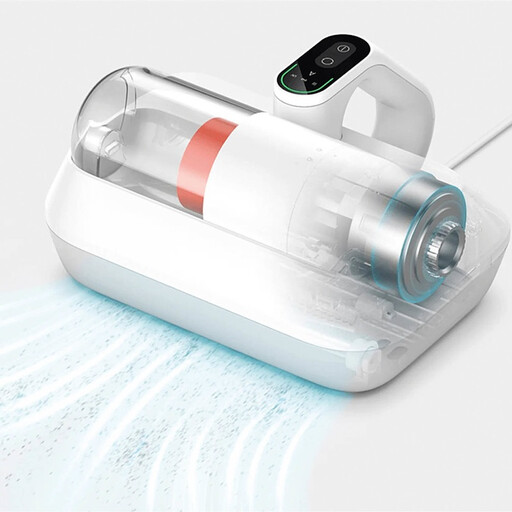
Why it suits this profile: Suitable for anyone wanting a more comprehensive system for mattresses, sofas, pillows and other soft furnishings.
The product information mentions a UV safety sensor that switches off the lamp when the device is lifted. The brand’s claim about reducing mites and disinfecting is not the same as a guaranteed result.
14 kPa suction power, 55 °C hot air, four-stage filtration and a 0.5-litre dust container. The display shows the suction power and operating status.
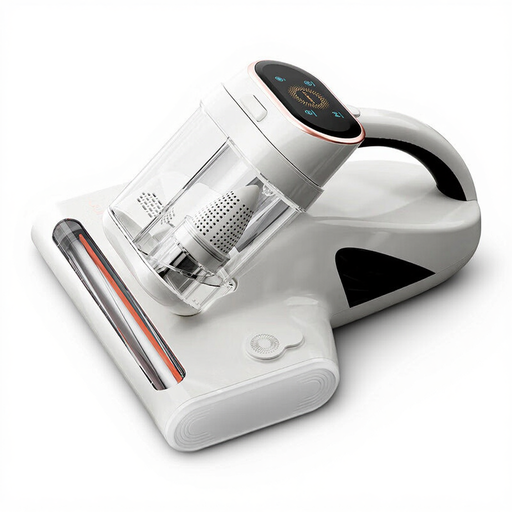
Why it suits this profile: An option for households with pets or lots of fabric, where a larger dust container, vibrations and a HEPA filter are important.
According to the product information, the UV-C lamp has a contact sensor. It also states that the HEPA filter must be completely dry before being reinstalled.
13 kPa suction power, 12,000 beating movements per minute, a dust capacity of 0.3 litres and a five-stage filter with a HEPA filter, according to the product description.
We have put together a complete, up-to-date list of products that fully meet these strict selection criteria and the applicable European safety regulations.
A device can remove dust, skin flakes, hair and other particles from fabrics. Brands may also make claims about UV-C, vibrations or hot air. According to the relevant brand’s own research, these functions may help reduce mites, but the result depends on how the device is used, the fabric and the appliance. Consider the device an addition to washing and thorough ventilation, not the only measure.
That depends on your household. If you have pets, lots of fabric or visible dust, weekly use may be practical. For regular maintenance, once every two to four weeks may be sufficient. Clean the filter more frequently if suction power decreases or if you vacuum up a lot of hair.
The main recurring costs are usually replacement filters and electricity. A corded 300 to 500 W motor uses relatively little electricity during a short cleaning session, but pay particular attention to the price and availability of filters. Washable parts can make maintenance easier, while a HEPA filter should be replaced periodically according to the instructions.
