
Livraison le jour même et le lendemain

Qualité garantie

Débloquez vos offres de bienvenue: Livraison GRATUITE | Jusqu'à -80 % | 30 jours d'essai gratuits à JoyPlus
Téléchargez l'application
A mattress vacuum can help remove loose dust, skin flakes, pet hair and other dirt from textiles. However, not every model is suitable for every household. Claims about UV-C, ‘99.9% removal’ and extremely high suction power can distract from practical considerations such as filter maintenance, cable length and ease of use.
If you’re looking for an anti-mite vacuum cleaner, bed vacuum or dust mite remover, it’s worth looking beyond power alone. Below, you’ll find the most important buying criteria, along with some models suited to different needs.
A figure such as 12 kPa, 14 kPa or 15 kPa gives an indication of suction pressure, but doesn’t tell you everything about how easy an appliance is to use. The brush, airflow, design of the suction head and filter all affect performance too.
A suction head that’s too powerful can also be difficult to move over thick bedding. So consider the combination of suction power, tapping frequency and nozzle width. A wide suction head can cover large areas more quickly, while a compact model is handier for cushions and narrow sections of a sofa.
Some models have a UV-C lamp. According to the product information provided by the relevant brands, this feature is designed to reduce micro-organisms or mites on the treated surface. How well it works depends on factors such as the distance from the textile, how quickly you move the appliance and how long the surface is exposed.
Think of UV-C as an additional feature, not a guarantee that all dust mites or dirt will be removed. Washable bedding should be washed according to its care label, and mattresses also benefit from being aired regularly.
A mattress vacuum collects fine dust. A small dust container can fill up quickly, while a dirty filter reduces airflow. So check:
Four-stage filtration or a HEPA filter may be worth considering for households that want to pay extra attention to fine dust particles. However, check that the product page specifically mentions a HEPA filter. Not every model with several filter layers automatically has one.
When choosing a vacuum cleaner for mattresses and sofas, three features are worth considering:
A higher figure isn’t automatically necessary for every household. If you’re cleaning one mattress a week, a compact model may be enough. If you have several mattresses, sofas, duvets and pets, a higher capacity is more practical.
A hot-air drying function blows warm air over the treated textile. The products in this selection specify temperatures of 50, 55 or 65 °C. This can be useful if you want to air or dry the surface after cleaning.
Always use warm air according to the instructions. Test the appliance on an inconspicuous area first when cleaning delicate fabrics, and don’t use it on damp surfaces unless this is permitted.
A handheld vacuum for bedding needs to be held for several minutes at a time. A lighter model may be more comfortable, but a larger motor and dust container can make an appliance heavier.
Pay attention to the cable length too. A model with a 2-metre cable is more likely to need an extension lead than one with a 4- or 5-metre cable. The cleaning width determines how many passes you’ll need to make over a mattress.
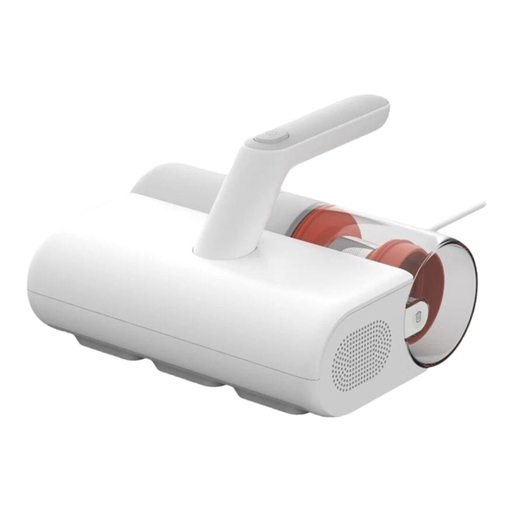
Why it suits this type of user: This model is designed for regular cleaning of mattresses, cushions, blankets and sofas. Its specifications list 12,000 Pa suction power, a weight of 1.63 kg and a 2-metre cable.
The product information clearly states that this model doesn’t have a HEPA filter. You can factor this into your decision rather than assuming that every multi-stage filtration system includes one.
12,000 Pa suction power, UV function, 50 °C warm air and a washable filter, according to the product details.
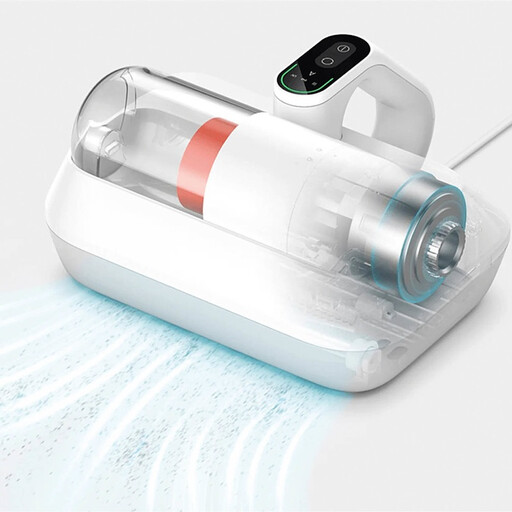
Why it suits this type of user: A smart mode, four-stage filtration and a wide suction head make this a good fit for households that clean several types of textile.
According to the product description, the UV lamp switches off when the appliance is lifted more than 5 cm. This is a useful safety feature, but you must still never look directly into the lamp.
14,000 Pa suction power, 55 °C hot air, a 0.5-litre dust container and three settings: low, smart and high.
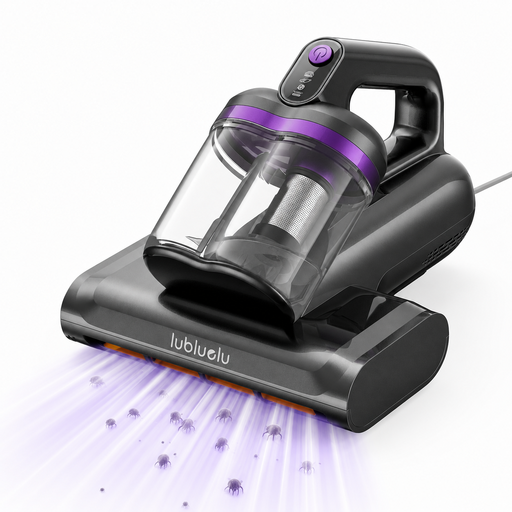
Why it suits this type of user: With 15 kPa suction power, a 650 ml dust container and a 4-metre cable, this model is designed for larger areas and frequent use.
The larger dust container and longer cable mean fewer interruptions while cleaning. The stated noise level is a maximum of 72 dB, so bear this in mind if you’re using it in a quiet bedroom.
15 kPa suction power, 55 °C warm air, 500 W rated power and a 650 ml dust capacity, according to the product details.
Use a mattress vacuum only on dry surfaces and follow the instructions. Pay particular attention to these points:
An allergy vacuum cleaner can be a useful aid for household cleaning, but it’s no substitute for medical treatment or professional advice if symptoms persist.
We’ve put together a complete, up-to-date list of products that meet these strict selection criteria and the applicable European safety regulations.
For routine maintenance, occasional use is enough. The right frequency depends on whether you have pets, your bedding, how much dust builds up and how often you air the bedroom. It’s better to clean slowly and methodically than to make several quick passes over the same area.
No, you shouldn’t expect it to remove them all. An appliance can pick up loose dust and dirt from textiles. Claims about UV-C and heating depend on the conditions of use and come from the brand’s product information. Wash bedding according to its care label and follow the mattress care instructions.
Most models in this selection run on mains electricity. The cost depends on the wattage and how long you use the appliance. A 300 to 500 W appliance uses around 0.15 to 0.25 kWh when used for half an hour. Also check the price and availability of replacement filters, as these affect the overall running costs in the longer term.
