
Vandaag of morgen in huis

Kwaliteit gegarandeerd

Welkomstaanbiedingen ontgrendelen: GRATIS bezorging | Tot 80% korting | Gratis 30 dagen JoyPlus-proefperiode
Download de app
Making matcha at home seems simple: put the powder in a bowl, add warm water and whisk. But the wrong matcha set can quickly disappoint. A whisk that loses its shape, a bowl without enough room or missing accessories can make everyday use unnecessarily difficult.
As a Joybuy Product Recommendation Officer, I focus on things you can check: what’s in the box, which materials have been used and how the components should be cared for. Read on to find out what to look for before choosing a Japanese matcha set, matcha whisk set or matcha gift.
A set with seven or nine pieces sounds comprehensive, but always check what’s included. Some sets, for example, don’t include a matcha sieve, serving bowls or a holder for the bamboo matcha whisk. So a high price per piece doesn’t automatically mean the set is more practical or complete.
These are usually the most useful components for home use:
The number of fine prongs is a useful product specification, but it doesn’t guarantee a particular experience when preparing matcha. The sets available range from around 76 to 100 prongs. According to the product description, a whisk with more prongs may help create a froth, but caring for it is just as important.
Soak a bamboo whisk in water briefly before use. After use, rinse it without soaking it for a long time, leave it to air-dry completely and store it upright on its holder. Prolonged exposure to moisture can cause mould. Check the prongs regularly and remove any that are loose or broken.
Several ceramic sets are described as being made from lead- and cadmium-free ceramic. Treat this as a product specification from the seller, rather than assuming other qualities based on the claim. Also check whether dishwasher or microwave claims apply only to the ceramic components.
Bamboo, wood and some holders should generally be washed by hand. Avoid using metal utensils in a glazed bowl to help prevent scratches.
A small bowl is often enough for one serving, but a wider bowl gives you more room to whisk in a zigzag motion. The models available include bowls with capacities of 510 ml or 560 ml. That’s plenty of room for whisking matcha and can be handy if you’re making a matcha latte too.
A pouring spout is useful if you want to divide the drink between several cups. It’s not essential for individual use, but it can make serving easier as part of a Japanese tea ceremony set.
Ceramic retains heat reasonably well, but can crack if the bowl is dropped or exposed to a sudden change in temperature. So check:
The TEANAGOO models are described as dishwasher-safe for their ceramic components, while the bamboo components should be washed by hand. Microwave use is not recommended for some models, even when the ceramic appears suitable for it.
A matcha sieve helps remove lumps from the powder before you add water. This is particularly useful when making a smooth matcha latte. A set with just a bowl, whisk and scoop may be enough for an experienced user, but beginners will often find a complete matcha kit more useful.
Pay attention to the dimensions too. A 510 ml or 560 ml bowl takes up more space than a compact one. Check that the set will fit in your kitchen cupboard and that the extra cups suit the way you plan to use it.
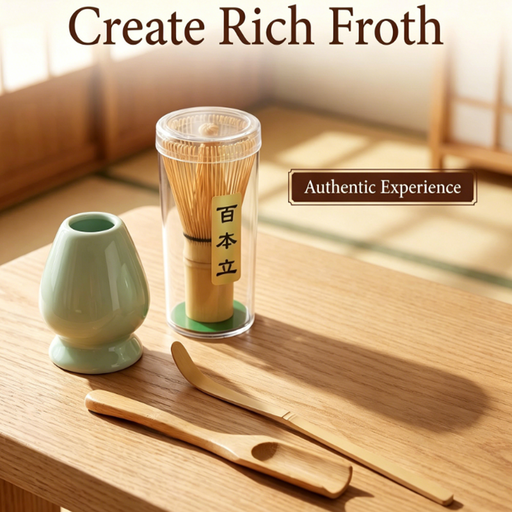
Why it suits this profile: A compact starter set for anyone who wants to learn how to make matcha at home without immediately buying extra cups or a large set. The product description lists a ceramic bowl and bamboo accessories.
The contents are clearly set out: bowl, whisk, holder and bamboo spoons. Before buying, check that the current packaging matches this specification exactly.
A bamboo whisk measuring approximately 15 cm, a holder and bamboo spoons; according to the product information, the ceramic bowl is dishwasher-safe.
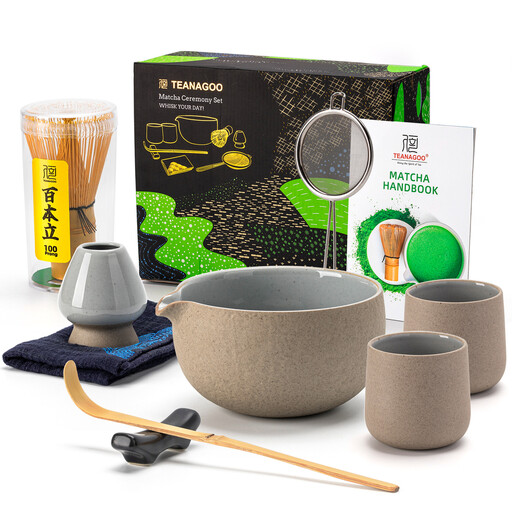
Why it suits this profile: A good choice if you’re looking for a comprehensive matcha tea set with serving pieces for everyday use and entertaining guests.
The set specifically lists a 510 ml bowl, a sieve, two cups and a whisk holder. This makes it clearer what you’ll receive before you buy.
9 pieces, including two cups of approximately 205 ml, a stainless steel sieve and a bamboo whisk with around 76 prongs.
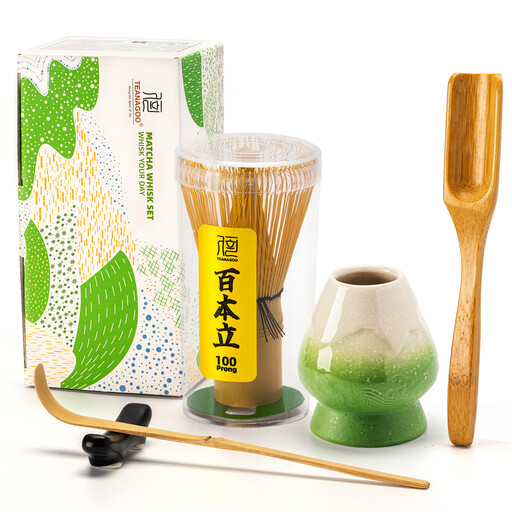
Why it suits this profile: A practical choice if you already have a bowl or mainly want to add to your matcha accessories for regular use.
The set explicitly includes a matcha sieve, so you won’t need to look for a separate accessory later. The bamboo components are not dishwasher-safe.
6 pieces, including a bamboo whisk with 100 prongs, a sieve, two holders and a bamboo scoop.
We’ve put together a complete, up-to-date list of products that meet these strict selection criteria and the applicable European safety regulations.
Use water that isn’t boiling. The product information for several sets recommends around 175 °F, or approximately 80 °C. Soak the whisk briefly before its first use, then whisk with a quick M- or W-shaped motion. Sieve the powder first if you want a smooth latte.
Rinse the whisk with clean water after use. Store it upright on its holder and wait until it’s completely dry. How long it lasts depends on how it’s used and cared for; with daily use, a bamboo whisk may need replacing after a few months. This isn’t a defect, but normal wear and tear for a natural material.
For a simple preparation, you need a bowl, matcha powder, warm water and a bamboo whisk. A scoop and matcha sieve aren’t strictly essential, but they make measuring and sifting easier.
Yes. Ideally, choose a bowl with enough room and a whisk. A set with a sieve is useful for reducing lumps. You can then mix the prepared matcha with hot or cold milk to make a latte.
It depends on how often you use it and how well you care for it. According to the product information for several of the sets available, it may need replacing after a few months of daily use. Let the whisk dry completely, don’t put it in the dishwasher and check the prongs regularly.
