
Vandaag of morgen in huis

Kwaliteit gegarandeerd

Welkomstaanbiedingen ontgrendelen: GRATIS bezorging | Tot 80% korting | Gratis 30 dagen JoyPlus-proefperiode
Download de app
A matcha set can look complete as soon as a bowl and whisk appear in the product photo. In practice, a sieve, holder or measuring scoop is sometimes missing. What’s more, features like “traditional”, “handmade” and “food-safe” aren’t always clearly explained. So if you want to prepare Japanese matcha or a matcha latte at home, it’s worth looking beyond colour and packaging.
A bowl with a matcha bamboo whisk doesn’t automatically make a complete matcha kit. For a smooth result, you’ll usually also need a measuring scoop and a fine sieve. Without a sieve, lumps can remain in the powder. A holder also helps to keep the bamboo whisk in shape while it dries.
So before you buy, check that the set actually includes:
Bamboo is suitable for a traditional preparation, but it needs different care to ceramic. A bamboo whisk shouldn’t go in the dishwasher and must be dried completely after use. If that isn’t made clear in the product information, the whisk can warp more quickly or develop an unpleasant smell.
With ceramic, pay attention to the stated composition. According to the product description, several TEANAGOO models are made from lead-free and cadmium-free ceramic. This is information from the brand and should be read as a product specification, not as a general guarantee for all matcha bowls.
A bowl of 510 or 560 ml gives you plenty of room to whisk and can be handy if you’re sharing matcha. For a single small serving, though, such a bowl takes up more space in the cupboard. If you only make a matcha latte for yourself, a compact bowl and a separate whisk set may be enough.
Also look out for a pouring spout. It can make pouring easier, but it sometimes makes the bowl less suitable for stacking or storing.
The number of prongs doesn’t on its own tell you how well a whisk works. In the product information for the sets mentioned, prong counts of around 76, 77 or 100 are listed. More prongs mainly means a finer structure to the whisk; your technique, water quantity and temperature remain important.
Soak the bamboo whisk briefly in lukewarm or cold water before use, following the manufacturer’s instructions. Then whisk in a quick M- or W-shaped motion. Don’t use boiling water. The product descriptions recommend water at a maximum of around 175 °F, which is about 80 °C.
A matcha bowl with a 510 ml capacity gives you enough room to mix powder and water without too much splashing. Models of 560 ml offer a little more leeway for a matcha latte or several small servings. A wide base helps with moving the whisk, while a pouring spout is useful when serving.
Also check whether the bowl is dishwasher and microwave safe. For several models, the product information states: ceramic parts are dishwasher safe, but bamboo accessories must be washed by hand. For other sets, hand washing is recommended for all parts. So always check the specific model.
A matcha set with bowl and whisk is especially practical when all the parts are matched to each other. A seven-piece set usually includes a bowl, whisk, scoop, sieve, holder, scoop rest and cloth. A nine-piece matcha tea ceremony set typically adds two drinking cups.
Bear in mind the accessories that aren’t always included:
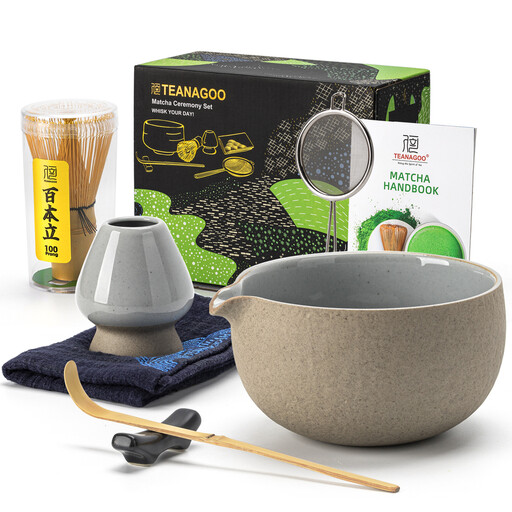
Why it suits this profile: This Japanese matcha set contains the basics for everyday use: a 510 ml bowl, whisk, scoop, sieve, holders and a cotton cloth.
The product description lists all the essential parts and a stainless steel sieve. This means you’re less likely to need to buy separate accessories.
510 ml ceramic bowl with pouring spout; according to the product information, the ceramic parts are dishwasher safe.
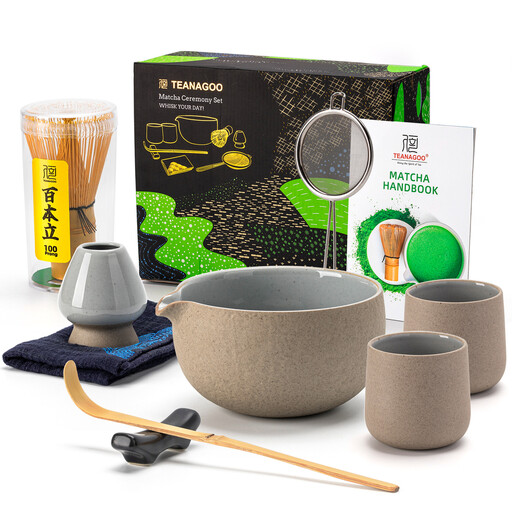
Why it suits this profile: A fitting choice if you want to serve matcha together, for example during a small tea ceremony or as a gift for matcha lovers.
The set isn’t just about looks: alongside the bowl and whisk, it includes a sieve, holders, cloth and two cups.
510 ml bowl; two cups of approximately 205 ml; the product information states lead-free and cadmium-free ceramic.
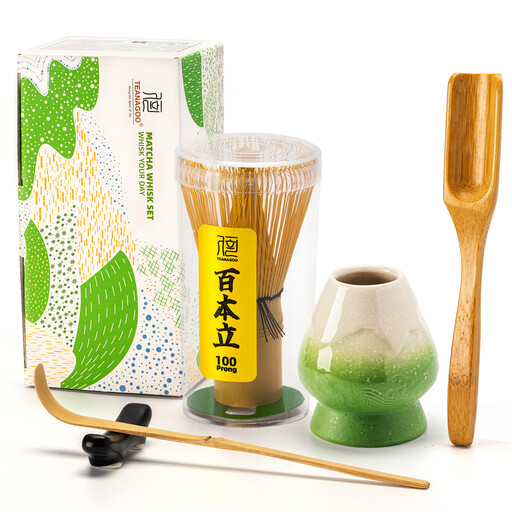
Why it suits this profile: Ideal if you already have a matcha bowl and are mainly looking for a targeted addition for matcha latte, everyday use or an existing Japanese tea set.
The contents are clearly defined as an accessory set. So you’re not paying for a bowl you already own, and you can see which parts are intended for replacement or supplementation.
100-prong bamboo whisk; sieve, scoop, spoon and holders included; hand washing and thorough drying required.
We’ve put together a full, up-to-date list of products that fully meet these strict selection criteria and comply with current European safety regulations.
A bamboo whisk is a consumable item. According to the product information, it may need replacing after a few months with regular use. That affects the total running cost of a matcha latte set. So don’t just factor in the purchase price, but also replacement whisks and matcha powder.
For a simple preparation, you need matcha powder, a bowl, a bamboo whisk and water. A sieve and measuring scoop make it easier to measure and mix. If you want to get close to a traditional preparation, choose a complete matcha tea ceremony set with a holder and cloth.
That depends on use, cleaning and storage. With daily use, a whisk may need replacing after a few months, according to the product information provided. Always let it dry completely, don’t use a dishwasher and check regularly for broken prongs.
Yes. A matcha latte set with a bowl, sieve and whisk can also be used for a latte. First prepare a concentrated matcha with water, then add warm or cold milk. Check beforehand whether the bowl is suitable for your method of heating; the bamboo accessories must not be exposed to high temperatures.
