
Vandaag of morgen in huis

Kwaliteit gegarandeerd

Welkomstaanbiedingen ontgrendelen: GRATIS bezorging | Tot 80% korting | Gratis 30 dagen JoyPlus-proefperiode
Download de app
Whether you're an avid athlete looking to speed up recovery or you sit at a desk all day and suffer from a stiff neck, a massage gun can seem like the perfect solution. However, the market is flooded with models that promise the world. Many people buy a device that ends up in a closet after just a few months. This is often due to a few common marketing traps and design flaws.
Before you make a choice, it's important to know what to look for. These are the three biggest pitfalls:
To avoid a bad purchase, it's better to focus on a few technical specifications that truly make a difference. These determine whether you're buying a powerful device for muscle recovery or just an expensive gadget.
This is perhaps the most important specification for a deep tissue massage gun. The amplitude, measured in millimeters (mm), indicates how deeply the head of the massage gun can penetrate your muscle tissue.
The stall force indicates how much pressure you can apply to the device before the motor stops. A low stall force (under 15 kg) means the motor will stall with even light pressure, making the device useless for tackling deep muscle knots. A model with a stall force of 15 to 20 kg is a solid choice for most people.
Modern, high-quality massage guns use a brushless motor. These motors are quieter, last longer, and are more efficient than older, brushed motors. A device with a brushless motor is often a sign of a better-engineered design and a more durable investment.
Based on these objective criteria, we have selected a number of models that suit different user profiles.
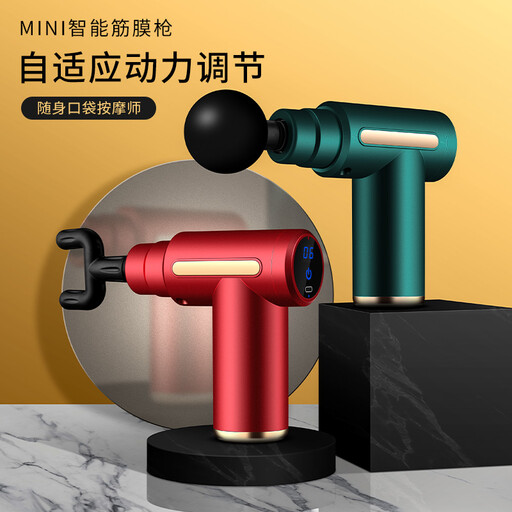
Why This Fits Their Persona: Ideal for anyone trying a massage gun for the first time. This model offers the basic functions you need for general muscle soreness and relaxation, without the complexity or high price tag of professional devices.
This model focuses on the essentials. With four functional attachments for the main muscle groups, you avoid the trap of an overabundance of unnecessary accessories. The specifications are clear and geared toward effectiveness at an entry-level price.
Advantage: Simplicity and ease of use. With 6 speed levels and USB-C charging, it's a practical and accessible device for daily use.
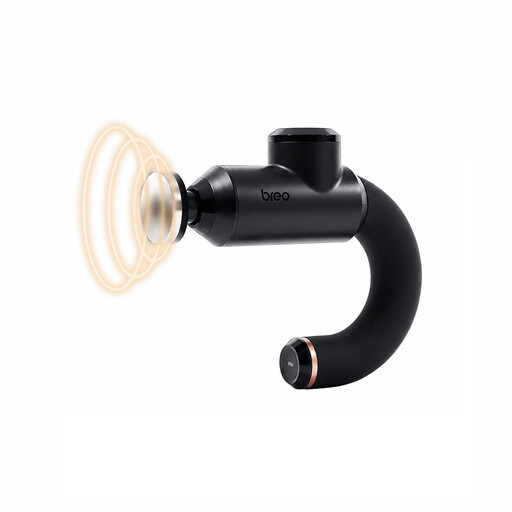
Why This Fits Their Persona: Designed for athletes who need power and depth. This model is focused on performance and effective muscle recovery after intense workouts, with specifications that go beyond those of a standard device.
This device focuses on what matters to athletes: power. With a 12 mm amplitude and a stall force of up to 19 kg, it delivers a true deep-tissue massage and the motor won't stop when you apply pressure. The added heat function is functional, not a gimmick.
Advantage: A combination of power and heat. The motor delivers consistent deep percussion, while the heated head helps to prepare muscles and relieve tension more effectively.
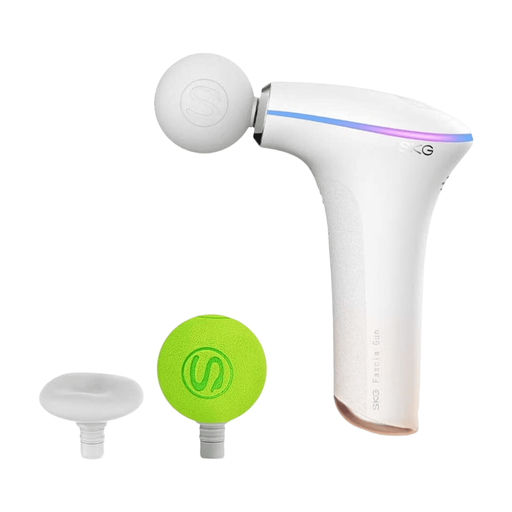
Why This Fits Their Persona: Perfect for those seeking a compact, lightweight, and discreet device to relieve tension in the neck and shoulders. At just 300 grams, it fits easily in a bag for use at the office or while traveling.
This model proves that a *mini massage gun* doesn't have to be weak. It combines a respectable 10 mm amplitude with a functional heat feature, making it much more effective than similar small, vibrating devices.
Advantage: Ultra-compact with heat therapy. The built-in heating elements (up to 53°C) help relax the muscles in the neck and shoulders, which is ideal after a long day at the computer.
We have compiled a complete, up-to-date list of products that fully meet these strict selection criteria and safety regulations.
For most people, it is recommended to use a massage gun in short sessions. Aim for 1-2 minutes per muscle group. Avoid using it on bones, joints, the spine, and the front of the neck. Listen to your body; if it feels painful, stop or reduce the intensity.
Yes, a massage device for neck and shoulders can be very effective. Use a softer attachment (like the round ball) on a low setting. Massage the tense muscles of the shoulders and the back of the neck. Be careful and avoid the vertebrae and the front of the neck, where major blood vessels and nerves are located.
The price difference is usually in the combination of core specifications. More expensive brands like Theragun or RENPHO often invest in a higher amplitude (16 mm vs. 10 mm), a stronger stall force (25 kg vs. 10 kg), and a quality brushless motor that is quieter and lasts longer. Additionally, they often offer extras like app connectivity with guided routines, longer battery life, and higher-quality materials. A cheaper model can be perfectly adequate for general relaxation, but for intensive use and deep muscle treatment, the specifications of a premium model are often worth the extra cost.
