
Vandaag of morgen in huis

Kwaliteit gegarandeerd

Welkomstaanbiedingen ontgrendelen: GRATIS bezorging | Tot 80% korting | Gratis 30 dagen JoyPlus-proefperiode
Download de app
A massage gun can come in handy after exercise, during a break at work or when you want to massage tense muscles. But there are big differences between models. A low price doesn’t automatically mean a poor buy, and an expensive device won’t necessarily suit the way you plan to use it.
Look out for these three common pitfalls:
Stroke depth, also known as amplitude, indicates how far the massage head moves back and forth. A higher figure may suit larger muscle groups, but more power won’t feel comfortable for everyone. Always start at a low intensity.
Speed is usually shown in rpm, or revolutions per minute. A model with a wide speed range gives you more control, but also consider how you adjust the speed. A dial, display or pressure indicator may be more practical than just a few fixed buttons.
For a deep tissue massage gun, the motor, pressure resistance and stroke depth matter as well as speed. Check these details in the product description rather than relying solely on terms such as ‘powerful’ or ‘professional’.
The shape of a massage head mainly determines how you use the massage gun:
More heads don’t automatically make a massage gun easier to use. Three well-suited heads may be enough for home use, while sportspeople may want more options for their legs, shoulders and arms.
A portable massage gun often weighs less than a larger model. That’s handy for commuting, going to the gym or travelling. Check that the handle feels sturdy and that you can hold the device without putting too much strain on your wrist.
For a quiet massage gun, check the stated noise level. The Torq Mini Premium, for example, lists a noise level of less than 35 dB. This may be useful in an office or shared home, but the actual noise can depend on the setting you choose and the surface you use it on.
A USB-C connection makes charging easier if you already have a compatible adapter. Also check the battery life. The Beurer MG79 states up to three hours of use, while the Xiaomi Mini weighs 375 grams. These are verifiable details that make it easier to compare models than general promises of ‘long battery life’.
The selection below is based on stated specifications such as weight, number of settings, massage heads, battery life, and heat or cold therapy. Claims about relaxation or recovery are presented as product information from the brand and do not constitute a medical assessment.
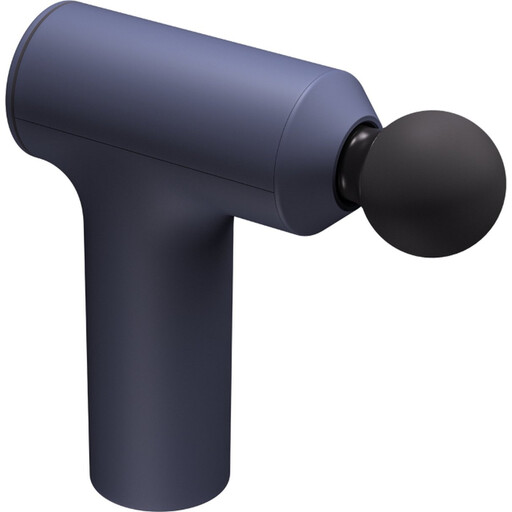
Why it suits this profile: Weighing 375 grams, this is a compact option for home, work or your gym bag. The pressure indicator gives you visual feedback as you use it.
The product information includes specific details: 190 mN·m, a massage range of more than 6 mm and three massage heads. This makes it easier to compare with other models than relying on marketing terms alone.
375 grams, brushless motor, three heads and a rechargeable battery. The product page also states that it comes with a minimum two-year statutory guarantee under EU consumer rules.
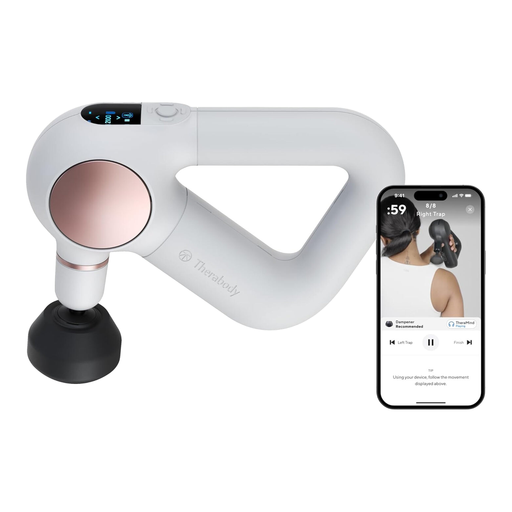
Why it suits this profile: Ideal if you want an electric massage gun with the option to follow guided routines through an app. The ergonomic triangular handle is designed to accommodate different grip positions.
The set includes four clearly named massage heads and a USB-C charging cable. The app and Bluetooth function are extras, not a hidden substitute for operating the device itself.
Four heads included, an ergonomic handle, a biometric sensor according to the product description, and support for guided routines through the Therabody app.
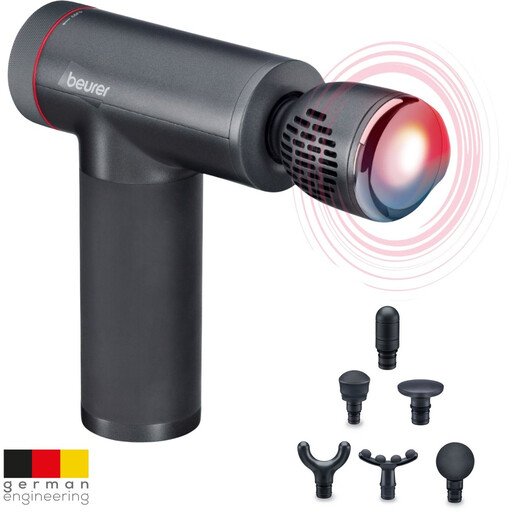
Why it suits this profile: A practical option if you want to combine temperature settings, multiple intensity levels and a wide range of heads in one device for sport and home use.
The product information specifies nine intensity levels, three heat settings, three cold settings and seven heads. It also states that heat and cooling can be used without the massage function.
Up to 4,5 hours of stated battery life, 515 grams, an LED display, a dial and seven massage heads. According to the product description, the heat and cold therapy can be used separately.
We’ve put together a complete, up-to-date list of products that meet these strict selection criteria and the applicable European safety regulations.
Start on the lowest setting and move the massage head gently over the muscle tissue. Don’t use the device directly on bones, joints, the spine, broken skin, or any swollen or irritated area. Keep the massage gun dry, and don’t use it while sleeping, driving or charging.
Stop immediately if you feel pain, numbness or discomfort. If you’re pregnant, have a pacemaker, have vascular problems or have an existing medical condition, it’s best to consult a doctor first. A massage gun is intended for personal comfort and muscle relaxation, not as a substitute for medical treatment.
That depends on the battery, motor, charging method and how often you use it. Brushless motors are often used in models such as the Xiaomi Mini and Beurer MG195. Also check whether replacement parts, charging cables and massage heads are available, and use the device according to the instructions.
Use a massage gun briefly on each muscle group and avoid applying prolonged pressure to one spot. Product manuals often give guidance such as 30 to 90 seconds per muscle group and a limited total session time. The right duration depends on the intensity and what feels comfortable for you.
A rechargeable massage gun uses relatively little energy while charging. The actual cost depends on the battery capacity, how often you charge it and the price of electricity. USB-C charging is convenient, but check whether an adapter is included before you order.
