
Vandaag of morgen in huis

Kwaliteit gegarandeerd

Welkomstaanbiedingen ontgrendelen: GRATIS bezorging | Tot 80% korting | Gratis 30 dagen JoyPlus-proefperiode
Download de app
A massage gun can be useful after a workout, during a break at work or when you want to massage stiff muscles at home. However, massage guns vary widely in power, weight, battery life and ease of use. A low price doesn’t automatically mean good value, while extra features may rarely get used.
The most common buying mistakes come down to three pitfalls:
Intensity is often shown as speeds or revolutions per minute, such as rpm. However, the number of settings doesn’t tell you everything. Amplitude refers to how far the massage head moves back and forth. A greater amplitude may feel more direct, but it isn’t necessarily more comfortable.
For gentle use at home, a model with several low settings is practical. If you’re treating larger muscle groups, you may also want to consider the maximum massage force. Always start on the lowest setting and move the device gently over the muscle.
A massage gun weighing over 1.5 kg can start to feel heavy after a few minutes, especially when used on your shoulders or back. A mini massage gun weighing around 400 to 500 grams is easier to take to the gym or on a trip. On the other hand, compact models may offer less power or fewer attachments.
Pay attention to the shape of the handle, too. A longer or angled handle can help you reach awkward areas more easily on your own. A non-slip material is useful if your hands are warm or damp.
A cordless massage gun gives you more flexibility than a model that needs to stay plugged in while in use. Check the stated battery life, the type of connection and whether a charger is included. A USB-C connection is handy if you already have a compatible adapter, but always check the manufacturer’s instructions.
When choosing attachments, focus on what they’re designed for rather than how many there are. A round head is generally intended for larger muscle groups, while a softer cushioning head may be more comfortable on sensitive areas. Avoid bones, joints, the front of your neck, and broken or irritated skin.
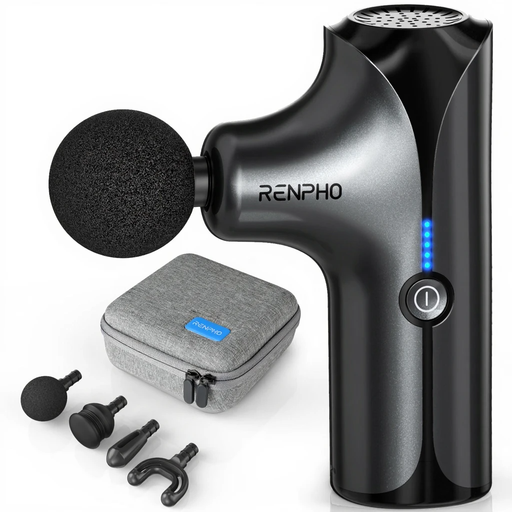
Why it suits this profile: This compact massage device weighs around 450 grams and comes with four massage heads and five speeds. It’s a good choice if you want to try a straightforward model first.
The five settings let you build up gradually. The specifications also don’t list a heating or cooling function, so you won’t be paying for features you may not need.
Compact design, around 4–5 hours of stated battery life, four heads and a rechargeable battery.
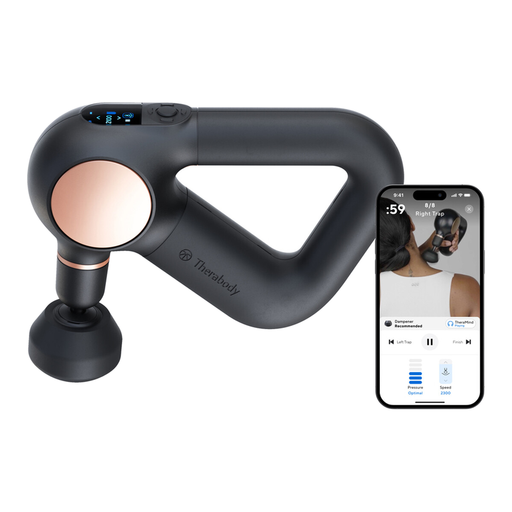
Why it suits this profile: This model combines percussive massage with Bluetooth, guided routines and an ergonomic triangular handle. It’s well suited to users who value guidance and a regular routine.
The app can help you choose routines, so you don’t have to rely on a high number of speed settings alone. The four included heads come in different shapes.
Bluetooth app, biometric sensor, four attachments and a weight of 1.65 kg according to the product information.
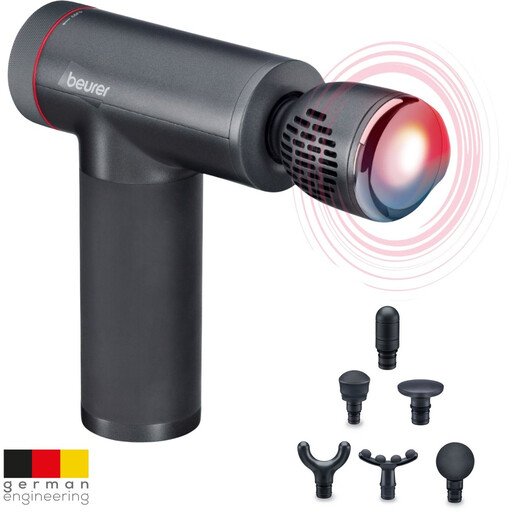
Why it suits this profile: If you’re looking for a massage gun with both heat and cooling, this model offers separately adjustable heat and cold programmes alongside its massage function.
The LED display shows the battery level and intensity, making it easier to see which setting is active than on models with just one button.
Nine speeds, seven massage heads, three heat settings, three cold settings, a weight of 515 grams and up to 4.5 hours of stated battery life.
We’ve put together a complete, up-to-date list of products that meet these strict selection criteria and the current European safety regulations.
Read the instructions before use and check which areas of the body the manufacturer says you can treat. Don’t use a massage gun on bones, joints, open wounds, irritated skin or swollen areas. If you have a medical condition, are pregnant, have thrombosis, a pacemaker or other implants, it’s best to consult a doctor first.
Start on a low setting and move the device over the muscle. Don’t press on one spot for a long time. Stop immediately if you feel pain, numbness or discomfort. A massage device is intended for personal relaxation and muscle massage, not as a substitute for medical treatment.
Start with around 30 to 60 seconds per muscle group. The right duration depends on the model, intensity and your personal comfort. Always follow the instructions and avoid applying pressure to one spot for a long time.
It varies by model and intensity. The RENPHO Mini product information states around 4–5 hours, while the Beurer MG195 lists up to 4.5 hours. Higher settings, heat functions and an older battery can shorten the run time.
For some people, it may work well as part of a short, gentle routine, but daily, intensive use isn’t necessarily needed. Alternate between muscle groups, use an appropriate intensity and stop if you experience discomfort or sensitivity. If your symptoms persist, consult a healthcare professional.
