
Cook with limited freezer space of their own
You want to store cooled mash regularly, but first need to check whether an under-counter freezer will fit in your shared kitchen, both physically and practically.


You only need an extra freezer if the shared freezer doesn’t offer an agreed space for your food, or if your portions consistently won’t fit. Otherwise, you can continue using the space you already have. If you decide to buy one, choose an under-counter model with drawers for easy organisation, a chest freezer if its layout suits the space, or a NoFrost model if you want to spend less time defrosting manually. Check the dimensions, stated annual energy consumption and whether the freezer can reach −18 °C. Allow the mash to cool, then place it in small, sealed portions in the fridge or freezer within 2 hours of cooking.
You want to store cooled mash regularly, but first need to check whether an under-counter freezer will fit in your shared kitchen, both physically and practically.
You want a clear system for storing sealed, dated portions, so your shared stock stays organised.
You freeze several portions at once and want to consider the space you’ll need, the freezing capacity and how to cool the food safely.
First, check whether there’s an agreed space for you in the shared freezer and whether it reaches −18 °C. If your portions consistently won’t fit or need to be kept separate, compare under-counter models with drawers and chest freezers by layout, the space they need and their stated energy consumption.
| What to consider | What should you check? | Who is this important for? |
|---|---|---|
| Fits in the kitchen | Measure the space, the clearance needed for the door or lid, and the ventilation clearance specified for the exact model. | I want to know whether a freezer of my own will fit without blocking the shared kitchen; around 33% of consumers prioritise suitable dimensions and placement. |
| Finding your portions | Check that your sealed containers fit in the drawers, and agree with your housemates on how to use the space and labels. | I want to be able to recognise and find my containers quickly; around 27% of consumers prioritise keeping portions separate and organised. |
| Freezing several portions | Compare the stated freezing capacity in kg per 24 hours with the amount you want to freeze at once; check that the freezer reaches −18 °C. | If I make several portions at once, I want to know whether I can freeze them safely; around 20% of consumers prioritise freezing capacity and −18 °C. |
| Ongoing use | Compare the stated energy consumption in kWh per year and check whether the model has NoFrost. | I want to consider that an extra freezer uses electricity all the time, as well as how often I’ll need to defrost it; around 20% of consumers prioritise the ongoing running costs and effort. |
Capacity, external dimensions and freezing capacity each tell you something different. If you freeze several portions at once, the stated capacity in kg per 24 hours is also relevant.
Measure the available space first, then compare the layout and freezing capacity of the exact model with the portions you plan to freeze.
The Netherlands Nutrition Centre says that freezer compartments with a one- or two-star rating cannot be set to −18 °C.
Check the star rating and the temperature the compartment can reach before storing prepared mash.
An extra appliance runs all the time, even when there’s very little inside.
First decide whether the existing shared freezer is sufficient. If not, compare the stated annual energy consumption of suitable models.
Freezing won’t make prepared mash safe if it has been left out of the fridge for too long.
Plan how you’ll cool and portion it in advance. The Netherlands Nutrition Centre advises putting cooked leftovers in the fridge or freezer within 2 hours.
The Inventum VR550 is an under-counter model with a stated capacity of 88 litres and a freezing capacity of 4 kg per 24 hours.
The ETNA VV856WIT is an under-counter model with three transparent drawers. Its product sheet lists a capacity of 85 litres, a freezing capacity of 4 kg per 24 hours and annual energy consumption of 131 kWh.
Beko describes the Beko CF100EWN as a chest freezer with a capacity of 98 litres.
Liebherr describes the FNe 1404 Pure as a NoFrost under-counter model with a capacity of 92 litres.
The Frilec BREMEN132-040BW is sold as an under-counter model. Joybuy lists a capacity of 87 litres, energy class B and annual energy consumption of 84 kWh for this model.
This selection includes freestanding under-counter freezers and a compact chest freezer for storing portions separately.
 No image available
NoFrost may be a good choice if you want to spend less time defrosting manually.
The product name lists energy class D.
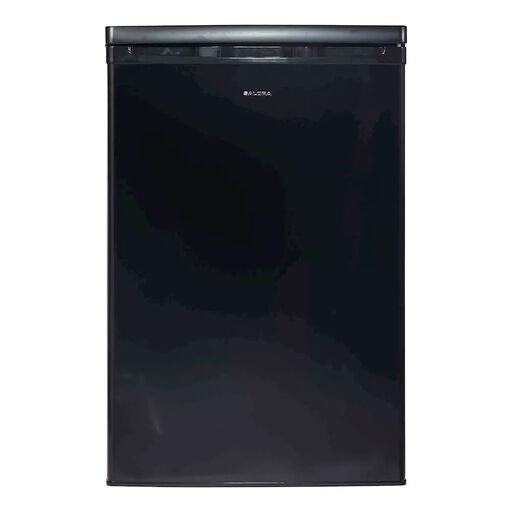 No image available
The four transparent drawers make this model worth considering if you want to organise portions separately.
The product name lists a capacity of 91 litres and a reversible door.
 No image available
The three drawers provide space to store sealed portions separately.
The product name lists a capacity of 60 litres and a freestanding design.
According to the product description, this model doesn’t have NoFrost and needs to be defrosted manually.
 No image available
A chest freezer may suit you if you’re happy to separate small portions yourself using sealed containers or labels.
The product name lists a capacity of 99 litres and a 4-star rating.
This model doesn’t have separate drawers, so bear that in mind if you want to organise portions separately.
 No image available
The three compartments can help you store portions separately.
The product name lists a capacity of 60 litres, an adjustable temperature and a reversible door.
According to the product description, the thermostat dial is behind the bottom drawer, which needs to be removed to adjust the temperature.
Yes. Once the mash has cooled, you can freeze it in small, well-sealed portions. Put prepared mash in the fridge or freezer within 2 hours of cooking, label the contents and date it was frozen, and set the freezer to at least −18 °C. This is the food safety advice from the Netherlands Nutrition Centre.
The Netherlands Nutrition Centre gives a storage time of 3 months for instant mashed potatoes made with semi-skimmed milk; this doesn’t automatically apply to every homemade recipe. Ideally, defrost meal leftovers covered in the fridge, or defrost a small portion in the microwave and then heat it through thoroughly.
Liebherr says NoFrost prevents ice build-up in the freezer compartment of the FNe 1404 Pure, so manual defrosting isn’t needed. Follow the instructions for your exact model when using and cleaning it.
Compare the stated annual energy consumption in kWh for the models you’re considering. According to the Government of the Netherlands, the seller must provide a solution if a product is faulty. When you buy online, you usually have a 14-day cooling-off period.
Yes. The European Commission states that household fridges and freezers are subject to energy labelling and ecodesign requirements. Compare the label and stated annual energy consumption for each model; this information won’t tell you whether the appliance will fit in your kitchen.