
Vandaag of morgen in huis

Kwaliteit gegarandeerd

Welkomstaanbiedingen ontgrendelen: GRATIS bezorging | Tot 80% korting | Gratis 30 dagen JoyPlus-proefperiode
Download de app
Buying a single pen seems simple, until you discover that the ink bleeds through the paper, the nib quickly loses its shape or the colours in a set barely work together. Anyone looking for markers and pens for school, the office, journaling or creative projects will also come across terms such as fineliner, brush pen, acrylic marker and watercolour marker. These terms do not always tell you enough about how the pen is actually intended to be used.
So always focus on the application, the nib and the type of ink. This helps you avoid paying for features you will not use.
A set with lots of colours may look appealing, but a wide range of colours is of little use if all the pens have the same broad nib. For notes, diagrams and journaling, you will often need a fine line. For hand lettering or filling in large areas, a flexible brush nib or chisel nib is more suitable.
So always check:
According to WRITECH’s own information, certain gel pens and rollerball pens use quick-drying ink that can help reduce smudging. However, your overall experience will also depend on the type of paper, your writing speed and the position of your hand. Left-handed writers in particular may benefit from fast-drying ink, but it is still sensible to test the pen on your own paper first.
Also pay attention to the difference between water-based, alcohol-based and acrylic paint ink. Alcohol markers can bleed through thin paper. Acrylic markers are intended for materials including wood, glass, ceramics and canvas, but they usually need to be activated by shaking and pumping.
A cap that does not close properly is one practical reason why markers and pens may not last as long. For models that can be left uncapped for a period of time, a specific drying time is often stated. According to STABILO’s own information, some highlighters can remain uncapped for up to four hours without drying out. This is a brand specification, not a guarantee for every usage situation.
Always replace the cap firmly after use and store the pens according to the product information. Some fineliners can be stored upright or horizontally; rollerball pens are often best stored horizontally.
The nib determines how versatile a pen is. A 0.4 mm fineliner is suitable for small lettering, drawing lines with a ruler and adding detail to illustrations. A 0.5 mm gel pen offers a similarly fine line for notes and journaling. A chisel nib with, for example, 1 and 4 mm or 2 and 5 mm widths allows you to underline and highlight broadly with the same pen.
Brush pens are particularly interesting for hand lettering. According to Faber-Castell’s product description, a soft brush nib creates thicker and thinner lines by varying the pressure. This is different from felt-tip pens with a fixed nib, which are mainly suitable for colouring and simple drawings.
Choose the ink based on the surface:
When using alcohol markers, consider ventilation and your choice of paper. Faber-Castell’s Goldfaber Sketch Marker Set is described as a set with alcohol ink, a 1 to 5 mm brush nib and a 0.6 mm metal fineliner nib. This makes the set suitable for sketching, but not necessarily for thin school paper.
For children, age recommendations, ventilated caps and washability are all relevant considerations. According to the product information, the Faber-Castell Castle felt-tip pens are intended for children aged four and over and contain washable ink. According to its product description, the Jar Melo set uses water-based ink and ventilated caps. Nevertheless, always check the packaging and keep small parts out of the reach of young children.
A CE mark or EN 71 reference provides information about compliance with relevant European requirements, but it does not mean that a product is suitable for every surface or creative technique. Use the pen as instructed and test new ink on a sheet of scrap paper first.
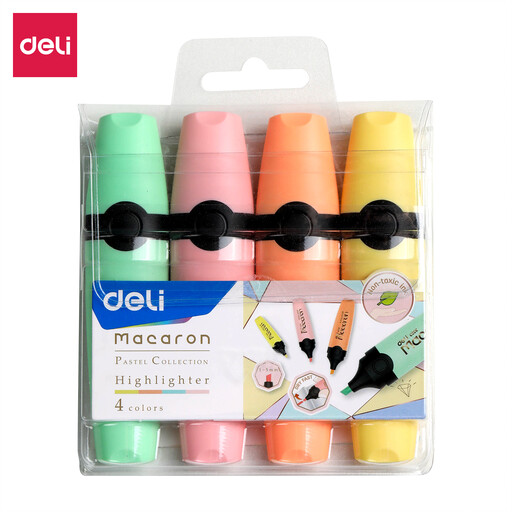
Why it suits this profile: A compact set with four pastel colours for school notes, diaries and everyday highlighting, without having to buy a large marker set straight away.
The chisel nib is designed for broad highlighting and narrower lines, so you do not need a different pen for every task.
Four pastel colours and a chisel nib for two types of line.
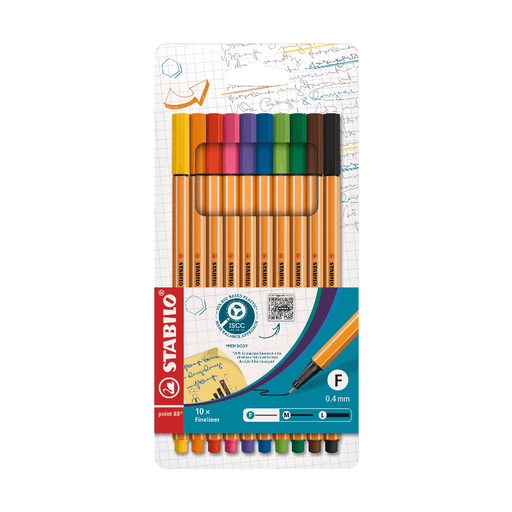
Why it suits this profile: For students, office professionals and journalers who value colour coding and fine, consistent lines.
The fixed 0.4 mm writing width makes the intended use clearer than a general set with unspecified nibs.
Ten colours, a metal nib and water-based ink according to the product description.

Why it suits this profile: For creative hobbyists and artists who want to work on more than just paper, such as wood, glass, ceramics or canvas.
The product information lists the suitable surfaces and activation steps. This makes it clearer what you need to do before use.
Six colours, two nib sizes of 1 and 3 mm and water-based acrylic ink according to the product description.
We have put together a complete, up-to-date list of products that fully meet these strict selection criteria and the applicable European safety regulations.
Fineliners, gel pens and fine rollerball pens are practical choices for journaling. Look for a nib of around 0.4 to 0.5 mm, a comfortable grip and ink that suits your paper. You can add pastel highlighters for colour accents. Test gel or liquid ink on a sheet underneath first to check for bleed-through.
Replace the cap immediately after use and check that it closes completely. Brush pens and felt-tip pens are best stored in a pencil case or storage box. Follow the activation instructions for acrylic markers and do not leave the nib pressed down unnecessarily. Also keep markers away from direct sunlight and extreme temperatures.
A pen set is often practical when you need several colours or nib sizes. For everyday writing, a single gel pen may be more economical, as you only replace the one that runs out. For creative projects, a marker set can offer more variety, but first check how many colours and which nibs you will actually use. A smaller writing and drawing set is sometimes a wiser starting point than a very large box.
