
Vandaag of morgen in huis

Kwaliteit gegarandeerd

Welkomstaanbiedingen ontgrendelen: GRATIS bezorging | Tot 80% korting | Gratis 30 dagen JoyPlus-proefperiode
Download de app
Markers and felt-tip pens may seem easy to choose. Yet an inexpensive set can quickly disappoint: the tip frays, the ink bleeds through the paper or the colours prove less useful than they appeared on the packaging. Anyone looking for markers and felt-tip pens should therefore compare the intended use, ink type and tip shape first.
In this buying guide, we outline the key points to consider. You will then find popular options for children, school pupils, students, hobbyists and adults who want to draw, write, colour, journal or highlight.
A set of 50 or 100 colours may look appealing, but you should also check the tip and the type of ink. Fine drawing pens are more practical than broad felt-tip pens for small lettering. A broader tip can save time when filling in larger areas.
Also consider the colour distribution. Some sets contain several shades that look very similar. A smaller set with clearly distinguishable colours may therefore be more useful for school or everyday use.
Permanent markers are designed for long-lasting marks, but adhesion varies depending on the surface. Check whether the product description mentions paper, plastic, metal, glass or other materials. Always use permanent ink in a well-ventilated area and avoid contact with the eyes and mouth.
An alcohol marker is a different category altogether. These markers are primarily intended for illustrations and sketches. The ink usually dries quickly and may show through thin paper. Using a protective sheet underneath is therefore advisable.
Brush pens and markers with flexible tips offer variation in line width, but applying too much pressure can deform the tip. According to the product description, acrylic markers often need to be shaken and pumped before the ink starts flowing. Skipping this step may result in an uneven line.
Close caps securely or retract click mechanisms after use. This helps limit drying and leakage.
Information from a brand about opacity, colour intensity or stain resistance is a claim taken from the brand’s product description. Do not treat it as a universal guarantee for every type of paper or material.
A chisel tip is versatile: the broad side highlights quickly, while the narrow side is suitable for underlining. You will find this design on highlighter pens and highlighting markers.
A brush tip responds to pressure and is useful for hand lettering, headings and illustrations. A fine fineliner tip is better suited to detail work. Sets with two tips, such as some acrylic markers, provide flexibility without requiring you to buy several types of pen.
For children, the recommended age and information about washability are important points to check. According to the product information, the Faber-Castell 12-colour felt-tip pen set has a recommended minimum age of 4 years and carries EN 71 information. The duo felt-tip pens display a CE label. Check the packaging for the latest safety information.
For markers containing small parts, pay attention to warnings for young children. Permanent markers and alcohol markers are generally more suitable for older children, students, adults and hobbyists.
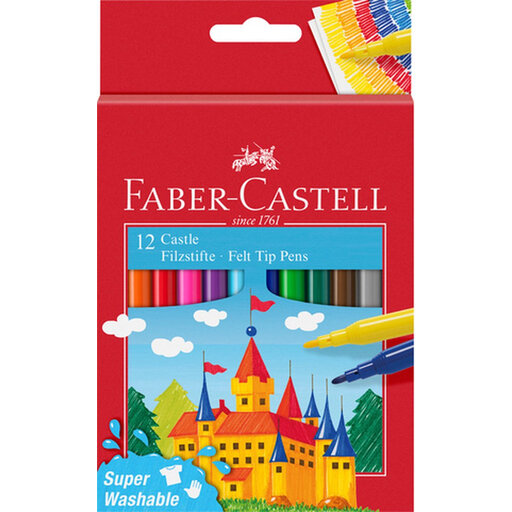
Why it’s a good match: A well-organised set for children from the stated minimum age, colouring activities and simple drawing projects.
You are not paying for an unnecessarily large colour assortment. The set contains 12 colours and has a sturdy tip for colouring.
According to the product description, the pens wash off hands and skin and include EN 71 information.
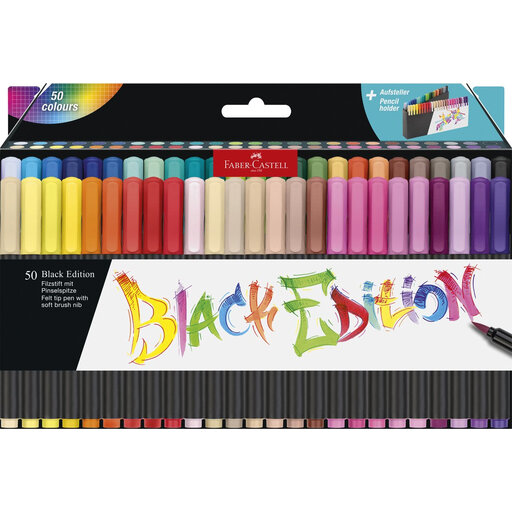
Why it’s a good match: Ideal for journaling, hand lettering, small drawings and lettering with varied line widths.
The product description clearly states that these brush pens are suitable for light-coloured paper, not black paper.
50 colours, flexible brush tips and, according to the product description, washable dye-based ink.
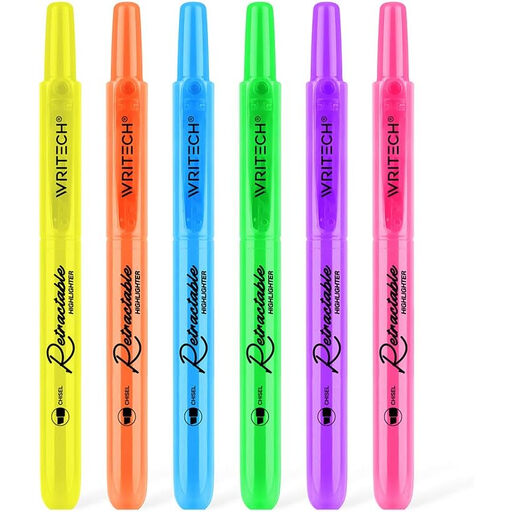
Why it’s a good match: Convenient for summaries, textbooks, bullet journals and office work when you want to highlight information quickly.
According to the product description, the click-tip design eliminates the need for a loose cap. Still, test the ink on your paper first to assess show-through.
Chisel tip with a stated line width of 1–4 mm and a retractable tip for one-handed use.

Why it’s a good match: Designed for illustrations, sketches and colour gradients where a brush tip and fine tip are needed together.
According to the product description, the set is classified as an alcohol marker set. Use a protective sheet underneath and check the paper for show-through.
24 colours, a 1–5 mm brush tip and a 0.6 mm metal fineliner tip, according to the product specifications.
Choose acrylic markers when you want to work on multiple materials, such as wood, canvas, stone, glass or ceramics. According to the product description, the Faber-Castell Shake & Paint sets feature 1 mm and 3 mm tips. Variants are available with 4 neon colours, 6 standard colours and 6 metallic colours.
For paper, colouring pages and schoolwork, regular felt-tip pens are usually the simpler choice. If you want to highlight documents, highlighter pens with a chisel tip are more suitable. For labels or long-lasting marks, permanent markers are the more logical option, provided the surface is suitable.
Markers and felt-tip pens do not require power or refills, but storing them incorrectly can shorten their usable life. Keep the following points in mind:
Explore a current selection of products and compare tip shape, colours, ink type and intended use before making your choice.
For young children, water-based felt-tip pens with a sturdier tip and clear age information are practical options. Check for markings such as CE or EN 71 and follow the warnings on the packaging. Washability varies by fabric and surface; the product information should always be treated as the starting point.
Brush pens generally have a flexible brush tip for creating thin and thick lines. They are useful for hand lettering and light drawing. Alcohol markers use alcohol-based ink and are primarily designed for illustrations and colour gradients. They can bleed through paper more readily and therefore require suitable paper and good ventilation.
Replace caps immediately or retract a click-tip after use. Do not store markers for long periods in direct sunlight or extreme heat. If a marker stops writing despite being stored correctly, check whether the tip is clogged or damaged before replacing it.
