
Vandaag of morgen in huis

Kwaliteit gegarandeerd

Welkomstaanbiedingen ontgrendelen: GRATIS bezorging | Tot 80% korting | Gratis 30 dagen JoyPlus-proefperiode
Download de app
A marker set may seem easy to choose: more colours often make for a more appealing purchase. But a large pack can prove impractical if the nibs wear down quickly, the ink bleeds through the paper or the markers aren’t suitable for the surface you want to use them on. Terms such as “washable”, “brush” and “acrylic” only tell you so much unless you know what they mean in practice.
So, look out for these three common pitfalls:
The nib determines how much control you have. A medium tip of around 1 mm is practical for writing, outlines and general colouring. A thicker tip of around 1.5 to 3 mm is quicker for filling larger areas and handy for younger children.
A flexible brush tip lets you create both thin and thick lines by varying the pressure and angle. This makes brush pens suitable for hand lettering, small illustrations and decorative writing. A fineliner tip of around 0.6 mm is useful for details.
Check the construction, too. A pressure-resistant or spring-loaded tip can stand up to firm colouring better than a soft tip that deforms quickly. For young children, a sturdy grip and rounded, ergonomic shape are practical.
Claims about coverage, drying time or washability come from the brand’s product information. Treat them as product specifications and instructions for use, not as a guarantee for every material or situation.
For occasional colouring or schoolwork, a compact drawing and colouring set with 10 to 20 colours may be enough. A larger set is worth considering if you want to combine lots of shades or illustrate regularly. Also think about storage. A sturdy case keeps loose caps together and makes it easier to find the colours you need.
For children aged 3 and over, always check the stated minimum age and safety information. Small parts can pose a choking hazard. A certification mark or reference to a standard such as EN 71 provides information about product safety, but doesn’t replace supervision for young children.
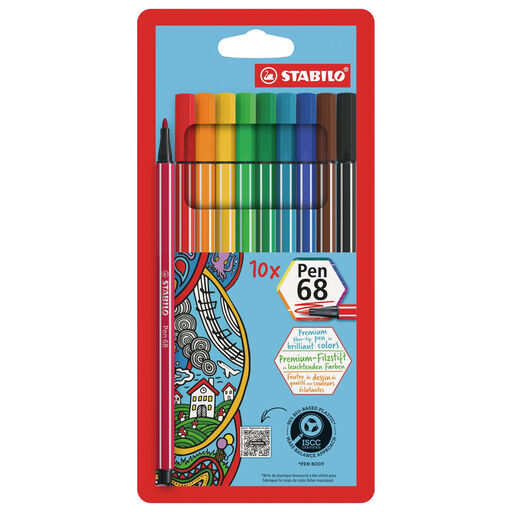
Why it suits this profile: This compact set is suitable for everyday colouring, writing and simple drawings on paper or card.
With 10 colours, this set is a manageable purchase and helps ensure that most of them won’t go unused.
Water-based ink, a tip of around 1 mm and, according to the product information, ink that can be blended with water for watercolour effects.
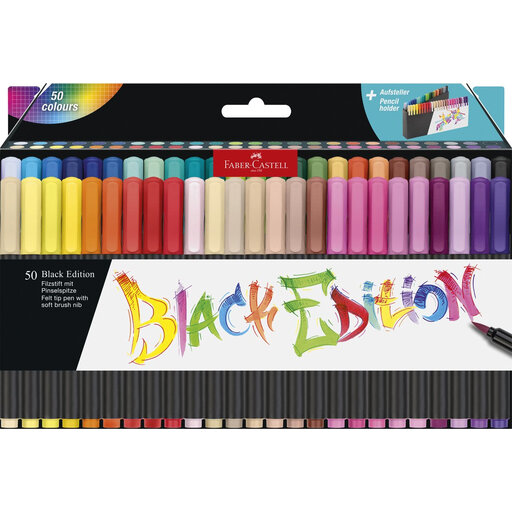
Why it suits this profile: The wide choice of colours gives children and adults plenty of scope for illustrations, colour combinations and hand lettering.
The brush tip is designed for both thin and thick lines. Use the pens on light-coloured paper, though; black paper is not recommended according to the product information.
50 colours, food dye-based ink and, according to the product description, washable ink.

Why it suits this profile: These paint markers are designed for creative projects on a range of surfaces, including wood, glass, ceramic, canvas and plastic.
This set isn’t limited to paper. Test adhesion beforehand, as results can vary from one surface to another.
6 metallic colours, water-based ink, two tip sizes of 1 and 3 mm, and an ink-level indicator.
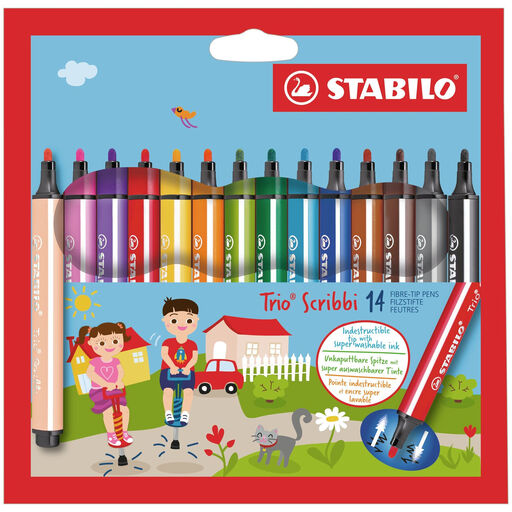
Why it suits this profile: The triangular shape and thick tip are designed for little hands and enthusiastic colouring.
According to the product information, the spring-loaded tip can withstand firm pressure, and the ink is described as super washable.
14 colours, a tip width of around 1.5 to 2 mm and a triangular grip. Check the minimum age and CE information before buying.
We’ve put together a complete, up-to-date list of products that meet these strict selection criteria and the applicable European safety regulations.
Choose a set with a stated minimum age, a sturdy tip and, ideally, washable ink. For children aged 3 and over, the STABILO Trio Scribbi and similar colouring markers are worth considering if the product information confirms they’re suitable for the child’s age. Supervise children and make sure they don’t put the markers in their mouths.
Felt-tip pens usually have a fixed fibre tip and are designed for paper and card. Brush pens have a flexible tip for varied line widths and hand lettering. Paint markers typically contain opaque acrylic ink and, according to the manufacturer, can be used on a range of surfaces. Always let the ink dry first and follow the instructions on the packaging.
Replace the cap straight after use and check that it’s firmly closed. Store the set according to the product instructions: some metallic markers are best stored horizontally, while other sets can be stored upright or lying flat. Keep them out of direct sunlight and away from extreme temperatures. This helps prevent them from drying out and keeps the ink flowing more evenly.
