
Vandaag of morgen in huis

Kwaliteit gegarandeerd

Welkomstaanbiedingen ontgrendelen: GRATIS bezorging | Tot 80% korting | Gratis 30 dagen JoyPlus-proefperiode
Download de app
A marker pen set may seem easy to choose: select a range of colours, compare the price and add the set to your basket. However, small differences in nib, ink and recommended age can have a major impact on how the pens perform. A set that is suitable for colouring books is not automatically the best choice for hand lettering, sketching or precise notes.
A set with 50 colours sounds appealing, but more colours are not always more practical. Consider whether you mainly want to colour large areas, draw fine lines or create colour gradients. For school and everyday writing, a compact colouring pen set may be easier to manage than a large box that often contains several shades from the same colour family.
A broad nib is quick and effective for colouring books, but less suitable for small details. A fineliner of around 0.4 mm is designed for thin lines, writing and sketching. Brush pens offer more variation in line width, but generally require greater control. So do not just look for the term “drawing pens”; also check the stated writing width and nib shape.
Water-based ink, gel ink and alcohol ink behave differently. Water-based ink is often suitable for paper and, with certain models, can be blended with water. Alcohol markers can bleed through paper and require suitable marker paper. Gel pens and rollerball pens write smoothly, but are mainly intended for writing, journaling and fine details.
Also look out for contradictory or unclear information in a product listing. An age recommendation, CE marking or EN 71 label must apply to the specific product. In addition, always check the safety warnings when the pens are intended for children.
Use these guidelines as a starting point:
A metal-encased nib, as found on some fineliners, can provide extra durability and shape retention. For children, a pressure-resistant or springy nib is practical, as pressing hard is less likely to damage or flatten the tip.
Water-based ink is a popular choice for school, drawing and colouring. According to the product description, the STABILO point 88 uses water-based ink and has a 0.4 mm metal nib. The STABILO Pen 68 is described by the manufacturer as using water-based ink with a writing width of approximately 1 mm. The listing also states that the ink can be blended with water to create watercolour effects; this is a product feature, not a guarantee of the same result on every type of paper.
According to the product information, Faber-Castell brush pens use washable ink made with food colouring. WRITECH sets use gel ink or liquid rollerball ink, depending on the model. When journaling, check whether the ink dries quickly and whether it bleeds through your paper.
No marker pen set will continue to work properly if the caps are regularly left off. Recap each pen after use and, where stated in the product information, store fineliners horizontally. Metal markers may need to be stored in a particular position.
Use thicker paper for wet techniques or alcohol markers. Test new colours on a separate sheet first, especially when using sketch pens, brush pens or coloured gel pens. Washable ink can help with stains, but treat clothing according to the care instructions and as quickly as possible.
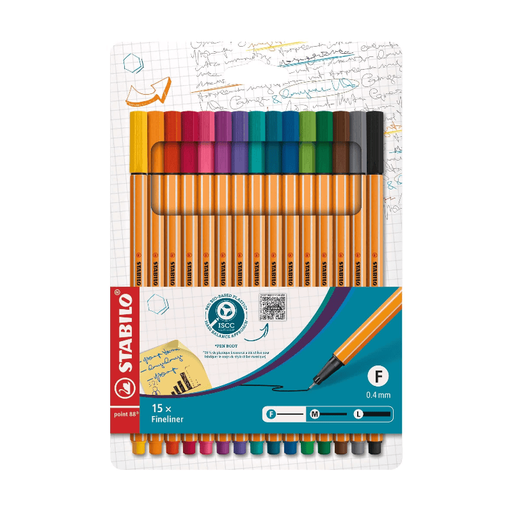
Why it suits this profile: This compact set combines a range of colours with a fine nib for school notes, simple drawings and everyday use.
The stated 0.4 mm nib thickness makes its intended use clearer than a general marker pen description. The cap can be attached to the end of the pen, and the product information states that it can be left open for several days without drying out.
Water-based ink, a 0.4 mm metal nib and 15 different colours for writing, drawing and sketching.
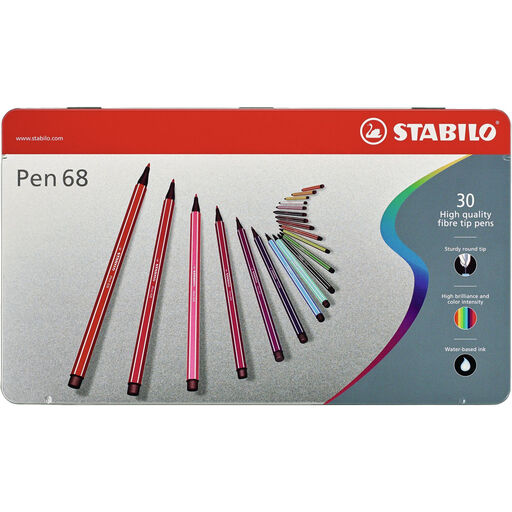
Why it suits this profile: Ideal for adults, students and hobby artists who want a wide choice of colours for drawing, colouring and creating watercolour effects.
The set specifies a robust nib of approximately 1 mm and water-based ink. Thicker paper or card is recommended for effects using water, making this limitation clear in advance.
30 colours, an approximately 1 mm writing width and, according to the product description, suitability for watercolour effects and colour blending.

Why it suits this profile: This set is designed for sketching and illustration, with a brush nib and a separate fine nib for details.
The product information clearly states that it uses alcohol ink, with a 1 to 5 mm brush nib and a 0.6 mm fineliner nib. However, be aware that the ink may bleed through and use suitable paper.
24 colours, a flexible brush nib, a 0.6 mm fineliner nib and fast-drying ink according to the product description.
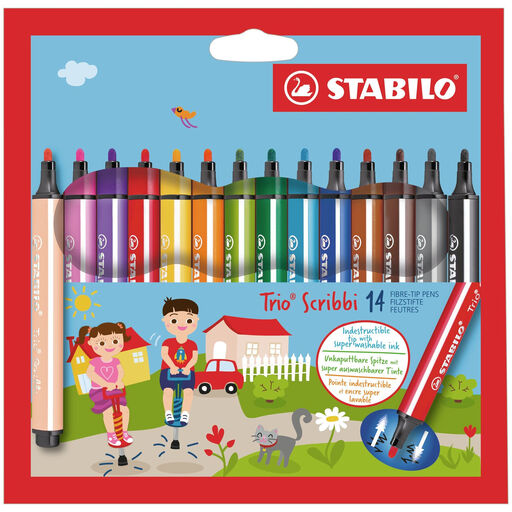
Why it suits this profile: The triangular shape and thick nib are designed for children aged 3 and over who mainly colour and create larger drawings.
The product description mentions a pressure-resistant, springy nib and super-washable ink. Stains should still be treated with water as quickly as possible.
14 colours, a triangular grip, a writing width of 1.5 to 2 mm and a recommended minimum age of 3 years.
We have compiled a complete, up-to-date list of products that fully meet these strict selection criteria and the applicable European safety regulations.
For children aged approximately 3 to 12, a sturdy grip, a pressure-resistant nib and clear age information are important. For school pupils and students, fineliners, gel pens and rollerball pens are suitable for notes, colour coding and journaling. If you create hand lettering or illustrations, it is better to look for brush pens with different line widths. Alcohol markers are an interesting option for colourful sketches, but use them on paper designed for this purpose.
When buying school supplies, also consider how easy the set is to store. A pencil case or resealable box prevents caps and colours from getting lost. A cap ring, as found on certain STABILO Cappi pens, can be useful for children who often misplace their caps.
Choose a set with an age recommendation suitable for the child, a sturdy nib and a grip that feels comfortable to hold. The product information for the STABILO Trio Scribbi states that it is suitable for children aged 3 and over. Always check the latest warnings and supervise use when small parts are present.
Replace the cap immediately after use, check that it is firmly secured and store the set according to the product instructions. Some models can reportedly be left open for longer without drying out, but this is no substitute for closing them carefully. Store the pens away from direct sunlight and extreme heat.
The purchase price mainly depends on the number of pens, the type of ink and the type of nib. Usage costs increase when pens dry out quickly or when you need to buy suitable paper for specialist techniques. Choosing a set that matches your work — such as fineliners for notes or brush pens for hand lettering — helps prevent you from buying several unsuitable sets.
