Start by measuring the width and depth of your desk, then consider how much space you need for maps, panels and tables. A compact QHD screen takes up less physical space; a 27-inch 4K monitor offers more pixels, but needs more room and an appropriate text scaling setting. A clamp mount or USB-C is only useful if it’s compatible with your desk or laptop.
Who is this choice relevant to?
Map researcher with a small desk
Wants to review maps and data without the screen or stand taking over the workspace. QGIS documentation describes an interface that includes a map view and panels; a compact screen and a clamp mount offer different ways to make the most of desk space.
Researcher comparing map details
Wants to view maps, attributes and documents clearly, and weighs screen resolution against the physical size of the screen.
Researcher using a laptop or visual material
May need specific connections or colour capabilities. The laptop features and colour workflow you use determine whether these properties matter to you.
What should you look for when choosing?
Start with the space available and your usual layout for maps, panels and tables. QGIS is an example of mapping software, not a specific software requirement.
| What to consider |
What to look for |
Who this matters to |
| Fit and adjustability |
Measure the screen and stand; if using a clamp, check that the edge of your desk is suitable too. |
If I have little free space, I want to know how much room the screen and stand will take up. Around 36% of consumers say physical fit is their main concern when buying. |
| Map detail and readability |
Compare screen size and resolution at the text scaling and window layout you use. |
When I want to view map details alongside tables, I look for a balance between pixel count and physical screen size. Around 29% of consumers prioritise map detail. |
| Laptop connection |
Check whether your laptop’s USB-C port supports video and whether the monitor’s features and power delivery are suitable. |
If I want to connect my laptop with as few cables as possible, I first check which features its port supports. Around 21% of consumers say laptop connectivity is their main concern when buying. |
| Colour assessment |
Compare the stated colour gamut with the requirements of your workflow; a manufacturer’s specification is not a measurement of your setup. |
If I also assess visual material for colour, I want to know which colour gamut my work requires. Around 14% of consumers say colour assessment is their main concern when buying. |
Common buying mistakes
-
Choosing based on screen size alone
A 27-inch monitor with a stand uses desk space differently from a model with a clamp mount. The screen size alone won’t tell you how much desk space the stand takes up.
Before choosing a screen size, compare the dimensions with the stand and the mounting method against your own desk.
-
Assuming every USB-C port does everything
USB-C features and stated charging power vary by model and need to be suitable for the connected laptop.
Check that both devices support video, data and the required charging power through their connection.
-
Treating a manufacturer’s claim as a check of your own colour display
Colour capabilities stated by a manufacturer aren’t an independent measurement of your monitor in your work setup.
Before choosing specialist colour features, first establish which colour gamut and checking process your workflow requires.
Brands and models for reference
LG
The models described include a compact 23.8-inch QHD option and a 27-inch QHD monitor with a C-clamp.
- LG lists the 24QP750P-B as 23.8 inches with QHD; according to LG, the 27QN880-B has a C-clamp stand.
- The 27QN880-B is QHD, not 4K. A clamp is only useful if it fits your desk.
Dell
The P2725QE is a 27-inch 4K USB-C hub monitor for a workspace with several connection requirements.
- Dell lists 90 W power delivery and RJ45 for this model.
- Check that your laptop is compatible and that the screen with its stand fits on your desk.
BenQ
The PD2706U is a 27-inch 4K model with USB-C, colour modes and an adjustable stand.
- BenQ lists 100% sRGB and a factory calibration report for the PD2706U.
- The stated width and depth with the stand are 613,8 mm and 238,3 mm. The colour information is based on the manufacturer’s specifications, not an independent measurement of your individual unit.
ASUS
The PA279CRV is a 27-inch 4K model with stated colour gamuts and USB-C power delivery.
- ASUS lists 100% sRGB, USB-C with 96 W Power Delivery and VESA 100 × 100 mm.
- The stated colour coverage doesn’t confirm the measured accuracy of an individual screen.
Philips
The 27E1N5600AE/00 is a 27-inch QHD alternative with USB-C for a compatible laptop.
- Philips describes picture, data and charging over a single cable for compatible devices.
- QHD has fewer pixels than the 4K models described here. Check the features of the exact port and the dimensions before buying.
Joybuy monitors for mapping and data work
This Joybuy selection includes portable 16-inch screens and 23.8- and 27-inch monitors for mapping and data work. Compare the dimensions and connections with your own workspace and laptop.
 No image available
UPERFECT 16-inch portable monitor
A portable option if you’re looking for a compact screen for mapping and data work.
16 inches; 2560 × 1600 pixels; USB-C and HDMI.
View at Joybuy
 No image available
ARZOPA Z1RC 16-inch portable monitor
A compact screen option if you want to view mapping and data work on a smaller desk.
16 inches; 2560 × 1600 pixels; USB-C and mini-HDMI; built-in stand.
View at Joybuy
 No image available
ASUS ProArt Display PA24ACRV
A 23.8-inch QHD option if you want to view mapping and data work on a more compact desk screen.
23.8 inches; 2560 × 1440 pixels; USB-C for video, data and power delivery up to 90 W.
View at Joybuy
 No image available
MSI Modern MD272UPHG
A 27-inch 4K option for viewing map details and research data on a larger screen; bear in mind how much desk space you’ll need.
27 inches; 3840 × 2160 pixels; USB-C power delivery up to 98 W; KVM and PIP/PBP.
View at Joybuy
 No image available
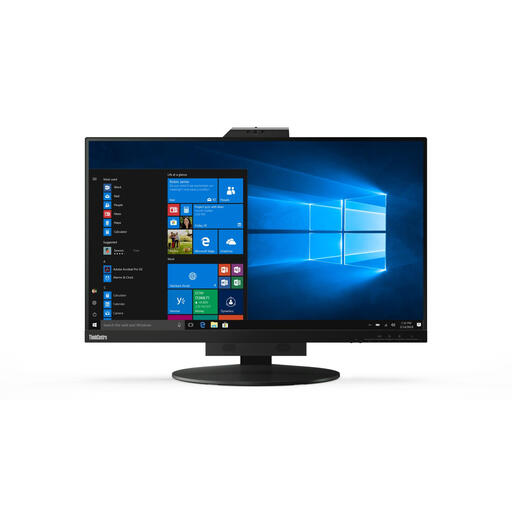
Lenovo ThinkCentre Tiny-In-One 27
A 27-inch QHD option if you want to review maps and tables on a larger screen and adjust your viewing position.
27 inches; 2560 × 1440 pixels; HDMI and DisplayPort; stand adjustable for height and tilt.
View at Joybuy
Frequently asked questions
What should you measure before ordering a monitor?
Measure the available width and depth, including space for the stand and keyboard; if you’re using a clamp, check the edge of your desk too. The screen size alone won’t show you how much room the stand takes up. BenQ lists separate dimensions for the PD2706U with its stand.
Can you always use a USB-C monitor with one cable?
No, it depends on the ports and features of both devices. Check whether the laptop supports video through the USB-C port in question and whether the monitor offers the required charging power and data features. BenQ specifies these features for the PD2706U; Philips says its QHD model requires a compatible device.
How should you set up your screen for extended use?
Adjust the screen position and workspace to suit how you work, and minimise distracting reflections and differences in contrast. The Dutch Arboportaal outlines requirements for employees; the stated rule about using a separate screen or keyboard with a laptop applies to more than 2 hours of screen work per day and isn’t a general product specification for every consumer.
How can you compare the energy use of monitors?
Compare the product information and energy label for the exact model. The European Commission states that computer monitors are covered by the energy label for electronic displays, with classes from A to G. Don’t estimate energy use based on size or resolution alone.


