
Writers taking their backup with them
Your manuscript will be travelling with you during the move. You want to factor in the risk of knocks without assuming that a portable drive is an indestructible copy.


Choose a portable SSD if you’ll be taking your backup with you regularly during the move. An HDD may suit you if you mainly need more space and can transport the drive carefully. Before you leave, make a recent copy, open a file from the drive to check it, and keep another copy somewhere else too: a single drive travelling with your computer won’t protect you if you lose both. Veilig Internetten and the National Cyber Security Centre recommend protecting important files with backups.
Your manuscript will be travelling with you during the move. You want to factor in the risk of knocks without assuming that a portable drive is an indestructible copy.
As well as text, you may store photos, scans or other project files. You’ll need to balance the storage capacity you need against portability and how vulnerable the drive is to knocks.
You want to be able to restore an earlier version if something goes wrong. So check which folders your backup software actually includes.
Choose this option: if you’ll be taking the backup with you, connecting the drive regularly or transferring larger files as well.
Bear in mind: speed isn’t necessarily the deciding factor for a text document. Focus on capacity, connectivity and any encryption features.
Choose this option: if you want to store lots of project files locally and can transport the drive carefully.
Bear in mind: an HDD has moving parts and, according to Seagate, is less suited to knocks and being moved around than an SSD.
| What matters | What to look for when buying | Who should consider this? |
|---|---|---|
| A copy you can restore | Check when the last backup was made, open a copied file and keep another copy somewhere else too. | If I need to retrieve my manuscript after a problem, I want to know that the copy is up to date and readable. Around 31% of consumers put confidence in being able to restore their files first. |
| Protection during transport | Compare SSDs and HDDs for the way you’ll be transporting the drive, and check any durability claims for the exact model. | If the drive is travelling with moving boxes and other belongings, I want to factor in the risk of knocks. Around 25% of consumers give safe transport top priority. |
| Connection and backup settings | Check your computer’s port, the cable, the format and whether your manuscript folder is included in the backup. | If I want to restore files without any extra steps, the drive needs to work with my computer and backup software. Around 19% of consumers prioritise being able to use their drive straight away. |
| Privacy if the drive is lost | Check whether the exact model or backup software offers encryption, and how to keep your recovery password safe. | If I don’t want someone to be able to read my manuscript if the drive is lost, I want to know how to set up security and recover access. Around 13% of consumers put privacy first. |
| Capacity for files and versions | Check the size of all the folders you want to copy and decide how many versions you want to keep. | If I want to keep scans, photos or project files as well as my manuscript, I need enough space without focusing on speed alone. Around 12% of consumers prioritise capacity over their budget. |
If both are lost or damaged at the same time, your backup won’t be available. Veilig Internetten and the National Cyber Security Centre recommend keeping important files in more than one place.
Make a recent copy before you leave, check that a file opens, and keep another copy somewhere outside the same moving route.
A quoted maximum transfer speed doesn’t tell you whether you’ll be able to restore a file after an incident, nor does it predict how quickly your particular backup will run.
First, choose based on your backup plan, transport, connection and capacity needs. Then consider speed in relation to the amount of data you’ll actually be transferring.
When you set up Time Machine, a Mac may ask to erase and reformat a drive that uses a different format. Apple warns that this will delete any existing data.
Save any files you need somewhere else before confirming the format.
A manufacturer’s warranty or recovery service is not an up-to-date copy of your manuscript. Seagate also states that the availability of the Rescue service mentioned may vary by country.
Check the terms for the exact model and make sure you have your own verified copies for recovery.
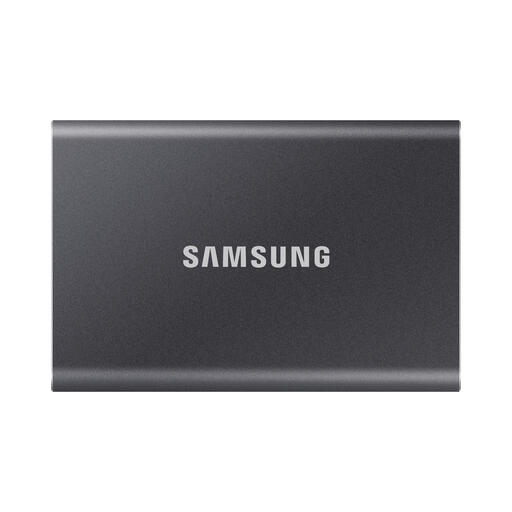
The T7 Shield is a portable SSD option to take with you. The Dutch model covered here is the black 1 TB MU-PE1T0S/EU.
The X9 CT1000X9SSD9 is a compact USB-C SSD for portable backups across different computers.
Canvio Basics is a range of USB-powered portable HDDs for local storage.
The Expansion Portable STKM2000400 is a 2 TB HDD option for a larger local project archive.
My Passport HDDs are worth considering if you want to look at encryption options as well as storage space.
This selection includes portable SSDs for backups you can take with you, plus a portable HDD for anyone weighing up Mac use and extra storage space.
 No image available
A portable SSD option for taking a manuscript backup with you during the move.
1 TB storage. The product description lists read speeds of 800 MB/s, a rubber attachment loop and drop protection from up to 2 metres. These are product claims, not independent recovery test results.
 No image available
A portable SSD option if you also want to take confidential files with you during the move.
The product description lists 1 TB, IP65, 256-bit AES password protection and drop protection from up to 3 metres. The quoted maximum read speed requires a compatible USB 3.2 Gen 2x2 host; write speeds are lower. The security feature needs to be set up appropriately.
 No image available
A portable SSD for anyone who wants to take a copy of their manuscript with them and needs a USB-C connection.
The product description lists 1 TB of storage, an integrated cable, read speeds of up to 1000 MB/s, compatibility with Windows and macOS, among others, and drop protection from up to 2 metres. This drop protection is a product claim, not a guarantee that your data can be recovered.
 No image available
A portable SSD option for anyone who wants to take other files as well as their manuscript, and explore encryption options.
The product description lists 2 TB, AES 256-bit hardware encryption, and USB-C-to-USB-C and USB-C-to-USB-A cables. The stated drop resistance from up to 2 metres doesn’t guarantee that your data will survive a fall; protect the drive from strong knocks and liquids.
 No image available
A portable HDD option for Mac users considering Time Machine and extra storage space. Bear in mind that HDDs are generally vulnerable to knocks during transport.
The product title says it can be used with Time Machine. The product description lists 2 TB, password protection, hardware encryption and a USB-C adapter. For password protection, the description mentions WD Discovery software; check what you’ll need for the feature you want.
Check the date of the last backup and open a copied file from the drive. If you use Windows File History, also check whether you’ve added any manuscript folders that are outside the default libraries. Microsoft explains that you can add folders like these.
Not always. Apple specifies APFS or encrypted APFS for Time Machine and may ask you to erase and reformat the drive during setup. So save any existing files somewhere else first.
That leaves your manuscript dependent on a single drive that could be damaged or lost. Keep a recent copy and store another copy somewhere else too; Veilig Internetten and the National Cyber Security Centre recommend not relying on a single drive that travels with you.
No. According to the Dutch government, there is no fixed statutory guarantee period in the Netherlands: you’re entitled to a product that works properly, and the retailer is your point of contact if something is wrong. A manufacturer’s warranty is an additional benefit and doesn’t replace those rights.
According to the Dutch Data Protection Authority, the exemption applies to the processing of personal data for personal or household use. You can’t automatically rely on this exemption for professional use or when processing data for others; in those cases, check separately which privacy rules apply.